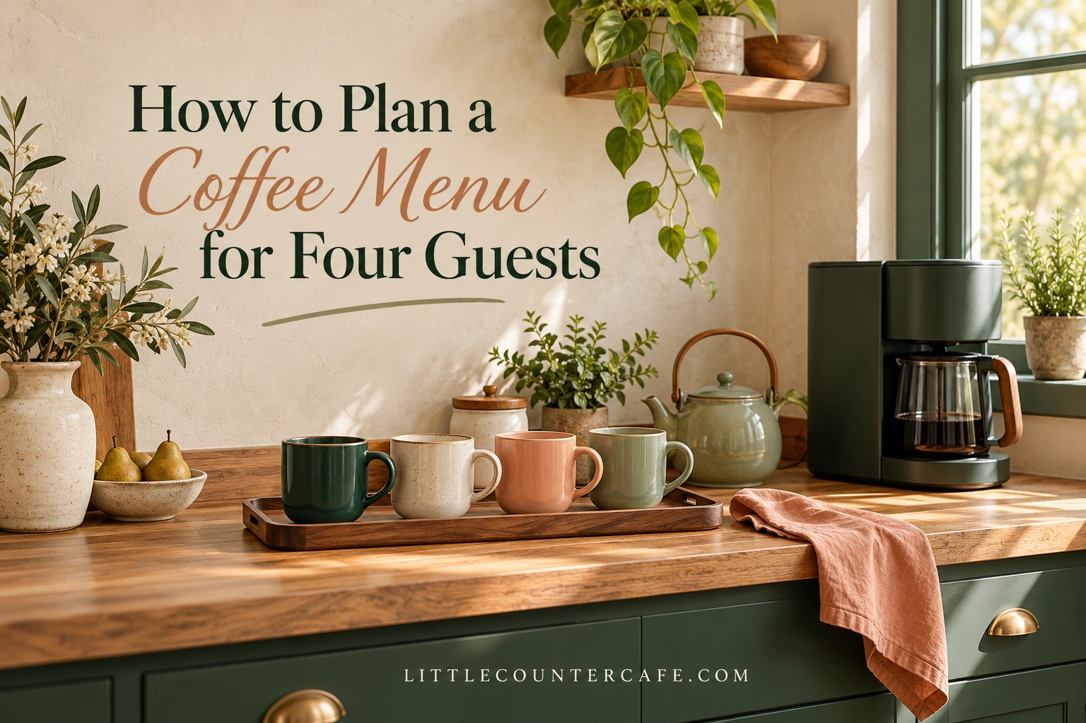
A lovely coffee catch-up does not need a list of drinks as long as a cafe chalkboard. For four guests, start with one dependable coffee, one tea or other suitable alternative, and one optional extra that uses ingredients you already have. Then work out servings, include yourself, and leave room to make the drinks comfortably.
I love the little ritual of coffee at home. When friends are coming over, a short menu helps keep that cozy feeling: everyone gets something they enjoy, and the host gets to sit down too. Here is a practical way to plan a small gathering without buying a new appliance or a cupboard full of syrups.
The example quantities below are planning illustrations, not tested recipes or predictions of what your guests will drink. The pictured setups are concept inspiration. Adjust the worksheet to your own mugs, equipment, visit length, and guests' preferences.
Choose Three Drinks Your Guests Will Enjoy
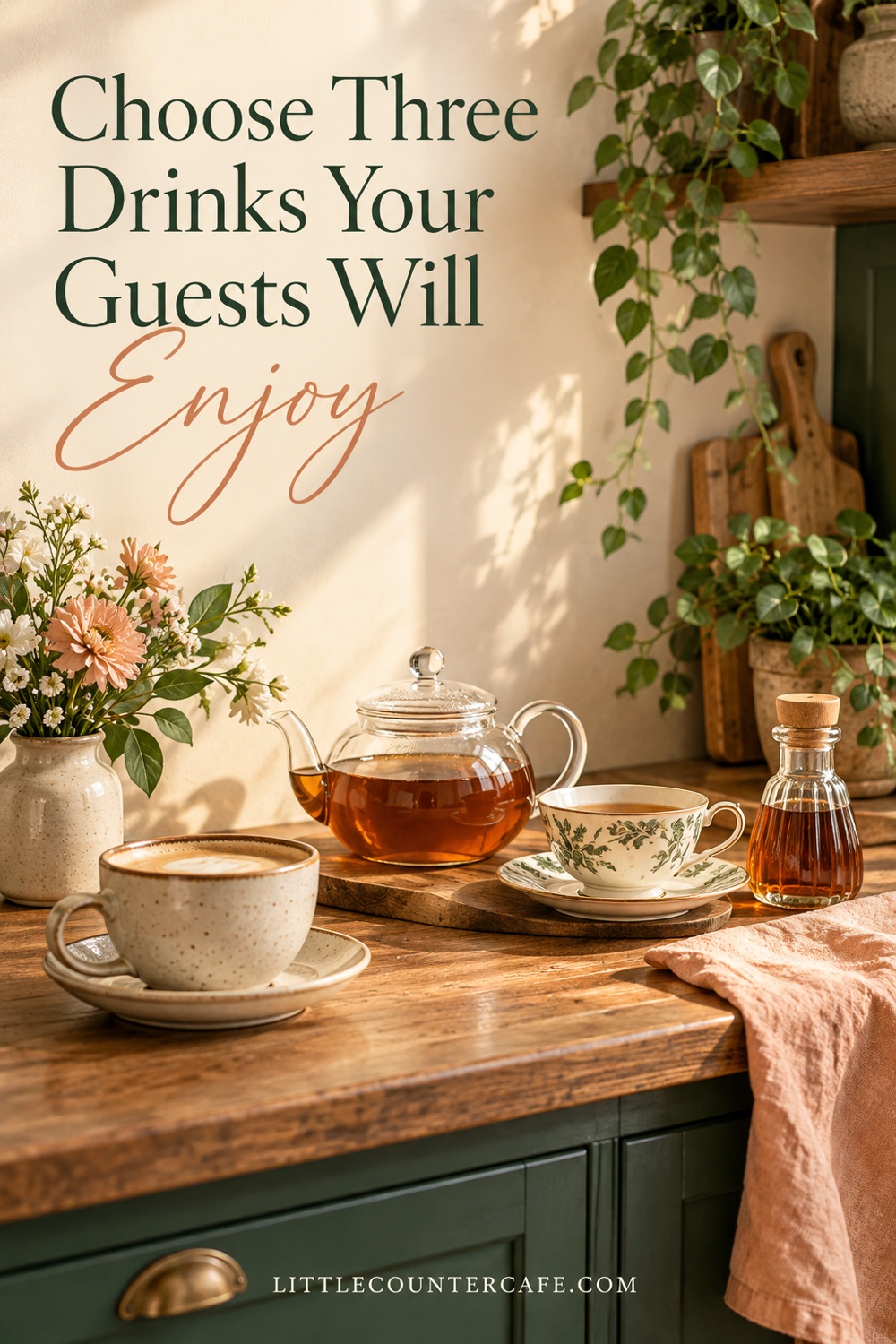
Before choosing flavors, send a simple message: “I'm planning coffee and tea. What do you usually drink, and is there anything I should avoid?” Ask about milk preferences, decaf, and food allergies before shopping. Four guests can have four very different ideas of a good coffee morning.
Build the menu around three roles rather than three complicated recipes:
- Your easy coffee: the familiar drink your existing brewer makes reliably. That might be filter coffee with milk offered separately, or espresso-based drinks if that is already your routine.
- A real alternative: tea, a suitable herbal infusion, or another drink your guest actually wants. Check the package when someone needs to avoid caffeine; decaf coffee and ordinary tea should not be described as caffeine-free. The FDA explains why decaffeinated does not mean caffeine-free.
- One optional extra: perhaps a store-bought syrup guests can add themselves, a chilled version of the main drink, or a familiar cocoa prepared according to its package. Skip the extra if it needs another appliance, several new ingredients, or a method you have never used.
Water belongs alongside the menu too. Put glasses where people can help themselves without reaching around the hot brewer. A small jug on the dining table can free valuable counter space.
For example, a relaxed menu could be filter coffee, tea, and optional vanilla syrup. Another could be your usual milk coffee, herbal tea, and water, with no flavored extra at all. These are menu combinations, not drink recipes. Use your established method and the manufacturer's or package instructions for preparation.
Keep choice visible but brief. A handwritten card with the actual options is enough; there is no need to offer every drink your machine could theoretically make. If two choices meet everybody's needs, stop at two. An option nobody wants adds work rather than hospitality.
Make dietary preferences part of the first decision
Milk, soy, and some nuts are among the FDA's major food allergens. Plant-based does not automatically mean suitable for every guest. Check ingredient labels on milks, syrups, cocoa, toppings, and any snacks; retain the packaging so guests can check it too. The FDA's food allergy guidance explains label reading and allergen cross-contact.
Ask an allergic guest what arrangements they need. Shared pitchers, spoons, steam wands, and preparation areas can complicate service; do not promise an allergen-free drink from a shared kitchen. If you cannot provide an arrangement they consider suitable, agree on a sealed drink or another option in advance. A clear, honest plan is more welcoming than an uncertain substitution at the counter.
Calculate Servings Without Overbuying

First decide whether “four guests” means four visitors plus you. In this guide it does: five people in total. Add any other hosts or family members who will have drinks. This small head-count detail makes more difference than an elaborate shopping list.
Use these steps on the printable planner:
- Write each person's first drink choice.
- Choose an actual serving size with room below the rim. Measure water into your own mug or use its stated capacity as a starting point; a coffee maker's cup marking is not automatically your mug size.
- Multiply the number choosing each drink by that drink's serving volume.
- Add only the refills you intend to offer, keeping coffee and tea quantities separate.
- Check what is already in the pantry, then buy only the difference.
A worked example for five people
Suppose three people, including the host, choose coffee and two choose tea. You plan 8 fl oz (about 240 mL) of finished drink per person. The first round is 24 fl oz of coffee and 16 fl oz of tea: five servings totaling 40 fl oz, or about 1.2 liters. Those are finished-drink volumes, not a universal brewing-water or ground-coffee recipe.
If you want one additional coffee serving and one additional tea serving available later, your planned total becomes 32 fl oz of coffee and 24 fl oz of tea, about 1.66 liters combined. You do not have to prepare all of it before guests arrive. Keep the ingredients for the extra servings ready and decide when to make them.
For a milk-coffee menu, plan milk from your familiar drink method instead. As a purely illustrative shopping calculation, three drinks using 5 fl oz of milk each would need 15 fl oz for that round; a fourth similar drink would bring the total to 20 fl oz, about 590 mL. That example is not a latte recipe and does not include every person's splash of milk in tea. Record those separately if needed.
For coffee grounds, pods, tea bags, or cocoa, follow the instructions for your brewer and chosen method. Do not scale a scoop count from an unrelated appliance. Check maximum and minimum batch sizes, the usable capacity of the serving vessel, and any milk left unused in the pitcher.
Give the budget a useful boundary
Shop the basics first: the agreed drinks, suitable milk, and enough servings. Treat decorative toppings and extra flavors as optional. Set a spending cap before shopping and subtract what you already have. A second syrup is an easy item to remove if it means buying a large bottle for one request.
Write “reserve ingredients” separately from “prepare now.” That keeps an optional refill from becoming a large pot nobody drinks. After the gathering, note what was actually used. Your own record will make the next menu more accurate than a fixed drinks-per-person rule.
Match the Menu to Your Machine and Counter
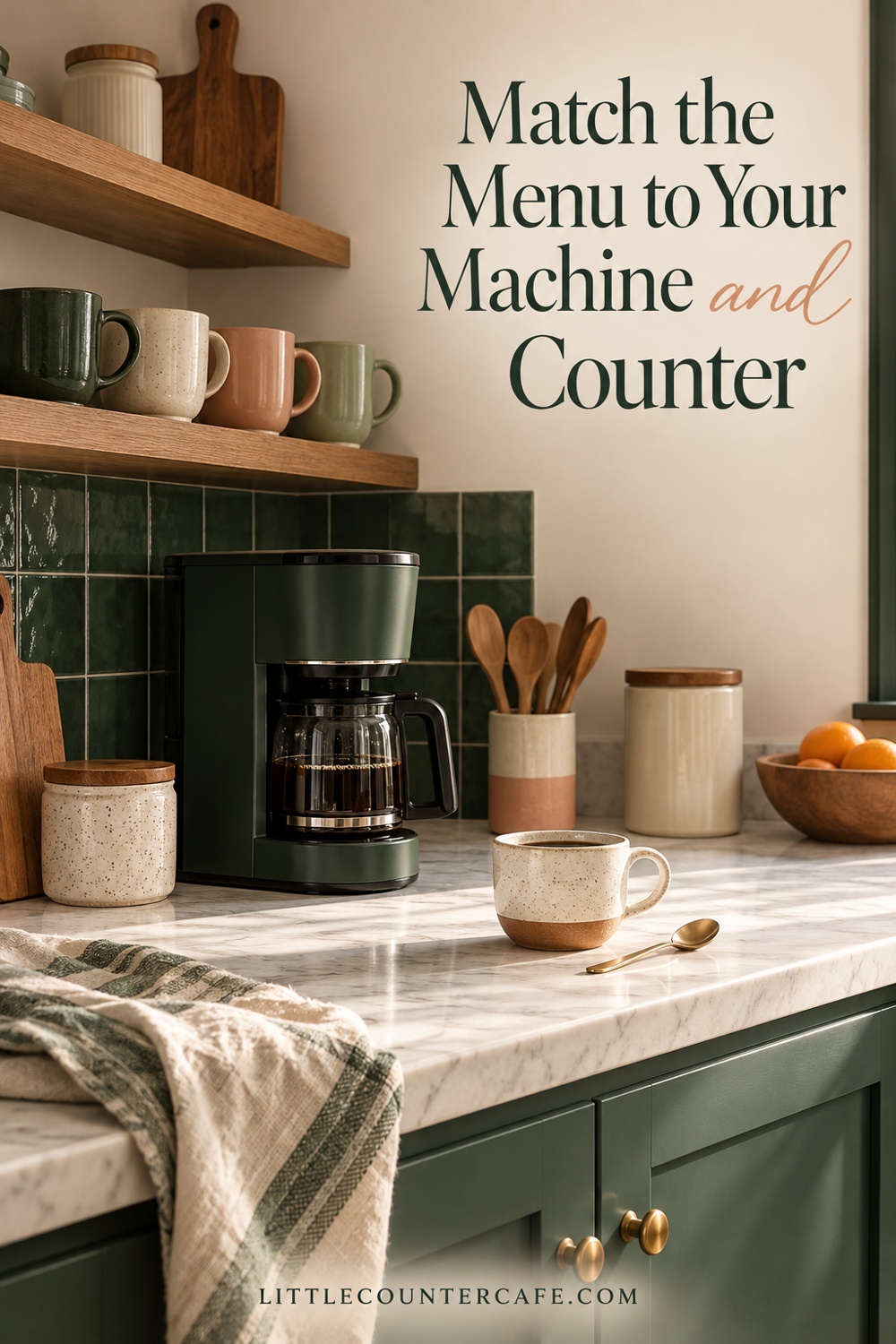
A menu is only comfortable if it fits the way you can serve it. Think through a complete round before committing to several milk drinks, a kettle, a frother, and an iced option simultaneously. You can simplify the menu without buying more equipment.
With a batch brewer, offer the familiar coffee it is designed to make, milk on the side, and a tea option. Check its manual for batch sizes and any approved holding arrangement. A thermal server is useful only if it is suitable for the drink and you already have one; it is not a requirement for four guests.
With a single-serve machine, keep the custom choices narrow and prepare drinks in an agreed order. Do not promise everyone a different elaborate drink at the same instant. Set out cups before brewing and ask whether guests mind staggered service. If the first drink would wait too long, change the menu rather than rushing the machine.
If your usual coffee setup needs several manual steps, choose a tea or packaged alternative that does not compete for the same tools. A new brewing technique is better learned on another day. This guide does not assume a specific machine's output, heat-up time, or electrical capacity.
Keep a usable landing space
Reserve a clear area for a mug, spoon, and pouring. Keep the hot work on the kitchen counter and move napkins, water, and snacks to a table when possible. Guests should not need to reach across a hot machine or kettle to get sugar. Keep hot drinks and appliance cords away from edges and children's reach, and follow your appliance's placement and electrical instructions.
Before the visit, place the actual empty cups and serving pieces where you intend to use them. Open the water tank and any cupboards you need. If the setup blocks refilling, cleaning, or ordinary kitchen use, remove an optional item. This is a check you can do in your own kitchen; the illustrations are not measured demonstrations.
For the wider room setup, see how to host a home cafe morning in a small space. If your supplies are taking over the work area, use the daily and backup supply guide to decide what needs to stay nearby.
Prep, Serve, and Reset With a Simple Plan
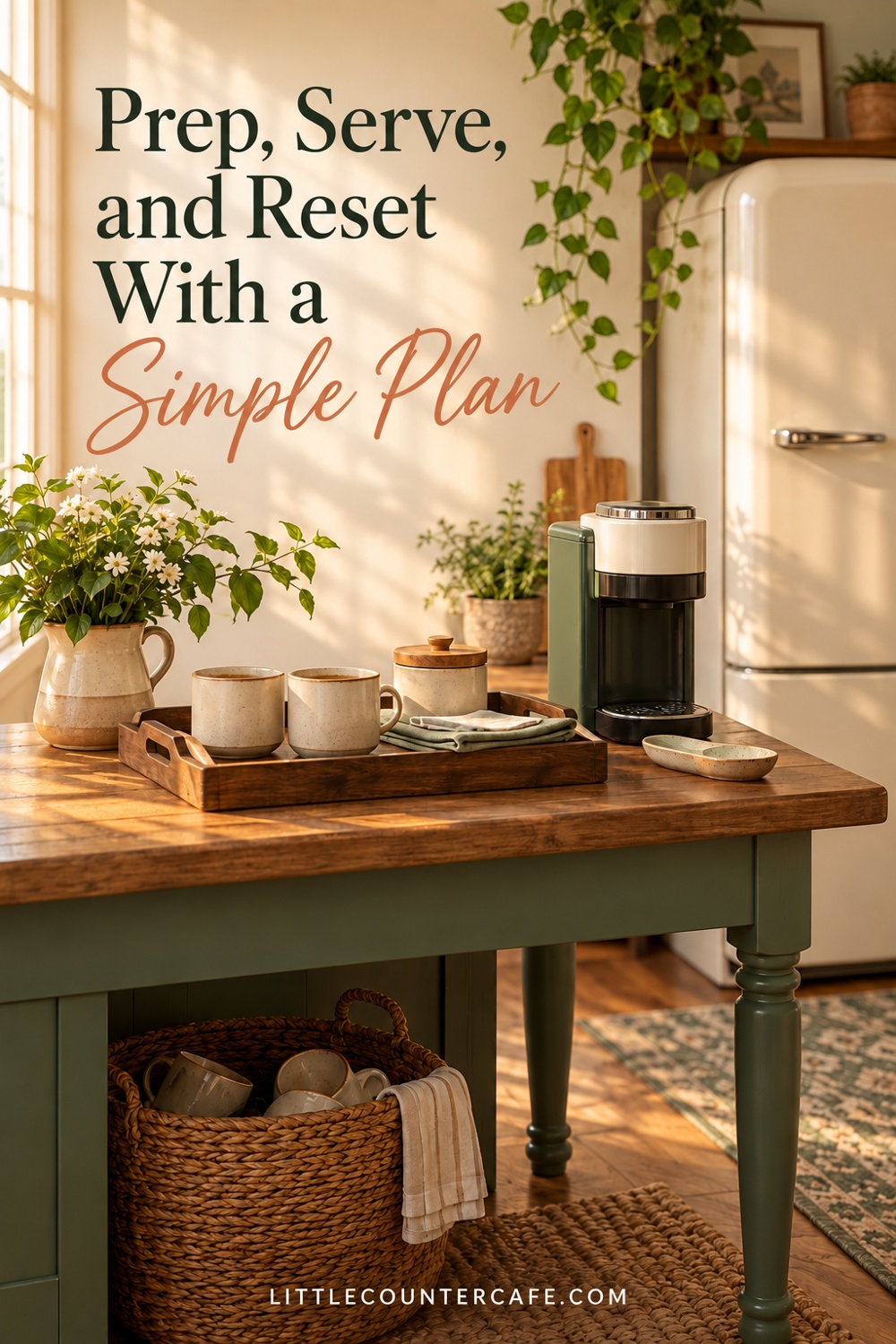
The day before, confirm preferences, check labels, write the menu, and count cups. Put shelf-stable supplies together and clear a fridge spot for milk. Plan snacks separately so the drinks counter does not become the entire buffet. Keep the printable planner beside your shopping list rather than adding several reminder notes around the kitchen.
Before guests arrive, wash your hands, prepare clean cups and utensils, and set out the nonperishable items. Fill and operate equipment according to its instructions. Leave refrigerated ingredients chilled until you need them. Assign a home for used spoons and cups so they do not migrate into the clean serving area.
Serve a little milk at a time
The FDA recommends keeping cold food at 40°F (about 4°C) or below. For milk and other ingredients that require refrigeration, follow the package storage instructions and put out small amounts as needed. If they need to remain out, use an appropriate cold-holding arrangement and check the temperature. Do not assume a decorative jug keeps milk cold.
Discard perishables left at room temperature for more than two hours, or one hour when the temperature is above 90°F (about 32°C). Track total time out rather than restarting the clock with each refill, and replace serving portions instead of topping up an old one. These points come from the FDA's safe entertaining guidance. Follow any shorter package limits too.
Use a calm service order
Take the first-round choices together, prepare drinks using your familiar method, then bring out the optional extra. Ask about refills before making another batch. If one guest arrives late, make their drink when they arrive instead of leaving a milk drink waiting on the counter.
When something changes, simplify. If everyone wants the slowest drink, explain the wait or offer your quicker planned alternative. If you run short of one milk, check with the guest before substituting. If a topping creates mess and nobody uses it, put it away. Your printed menu is a helpful plan, not a promise to operate a cafe.
Your final menu check
- Four guests and the host are included in the head count.
- First choices, dietary needs, and suitable alternatives are confirmed.
- Serving sizes and refill quantities are written down.
- The ingredients fit your budget and existing equipment.
- Milk has a chilled storage plan; labels and separate utensils are available as needed.
- Hot work, guest self-service, and used cups each have a sensible place.
Download the Four-Guest Coffee Menu Planner below to record preferences, calculate first-round and refill servings, and make a short shopping and preparation list. After the visit, add one note about what you would change. A menu that works for your friends and your counter is the one worth repeating.
LITTLE COUNTER CAFE · Coffee Hosting & Gift Ideas
Make a small coffee moment feel special.
Thoughtful brewing gifts, serving pieces, and drink supplies for relaxed coffee catch-ups at home.
As an Amazon Associate I earn from qualifying purchases. This is a paid link.