
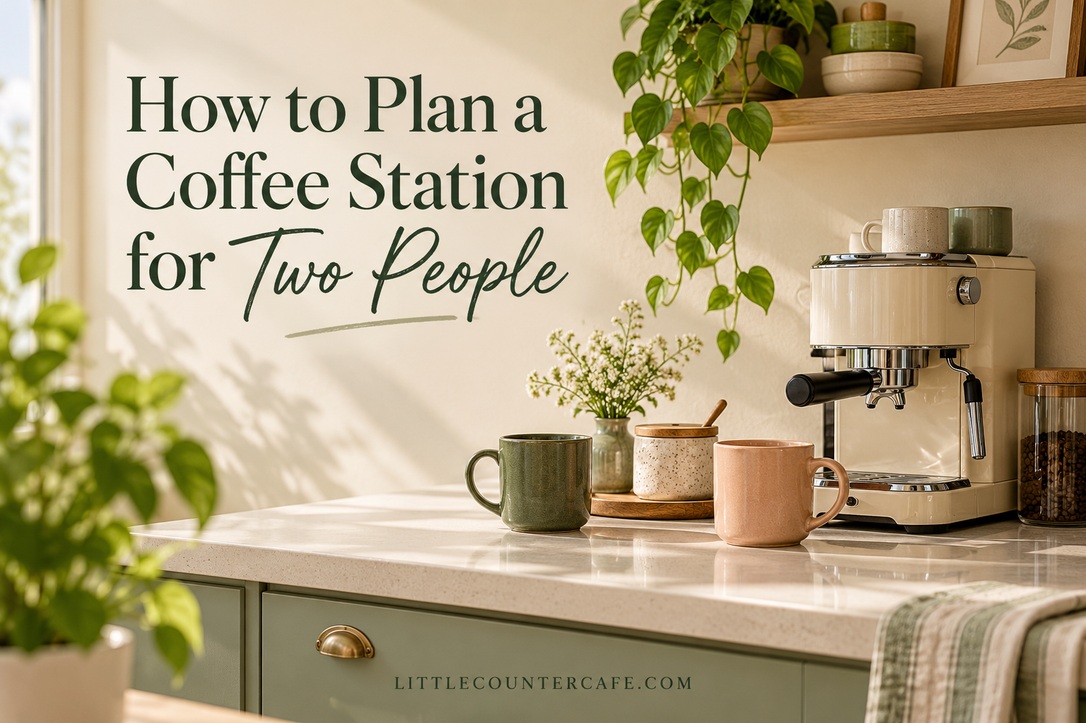
A shared coffee station works best when both people can make their usual drink without moving the other person’s supplies out of the way. That might mean one brewer and two favorite mugs. It might mean coffee for one person, tea for the other, and a clear agreement about who refills the water.
Start with the two routines, then decide what belongs on the counter. You do not need two of everything or a larger collection of organizers. You need a sensible place to brew, an accessible home for each person’s essentials, and a reset that leaves the station ready for whoever uses it next.
The arrangements pictured here are illustrative inspiration. Check the actual fit, appliance instructions and access needs in your own kitchen before arranging equipment. Use the free two-person coffee station planner below to turn these ideas into a setup that fits your household.
Compare Your Two Morning Routines

Write down each person’s first drink, usual mug, brewing method and approximate departure time. Include the small steps that are easy to overlook: filling a travel cup, finding a teaspoon, fetching milk, emptying grounds or waiting for the kettle. These details tell you whether the problem is storage, counter space or simply two people needing the same appliance at once.
A useful comparison has five lines for each person:
- Drink: regular coffee, decaf, tea, or another usual choice.
- Tools: brewer, filter, scoop, tea infuser, frother or travel mug.
- Timing: who starts first, and whether the routines overlap.
- Reach: which shelf and drawer positions are comfortable to use.
- Finish: what must be washed, emptied, returned or refrigerated afterward.
For example, one person might make a black coffee before leaving while the other prepares tea later. They can probably share a preparation area. Two people making milk drinks at the same time may need an agreed brewing order and a separate place to assemble the second drink. These are planning examples, not tested service timings.
Decide what can be shared. A spoon caddy, sugar container and cleaning cloth may be shared, while regular and decaf supplies need clear individual identification. If one person uses an ingredient the other avoids, retain the original packaging and discuss the level of separation needed. A label is useful for identifying supplies; it does not make shared tools suitable for managing a serious food allergy.
Do not buy a second appliance just because two people use the station. First try the existing equipment and write down the actual waiting point. If the conflict happens only on weekends, a little sequencing may solve it. If both people regularly need the same brewer before leaving, compare its real serving capacity and your routines before making a purchase. A machine’s two-cup button does not automatically mean two full-size mugs of the drink you want.
Choose a Layout You Can Share

Treat the station as three jobs: getting supplies, brewing, and finishing the drink. Both people should be able to reach supplies without reaching across the person handling hot water. Keep the brewing position stable; use the surrounding storage to reduce crossings.
One brewer, different departure times: place the brewer in its approved operating position, with a clear preparation area beside it. Store the next person’s clean mug and supplies in the same predictable location each day. The first user leaves the station reset rather than staging a second drink that may sit out unused.
Coffee and tea together: use one shared finishing area, with dry coffee and tea supplies in separate containers or drawer sections. If a kettle is also needed, give it a suitable operating position following its own instructions. Do not assume a crowded tray is a safe home for multiple heated appliances. A tray is often more useful for dry supplies than for supporting a brewer.
Two people at the same time: let one person brew while the other gathers their mug and additions from a separate accessible spot. Agree who uses the hot-water area first. If the kitchen is too narrow for two people to pass comfortably, take turns. Storage should support the room you have, rather than encourage an awkward squeeze beside hot drinks.
Measure more than the equipment’s closed footprint. Check refill access, removable tanks, open lids, steam paths, drip-tray removal and the space needed to lift out a full mug. Our coffee maker footprint guide walks through those checks. There is no single clearance number that suits every machine.
Read the instructions for your exact appliance. For example, the Breville Bambino Plus manual specifies a level, clean surface and gives heat, cord and operating precautions. Use those instructions for that model; do not treat an attractive inspiration photo as installation guidance for yours. Keep cords out of walking routes and away from water and hot surfaces. Do not stretch a cord across a sink to make an arrangement fit.
Before buying storage, place the two actual mugs and everyday tools in their proposed positions with appliances off and cool. Walk through the retrieval and return steps without preparing hot drinks. Check whether opening a drawer blocks the other person, whether either person must reach over the brewing position, and whether the refrigerator door interrupts the route. Move the dry supplies first if the layout feels awkward.
Give Each Person Easy Storage

A shared station does not need a rigid equal division of every shelf. Allocate space according to use and comfortable access. Someone who uses one mug and tea bags needs a different arrangement from someone with a travel mug, grinder and filter papers.
Try one of these simple systems with containers you already own:
- Two drawer sections: each person has a small area for their dry supplies, with shared tools between them.
- Two removable caddies: useful when the counter must return to meal preparation afterward. Keep caddies light enough for their user and store them where they can be lifted comfortably.
- One shared shelf and two mug positions: suitable when both people use the same coffee and brewer. Only personal items need separate places.
Choose organizers by usable interior size and the space needed to remove them. A basket that fits on a shelf can still be awkward if its handle catches the shelf above. Place frequently used items where their user can comfortably reach them. Do not put everyday mugs high up simply to make the display look balanced. Ask each person to try their own retrieval and return steps.
Keep regular and decaf in clearly different positions and label them in readable text. Color can be an extra cue, but should not be the only way to identify a supply. Leave product information with its container. If you decant dry supplies, transfer the identifying details you need and do not combine old stock with a new package without checking it first.
Store coffee for freshness rather than display. The National Coffee Association’s storage guidance recommends airtight, opaque storage in a cool, dark location. A sunny counter jar may look inviting in a concept scene, but an opaque container away from heat is the more practical everyday choice. Keep tea dry and follow its packaging instructions too.
Give reserve stock another home. A modest working supply of filters, pods or tea bags is easier to manage than every spare package beside the brewer. For a more detailed restocking system, see daily and backup coffee supplies. Buy additional organizers only after trying the arrangement; a spare kitchen container may already solve the problem.
Keep the Shared Station Ready

Agree on the handover, especially if your routines happen hours apart. “Leave it ready” is clearer when it means returning dry supplies, dealing with used grounds or tea leaves, following the appliance’s after-use instructions, and leaving a clean mug location available.
Make the jobs small and specific. The person finishing a drink can return their ingredient and put their used spoon in the agreed washing spot. Choose who checks filters and who adds coffee or tea to the shopping list. If both assume the other person is checking, supplies can still run out in a beautifully organized drawer.
Refrigerated ingredients belong back in the refrigerator promptly. Follow the product label for opened plant-based drinks, milk and other additions. The FDA recommends a refrigerator temperature of 40°F or below. Do not leave a milk carton at the station for the next person’s later morning drink. Let each person fetch what they need.
Use this short evening check:
- Return clean, dry mugs and utensils to their agreed homes.
- Check the supplies needed for both people’s next drinks.
- Follow your model’s cleaning and shutdown instructions; let hot parts cool before handling them.
- Leave the preparation area clear, with no cloth or packaging draped over equipment.
- Put a missing item on the shopping list instead of moving someone else’s supply without telling them.
If the setup stops working, identify one specific problem. A missing spoon needs a reliable utensil home. Confused coffee bags need clearer identification. Two people colliding at the brewer need a different sequence or route. Adding a larger tray will not necessarily fix any of those problems.
Free printable: download the two-person coffee station planner below. Page one compares drinks, timing and access needs. Page two records your layout checks, storage homes and shared reset jobs. Fill it out together, try the arrangement, then revise the one step that causes friction. A successful shared corner is one both people can use comfortably and leave ready for the next cup.
Download the free two-person coffee station planner (PDF)
LITTLE COUNTER CAFE · Small-Space Coffee Station Essentials
Make room for your daily coffee ritual.
Space-saving organizers, compact brewing tools, and simple measuring essentials for planning a practical coffee corner.
As an Amazon Associate I earn from qualifying purchases. This is a paid link.