
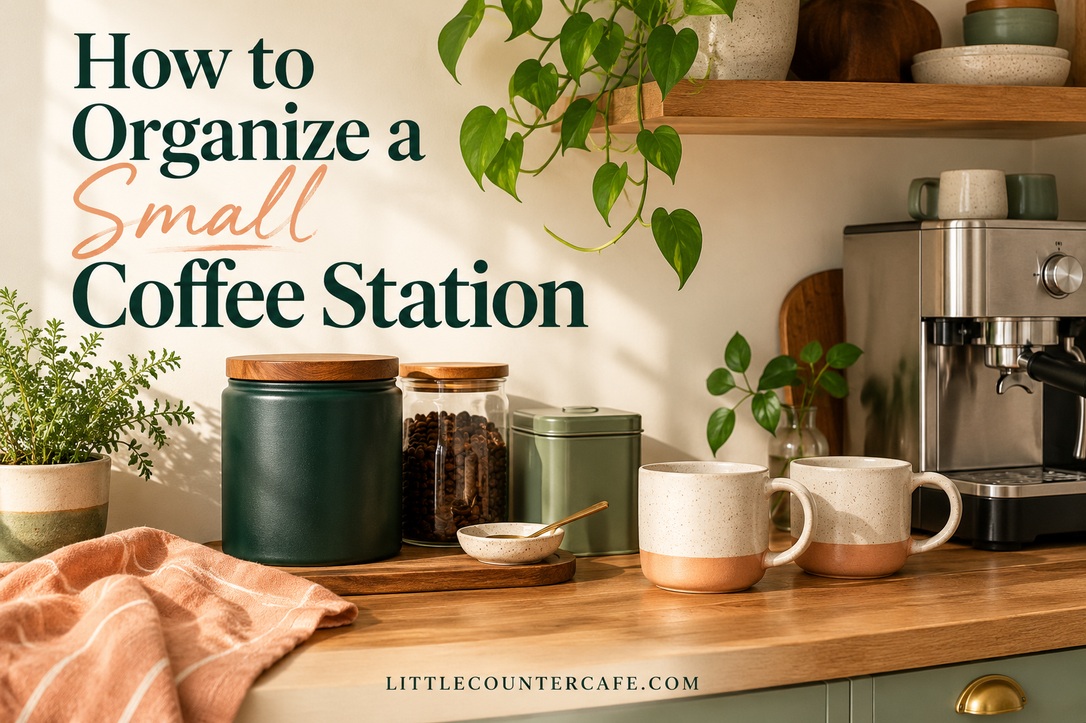
A coffee corner can look lovely and still be awkward to use. The teaspoons disappear behind the machine, the tea bags live in three different places, and a collection of favorite mugs leaves nowhere to set down today’s cup.
Start with the items you actually reach for. Give those a simple home, move the extras nearby, and leave enough clear counter to make a drink comfortably. You can do this with a cupboard, a drawer and a tray you already own; matching containers are optional.
This guide organizes an existing station rather than choosing a new location or machine. The pictured arrangements are concept illustrations for inspiration, not measured installations or product tests. Use your equipment’s instructions and your own measurements to check what works in your kitchen.
Sort Supplies by How You Use Them
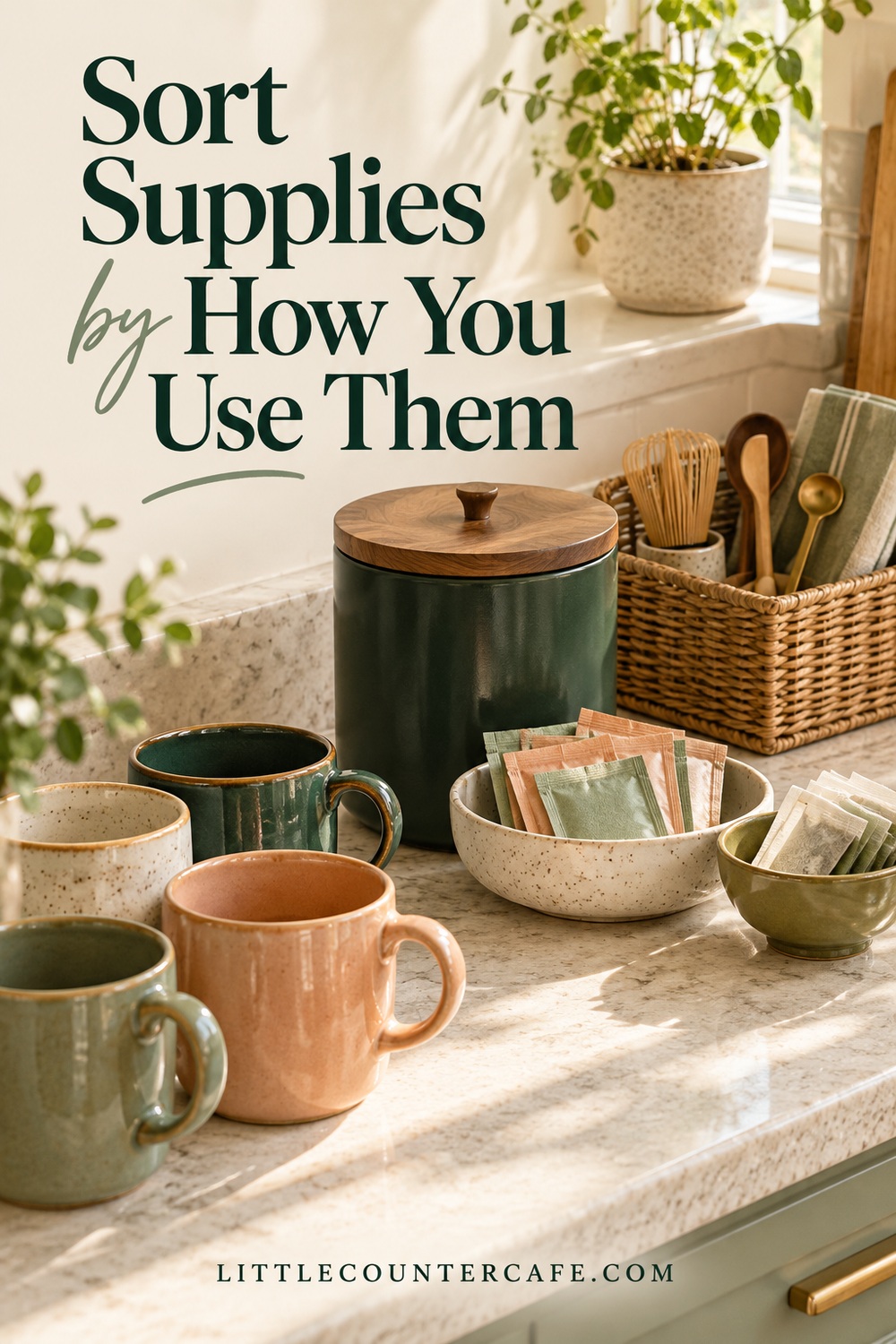
Clear the loose supplies onto a table while the appliances are off and cool. Leave heavy equipment where it is if moving it would be awkward. Wipe and dry the cleared surface using a method suitable for your countertop, then look at everything you have collected before putting it back.
Make three practical groups
Put the things used most mornings in the first group: your usual mug, coffee or tea, the right filter or capsule, and a spoon or scoop. The second group holds occasional supplies such as a weekend teapot, extra mugs or a second brewing method. The third is unopened backup stock. Keep cleaning products in their own appropriate storage, separate from food supplies.
Frequency is personal. If one person drinks coffee and another drinks tea every day, both belong in the everyday group. A large syrup collection does not need counter space just because the bottles look good together; keep your regular choice handy and store the others according to their labels.
Give duplicates a job or let them go
Compare scoops, travel lids and small accessories with the equipment you still use. Set aside mismatched pieces until you can identify them. Donate usable extras you no longer want and dispose of damaged items appropriately. Do not discard a machine part because it looks unfamiliar; check the manual first.
Before shopping, write down the actual problem. “Tea packets fall behind the mugs” is useful. “The counter needs more organizers” is too vague to guide a purchase. An existing shallow container may solve the first problem without adding anything new.
Give Everyday Items an Easy Home
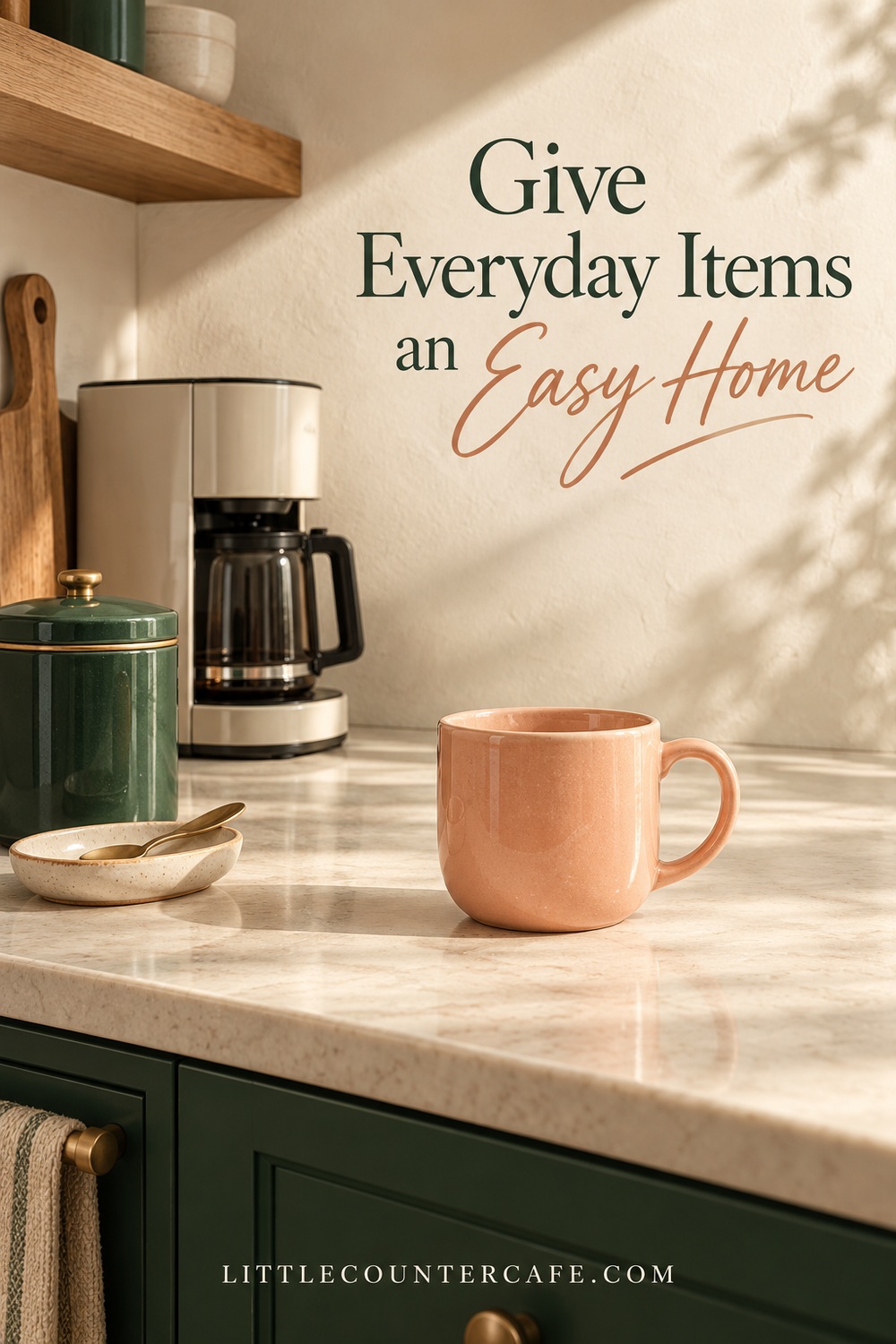
Arrange the everyday group in the order you make a drink: get a cup, reach the coffee or tea, prepare it, then add anything you use. This is a practical starting point rather than a fixed left-to-right rule. Adapt it to the hand you favor, the cupboard door swing and everyone who shares the station.
Protect the working space first
Leave a clear landing spot for a mug and enough room to operate, refill and clean your equipment. Open the reservoir lid, remove the drip tray and move the steam wand as instructed before deciding where a container belongs. A canister that fits when everything is closed may block the next refill.
Follow your own appliance manual. For example, the Breville Bambino BES450 instruction book calls for a level, clean, dry surface away from the counter edge and says not to operate that model inside a cabinet. Those instructions are an example, not a clearance specification for every coffee maker. Keep storage out of vents and steam paths, and keep cords clear of the counter edge and water.
Use a tray only when it helps
A low tray can group a spoon dish, sugar container and tea tin so they move together for wiping. Check its outside dimensions, including handles, rather than measuring only the inside. Keep appliances on their manufacturer-approved surface unless the manual permits the proposed base; a decorative tray is not automatically a safe appliance platform.
If the tray crowds your mug landing spot, use a smaller one or skip it. Put the most-used mug in the easiest safe cupboard position, or keep just the number that comfortably fits. You do not need to display every mug to enjoy them.
Use Drawers and Cabinets for the Rest
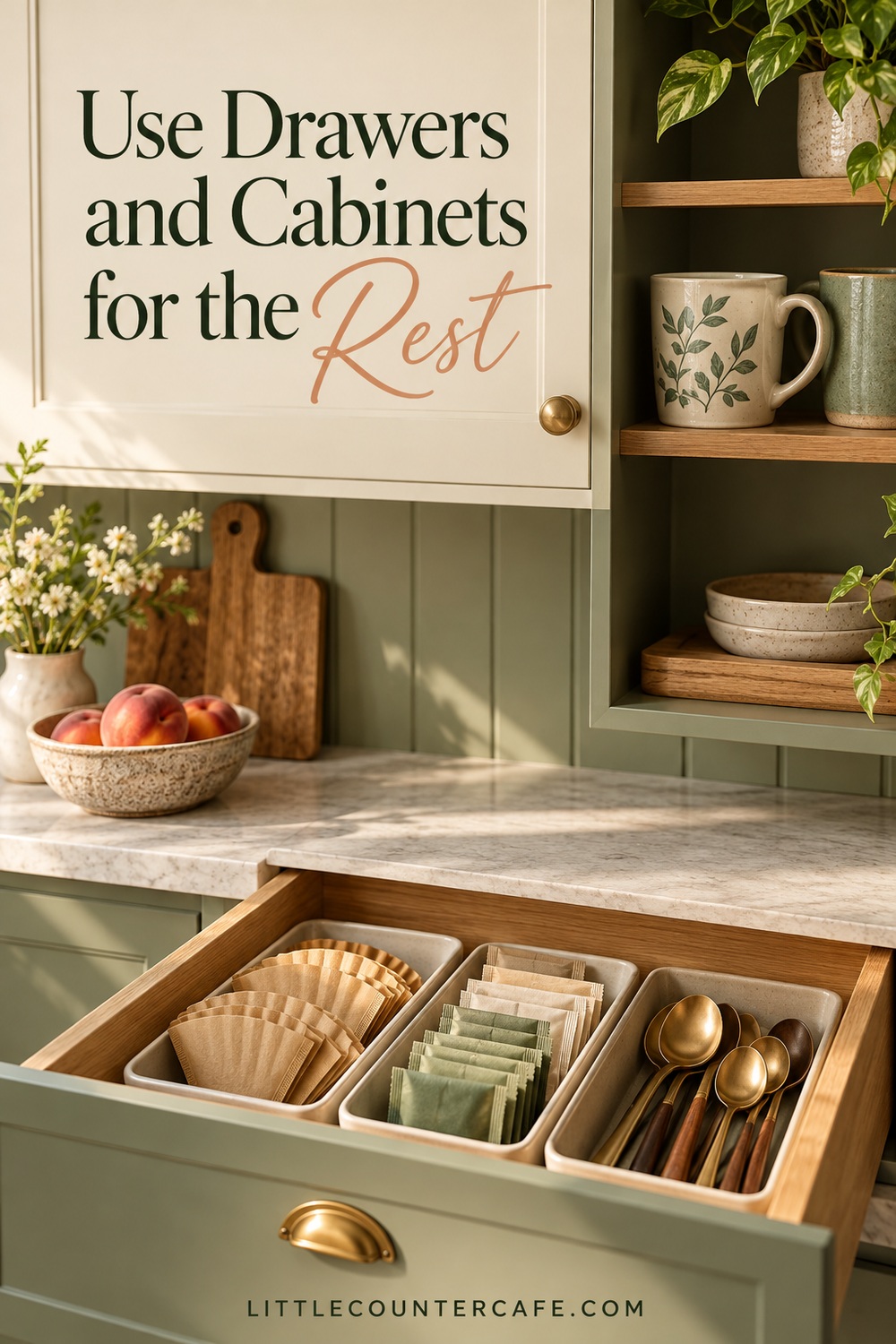
Nearby storage is part of the station. A drawer below the counter can hold filters, teaspoons and tea packets, while a cupboard can keep spare mugs and unopened stock together. This frees the counter without making the daily essentials hard to find.
Measure the usable space
Measure the inside width, depth and usable height of the drawer or shelf. Allow for hinges, drawer hardware and the space needed to lift an item out. Check that the drawer closes with a container inside and that your hand can reach the back without lifting a stack of other things.
As an illustrative fit check, a drawer measuring 12 by 16 inches inside is about 30.5 by 40.6 cm. An organizer with those same advertised outside dimensions may still be too tight once rounded corners or drawer hardware are considered. Measure your actual drawer and the organizer’s widest points; this example is not a tested fit recommendation.
Start with a removable divider or a clean, dry container you own. Separate long spoons from small packets, and keep filters in their packaging or a suitable covered holder so they stay clean and dry. Store heavy mugs on a stable shelf you can reach comfortably. Use shelf risers only within their rated load and intended use, with enough room to remove mugs safely.
Keep backup stock visible
Choose one nearby place for unopened coffee, spare filters and extra tea. Put older suitable stock toward the front and newer purchases behind it. Keep original labels, preparation instructions, allergen information and dates available if you transfer food into another container.
Avoid filling every gap. A little spare room makes putting things away easier and helps you see what needs replacing. If supplies regularly overflow, reduce how much you keep at the station before adding a second layer of storage.
Choose Storage That Protects Your Supplies
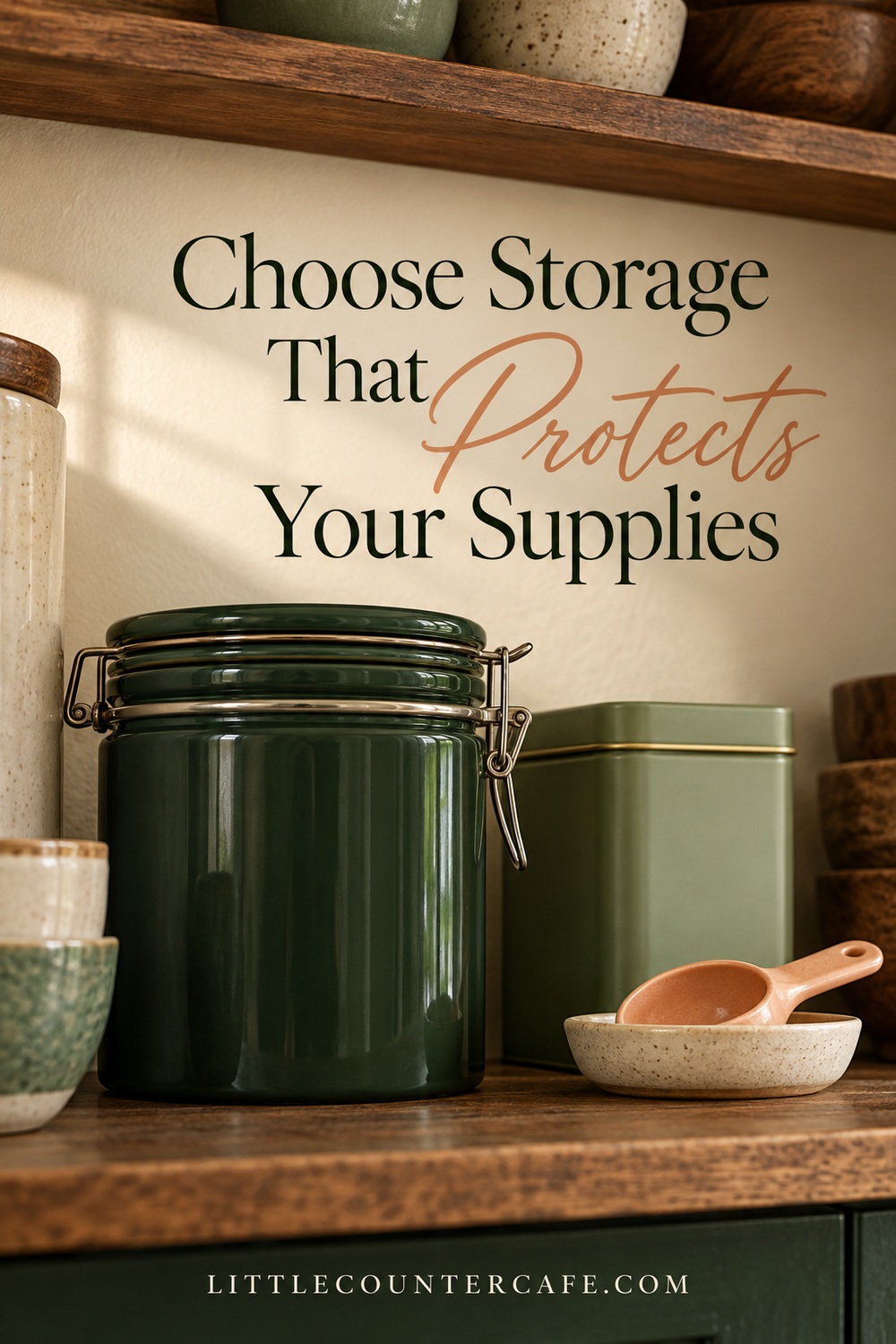
Choose containers for the contents and the way you use them. A beautiful jar is only useful if it closes properly, suits food storage and can be cleaned and dried as directed. A wide opening may be easier for a scoop; a narrow bottle may be harder to clean or identify.
The National Coffee Association’s storage guidance recommends airtight, opaque containers in a cool, dark location to limit exposure to air, moisture, heat and light. Keep your everyday coffee away from strong sun and appliance heat rather than choosing the brightest display spot. A decorative clear jar of beans should not be treated as ideal everyday coffee storage.
Keep tea, cocoa and other ingredients sealed and follow their package instructions. Label similar containers clearly so people can tell regular coffee from decaf and identify ingredients without guessing. Keep allergy information available; matching jars should not make an ingredient harder to recognize.
Let refrigeration decide what stays out
Milk and cream belong in the refrigerator when they require refrigeration. Follow the storage directions for plant-based milk and syrups too, including any changes after opening. Do not assume a pump bottle or a homemade label makes a product shelf stable.
The FDA’s food-storage guidance recommends a refrigerator temperature of 40°F (4°C) or below. Food that requires refrigeration should not remain at room temperature for more than two hours, or one hour above 90°F (32°C). Bring out what you need for your drink and return the container promptly. Keep cleaning chemicals separate from ingredients.
Buy for one specific storage gap
If you still need an organizer, compare its outside size, cleanability, stability and ease of access. Choose a small packet bin for packets, not a large decorative basket that hides them. Look for an opaque airtight food-storage container for coffee rather than buying a whole matching set you cannot fit.
Our Storage & Organization favorites below are a starting point for comparing canisters, tea storage and small organizers. Check current dimensions and suitability yourself. These are shopping suggestions, not products tested for this guide. As an Amazon Associate I earn from qualifying purchases.
LITTLE COUNTER CAFE · Coffee & Tea Storage Favorites
A calmer counter starts with a place for everything.
Canisters, tea storage, shelf organizers, and small accessories to keep everyday café supplies easy to reach.
As an Amazon Associate I earn from qualifying purchases. This is a paid link.
Keep the Station Easy to Reset
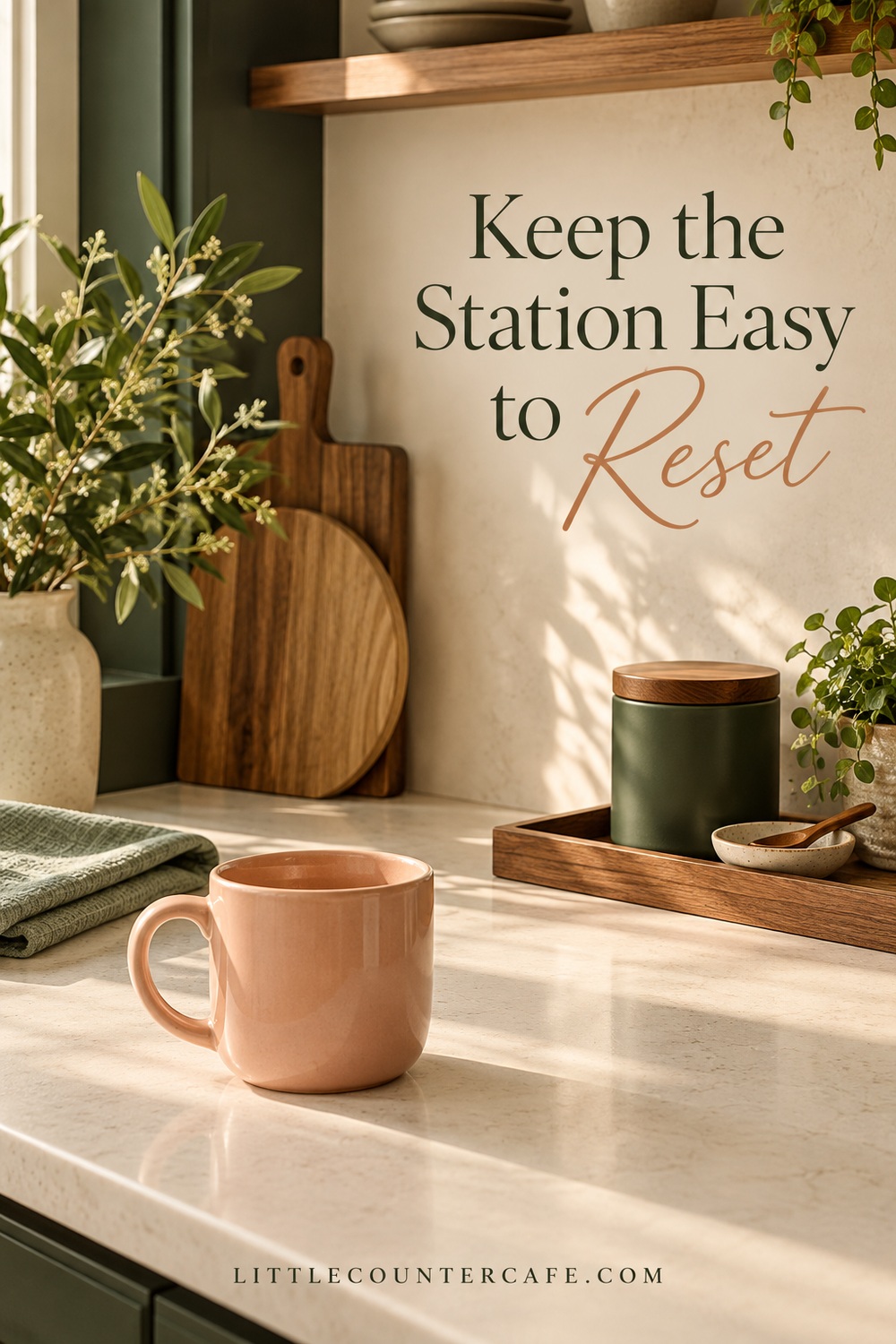
A useful arrangement should be easy to put back after making a drink. If every item has to be lined up precisely, simplify the setup. Keep the spoon dish obvious, leave room to return the coffee container, and make the backup location easy for everyone to recognize.
Copy this everyday reset checklist
- Return milk and other refrigerated ingredients promptly.
- Close coffee, tea and topping containers and put them in their assigned places.
- Take used mugs and utensils to the washing area.
- Follow the appliance’s instructions for after-use care; let hot parts cool before handling them as directed.
- Wipe suitable counter and tray surfaces, keeping water away from electrical parts, then dry them.
- Leave the mug landing spot clear for the next drink.
Use a simple weekly stock check
Check your current coffee or tea, filters or capsules, and any favorite add-ins before buying replacements. Look behind the everyday containers for forgotten packets. Clean storage pieces according to their instructions and dry them before refilling. Avoid topping up old contents indefinitely; keep dates and ingredient information with each batch or package.
If the station becomes cluttered again, change the part that causes friction. Move the spoon dish forward if spoons are left on the counter. Reduce the displayed mugs if clean ones have nowhere to go. Move the tea to the same easy-to-reach area as the coffee if someone keeps leaving the box out.
A small-station organizer worksheet
Download the one-page organizer worksheet, or copy the prompts below onto paper:
| Item or group | How often is it used? | Assigned home | What blocks access? |
|---|---|---|---|
| Everyday mugs | |||
| Coffee and tea | |||
| Filters, capsules or infuser | |||
| Spoons and scoops | |||
| Add-ins | |||
| Backup stock |
Before buying storage, record your usable drawer or shelf width, depth and height, the organizer’s outside dimensions, and the space needed to open and lift it. Then run through making a drink with your usual equipment safely positioned. Adjust anything that makes you reach over hot surfaces, move several objects or balance a mug near the edge.
For more ideas as your corner develops, explore Coffee Corners and Cafe Essentials. Start by giving one frequently used item a better home, then work through the rest. A small station feels welcoming when the next cup is easy to make.