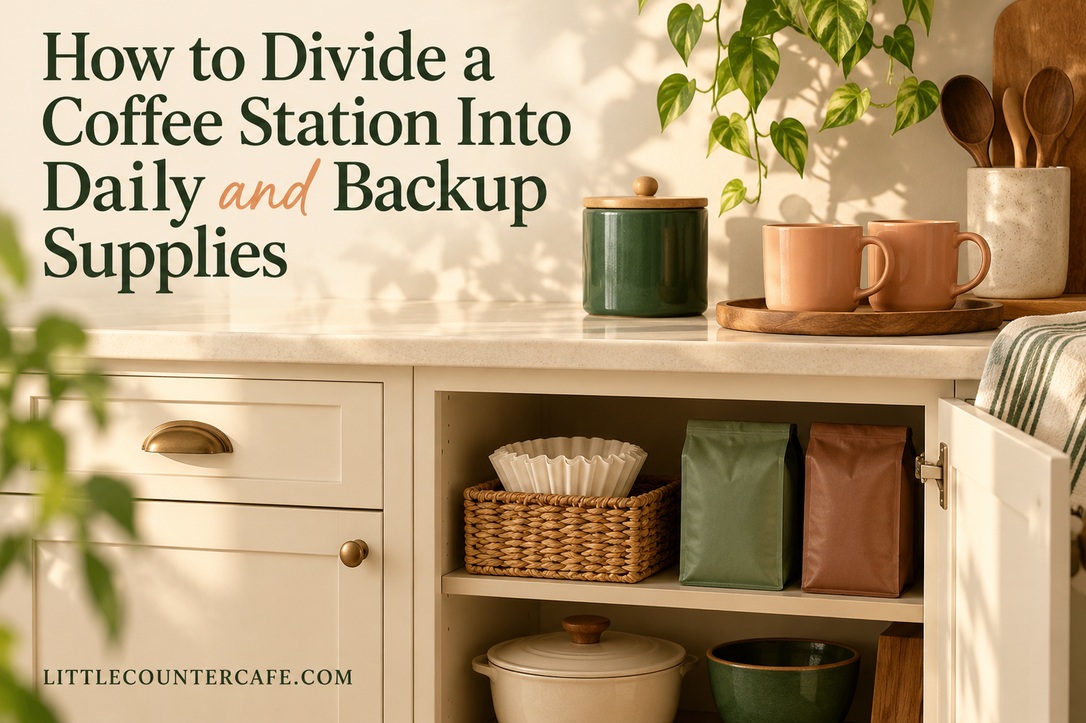
A coffee corner can look small and still be holding far too much: an open bag, two spare bags, the whole box of filters, six mugs, and a tea collection that keeps spreading. The useful change is to separate the supplies you reach for while making a drink from the supplies you reach for while restocking.
Give your everyday items a convenient home near the brewing area. Give reserve stock one clear home in a suitable cupboard. Then decide what tells you it is time to refill or shop. The reserve home does not have to sit on the counter, and the everyday home can be a drawer rather than a display.
This guide helps you decide amounts and refill habits. If you are still deciding which tools deserve counter space, start with what to keep on a coffee counter and what to put away. Here, the aim is to make the supplies you have easier to use and keep track of.
The room scenes are illustrative setup ideas. Use the printable daily-and-backup worksheet to plan a system around your own drinks, storage and shopping routine.
Choose a Working Supply for Your Routine
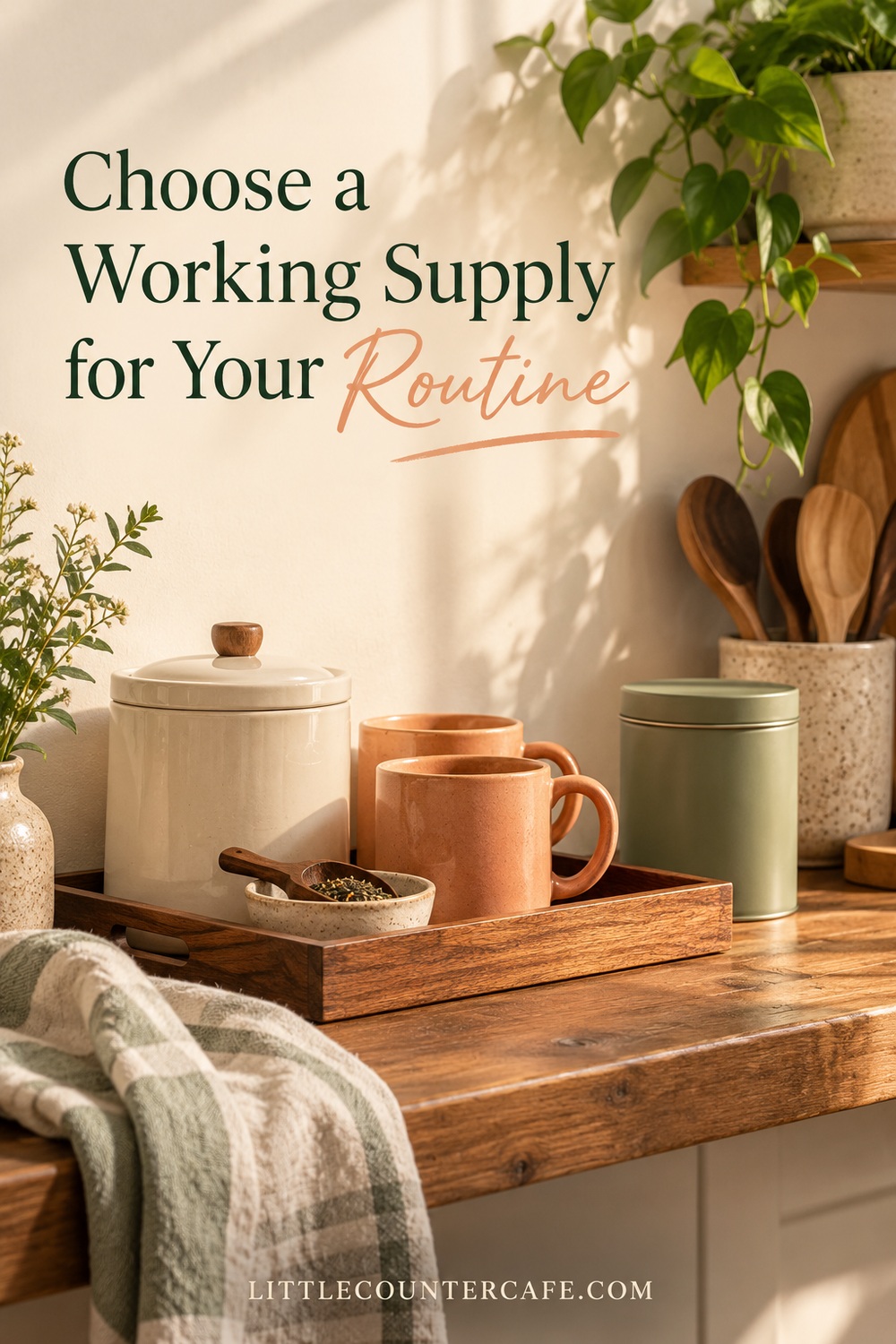
Start with the drinks your household actually makes in an ordinary week. Include tea, decaf and occasional favorites without giving every drink the same amount of space. A person who has black tea every afternoon needs a convenient tea supply; a flavor used once a month can live with the reserves.
Make a quick list of consumables: beans or grounds, pods, filters, tea bags, sugar packets and any packaged toppings. Put reusable tools on a separate list. A scoop and a mug need a home, but they do not need a refill quantity. This avoids buying a second tool when the first is simply in the dishwasher.
Set a working amount you can explain
Choose the interval between convenient restocks before choosing a container. You might want to bring filters forward twice a week because the cupboard is close, or once a week because the reserve shelf is farther away. There is no standard number that every coffee station should hold.
For dry, nonperishable accessories, an illustrative calculation is:
Uses per day × days between refills = starting working quantity.
If you use two paper filters per day and plan to refill every five days, start with ten filters in a clean, dry, covered holder. Count your actual brewing sessions rather than people: a shared carafe and two separate brews use different numbers. Add a small allowance only if it solves a real problem. This is a planning example, not a freshness or food-safety limit.
Coffee needs a different judgment. Do not pour a large quantity into a display jar just to fill it. The National Coffee Association’s storage guidance recommends buying smaller amounts and protecting coffee from air, moisture, heat and light. Choose an opaque, airtight container and a cool, dark location. A nearby cupboard can be a better everyday home than a sunny counter. There is no need to decant twice if suitable sealed storage already works.
Keep the first version small
Try the working supply using containers you already own. A shallow drawer can hold a small covered filter box, a tea caddy and the scoop. A modest tray can group a closed canister and two mugs while leaving the pouring area clear. Keep storage away from appliance vents and the space needed to remove tanks, open lids and handle hot cups; follow your appliance manual.
If you have to move three containers to make one drink, reduce the group or move an infrequently used item. If you run out every morning, increase the working amount or make refilling more convenient. Let the routine decide, rather than trying to match a photograph.
Store Backup Supplies Where They Stay Useful
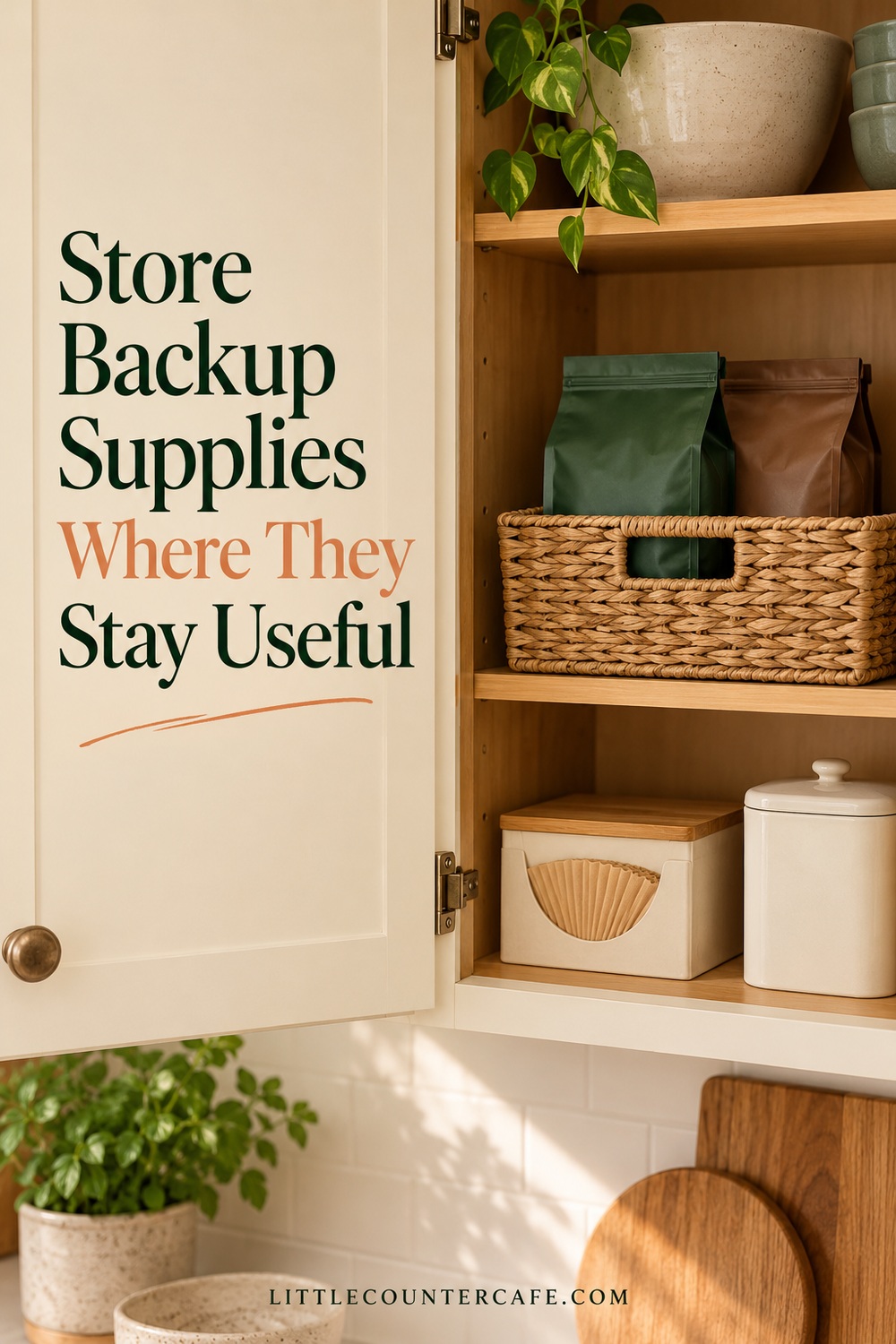
Choose one reserve location for the station: a cupboard shelf, a pantry basket or a drawer that is large enough to see what is there. It should suit the products’ storage instructions and be easy for the person restocking to reach. Avoid putting heavy refills high overhead or stacking bags so deeply that you cannot check the back.
Use one basket for sealed coffee refills and another small space for spare filters or tea. You do not need matching bins. An existing food-storage box or a simple shelf section can do the job. The useful feature is a visible boundary: if the reserve area is full, check it before adding more.
Give open packages an obvious place
Keep the current open supply at the front, with suitable unopened reserves behind it. Use the package that should be used next according to its label and condition. Do not mix old and new coffee in a canister simply to hide a low level. Finish the existing supply, then clean and fully dry the container as its care instructions require before refilling.
Retain the product name, allergen information, storage directions, date and identifying package details when you decant. Keeping the original package alongside the container, or saving a clear photo, is a practical way to avoid losing that information. Do not transfer supplies to a container that once held a cleaning product.
Keep filters protected from splashes and strong household odors. Leave tea in its suitable packaging or a closed caddy according to the producer’s instructions. Store cleaning products separately from food and drink supplies. The FDA’s home food-storage advice also emphasizes checking storage directions and keeping foods away from household chemicals.
Keep refrigerated supplies in the refrigerator
Milk and products labeled for refrigeration belong in the refrigerator, including after opening when the label requires it. They are not countertop working stock. Bring out what you need while preparing a drink and return it promptly. Follow product-specific directions for plant milks, creamers and syrups; a pretty bottle does not change the storage requirement.
For the reserve shelf, keep a short note such as “milk: fridge” if someone might otherwise search the coffee basket. This lets one planning sheet cover the whole drink routine without putting every item in one physical place.
Set a Refill Trigger Before You Run Out
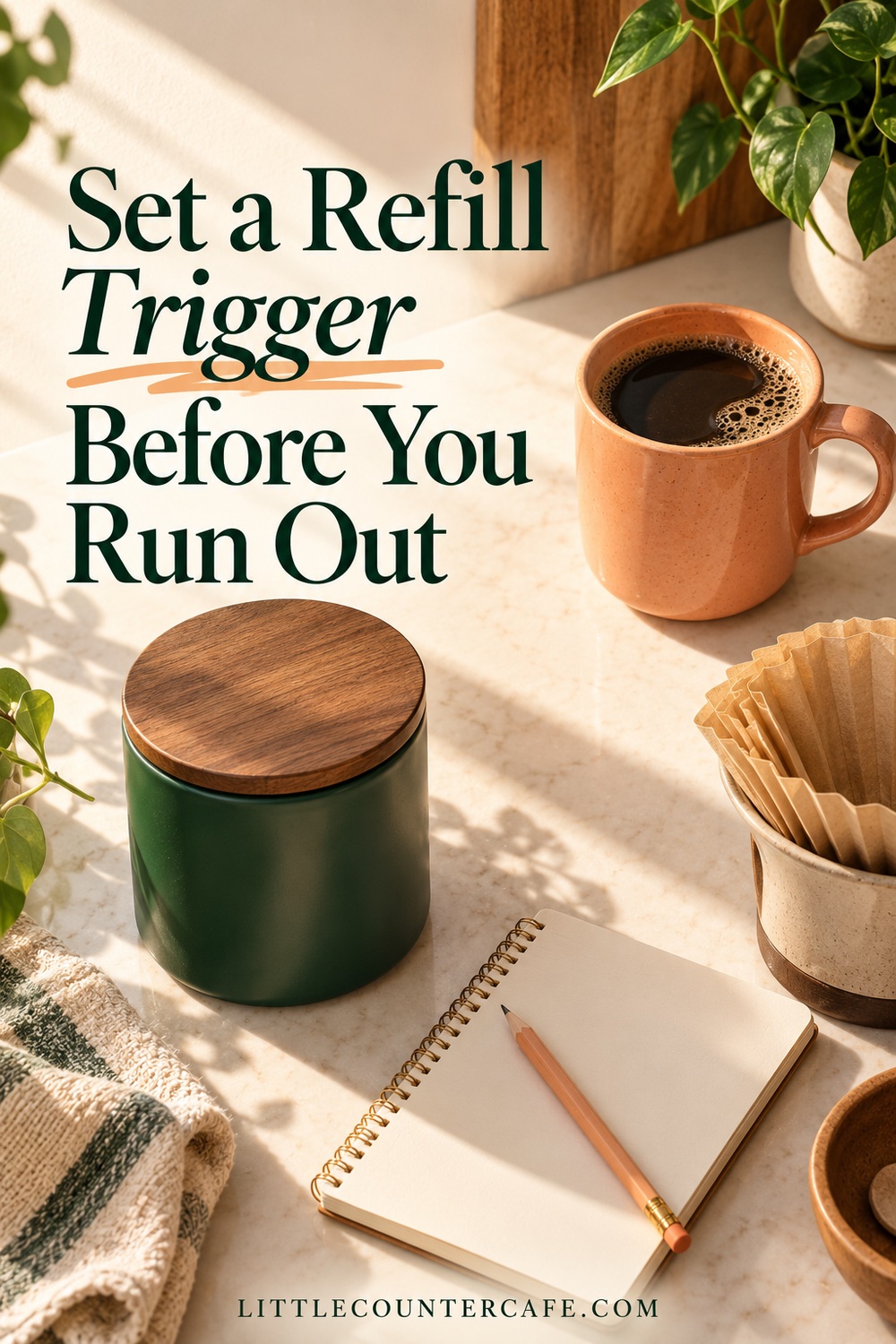
Refilling the working area and buying more are two different jobs. A low filter holder tells you to bring filters forward. An empty reserve box tells you that shopping is needed. If both signals mean “buy more,” duplicates can accumulate while an unopened pack sits out of sight.
Choose a simple trigger for each frequently used item. For filters, that could be the point when only two mornings’ worth remain. For individually wrapped tea bags, it might be a visible divider in the caddy. For coffee, check the remaining amount during the regular restock rather than leaving the lid open or relying on a clear jar for visibility.
Use a trigger that is easy to recognize without measuring everything every day. A removable card inside a filter holder can say “refill from pantry,” while the reserve basket carries the shopping reminder. Keep cards and markers outside direct food contact.
Work out a shopping threshold separately
Consider how long it takes to replace an item. If you use two filters daily and your next normal shopping trip is three days away, six filters would cover that expected use. You might choose a small cushion for an extra brew. This is an illustrative inventory calculation, not a reason to overbuy coffee or override package dates.
Write the shopping signal in plain language: “add filters when the last reserve pack is opened” or “check tea before Saturday shopping.” Pick one shared shopping list rather than relying on several people’s memories. Before ordering, check both the working area and the reserve home.
Make a quick restock sequence
- Check the working supply and remove anything damp, damaged or unsuitable.
- Look in the reserve home before adding to the shopping list.
- Bring forward only the amount that fits the chosen routine.
- Close packages and containers, keeping identifying information with them.
- Note the next item to use and add genuinely needed purchases to the shared list.
Attach the check to something you already do, such as putting groceries away. If the station still runs empty, move the check earlier or shorten the refill interval. A missed restock is information about the system, not a reason to build a more complicated one.
Make the System Easy for Everyone
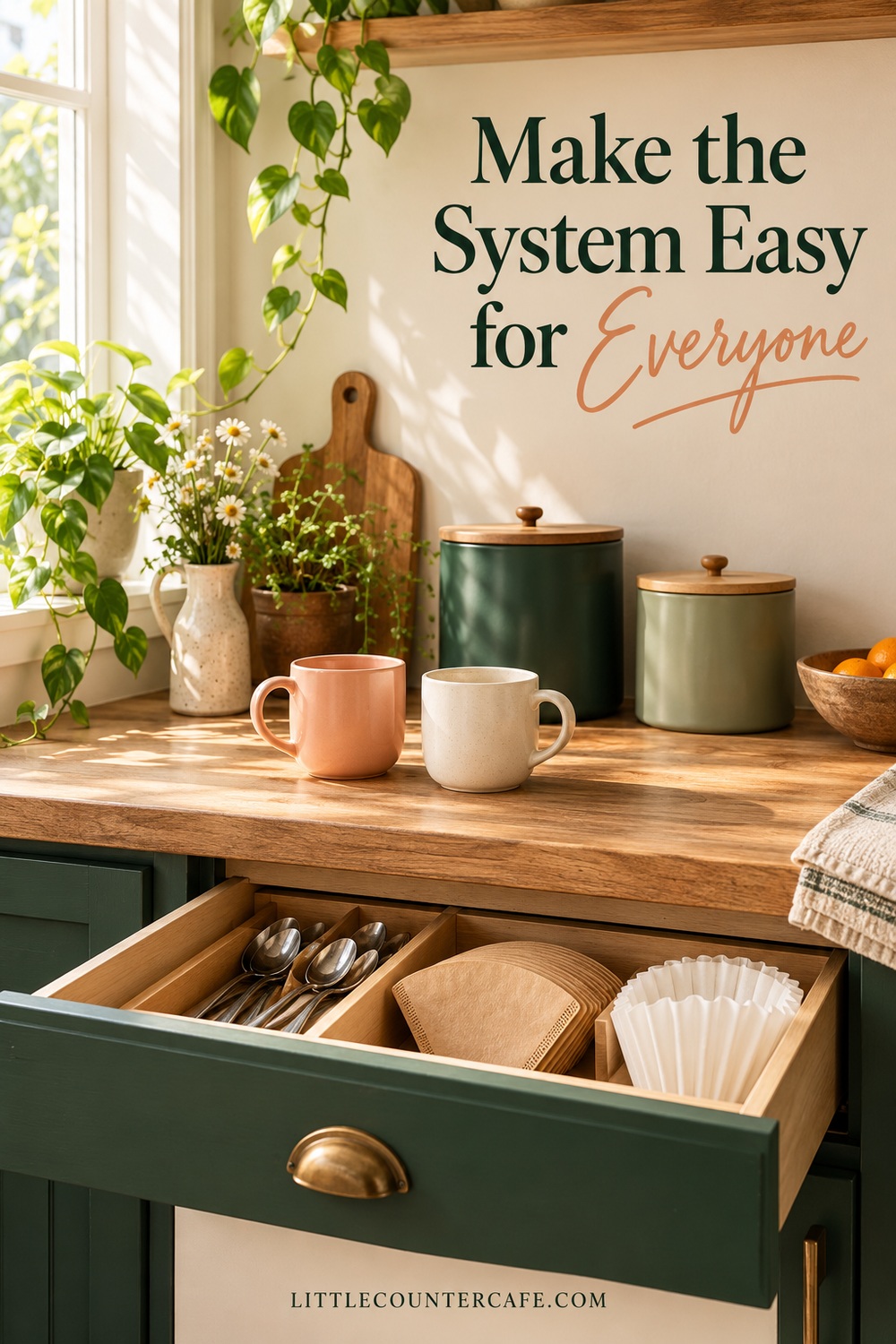
Use labels that describe an action or destination. “Daily filters,” “spare filters” and “open this next” give clearer guidance than decorative words that do not tell someone what belongs where. If two people use different coffees, keep their supplies distinct, with product identities intact. Keep allergy-related ingredient information available and use separate tools where the household’s needs require it.
Make the reserve home easy to return to its original state. A basket that needs to be unpacked to reach one bag will soon become a pile. If you share a kitchen, walk through one refill together: where the spare pack lives, how much moves forward and where a shopping note goes. Choose a reachable shelf rather than a stool-dependent arrangement whenever possible.
Use the printable worksheet
Download the Daily and Backup Coffee Supplies Planner. It includes a working-supply table, reserve-location notes, refill and shopping triggers, and a short reset checklist. Fill in the items you actually use; leave the rest blank. The worksheet is a planning aid, not a record of tested storage times or a replacement for package directions.
Begin with three high-use items, such as coffee, filters and tea. After a week of ordinary use, note what ran low, what never moved and which step someone found confusing. Adjust one amount or location at a time. You do not need to buy a complete organizer set to make the next morning easier.
For a broader tidy-up, use how to organize a small coffee station alongside this refill plan. Keep the daily area convenient, the reserves visible and the shopping signal clear. That is enough structure to make a small coffee corner feel calmer while still serving the people who use it.
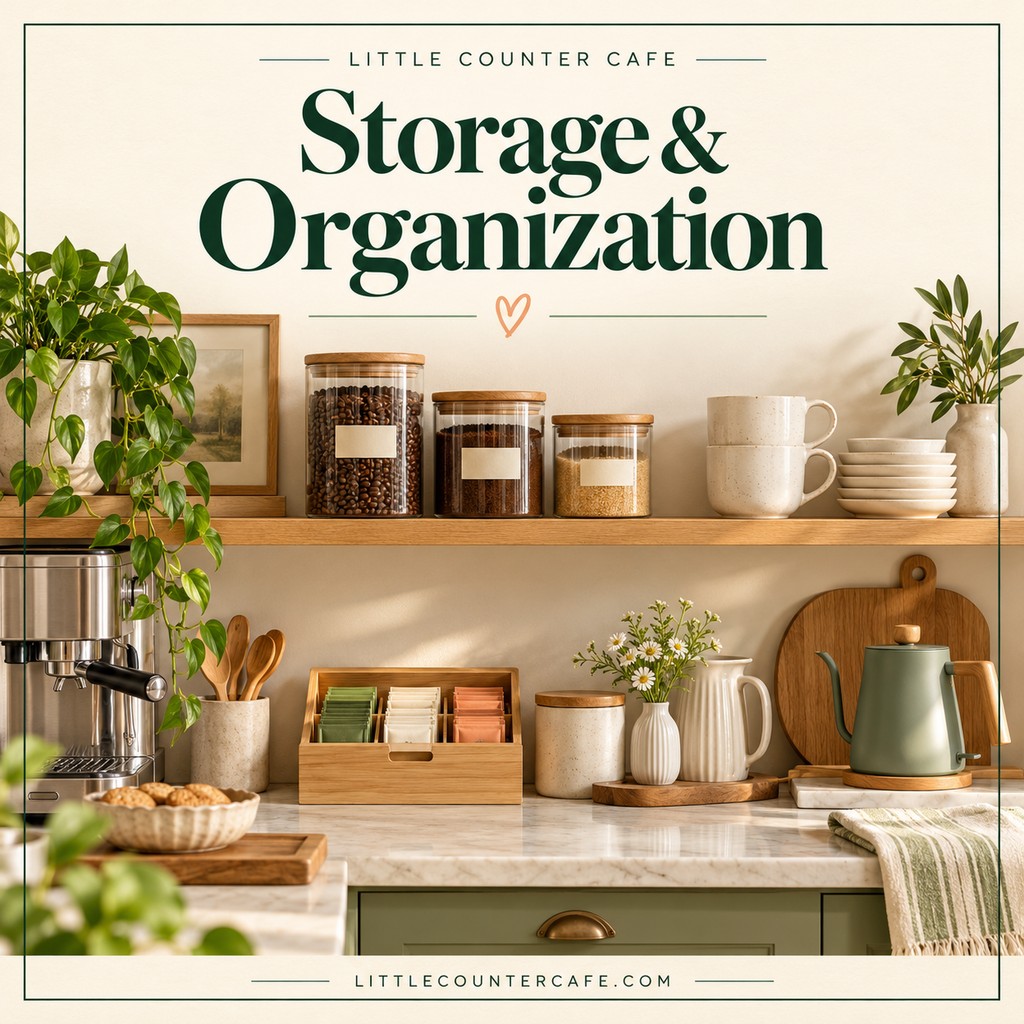
If you need a suitable canister, covered holder or small basket, the Storage & Organization collection below offers ideas. Measure your space and check capacity and care instructions before choosing anything. Existing containers that safely meet the need are a perfectly useful starting point.
As an Amazon Associate I earn from qualifying purchases.
LITTLE COUNTER CAFE · Coffee & Tea Storage Favorites
A calmer counter starts with a place for everything.
Canisters, tea storage, shelf organizers, and small accessories to keep everyday café supplies easy to reach.
As an Amazon Associate I earn from qualifying purchases. This is a paid link.