

A coffee counter can hold everything you need for a good morning without holding everything you own. The useful starting point is your next drink: keep the equipment and small supplies you actually reach for, then give the rest an easy home nearby.
That does not mean you need a bare counter. A favorite peach mug, a handsome canister, or a little wooden tray can make the corner feel welcoming. The aim is to leave enough room to prepare a drink comfortably and return things without a daily shuffle.
Quick answer: keep your regular brewer, the tools you use with it, a small amount of frequently used shelf-stable supplies, and enough mugs for your normal routine. Put spare mugs, unopened refills, occasional appliances, and extra decor away. Milk and anything labeled for refrigeration belong in the refrigerator between uses. A clear working spot counts as part of the station, too.
The room arrangements pictured in this guide are concept illustrations for inspiration, rather than measured or tested installations. Use the checklist below to make decisions for your own kitchen before buying storage.
Choose What Earns a Place on the Counter
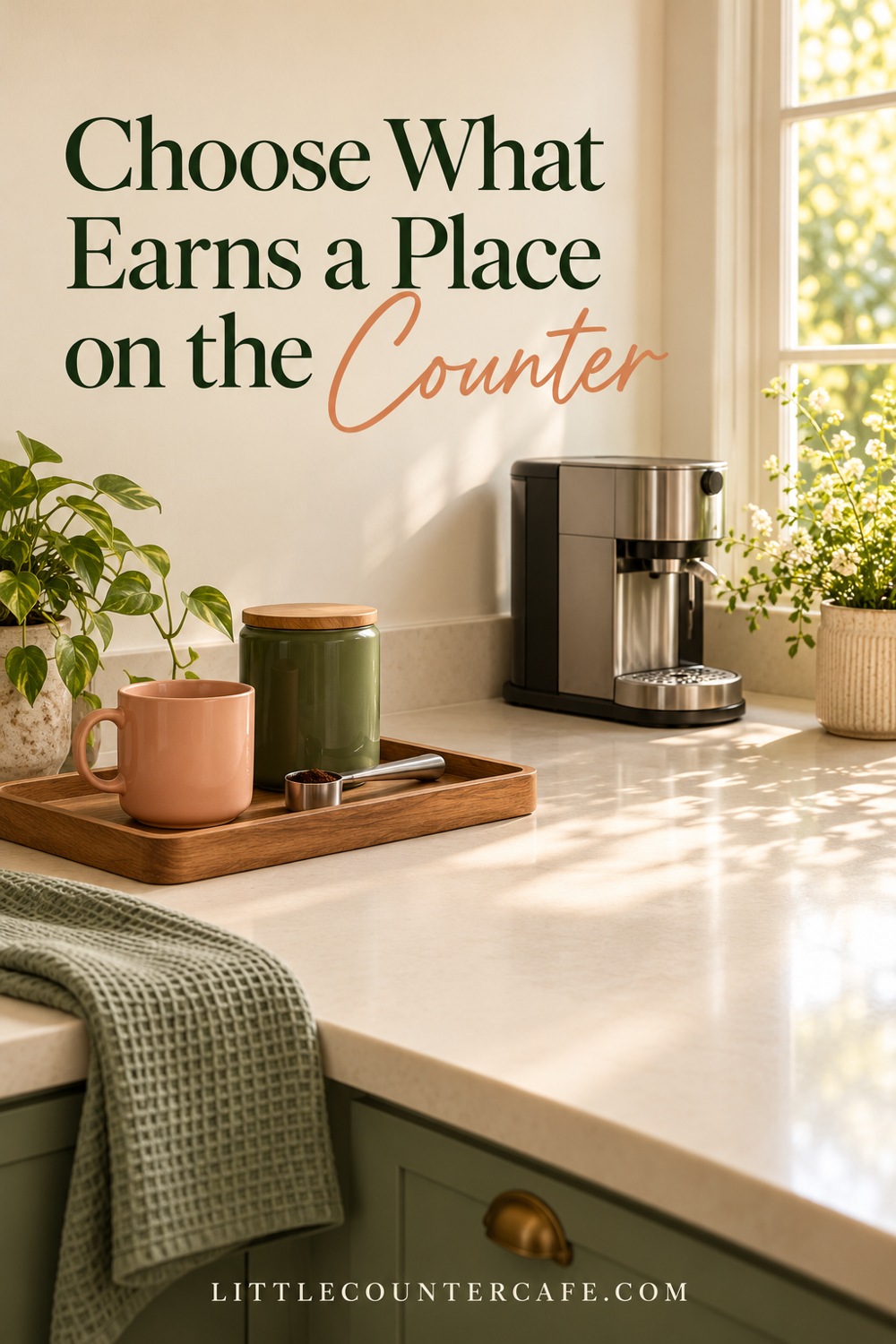
Start by looking at what you use on an ordinary day, rather than what you might serve at a holiday gathering. If you drink one coffee before work and tea later, both routines deserve consideration. You do not need to create a display for every drink you could possibly make.
Take the loose accessories off the counter and sort them on a table. Leave heavy equipment alone until it is switched off, cool, and safe to move according to its instructions. For each item, ask three questions: Do I use this regularly? Does keeping it here make the routine easier? Can it live here without crowding preparation or compromising storage conditions? An item needs a useful answer to all three, not just the first.
Keep the equipment you regularly use
A daily brewer is usually a sensible counter resident. So is a grinder if you grind for each brew, or a kettle if coffee and tea both depend on it. A milk frother used once a month is a different decision. Store occasional equipment in an accessible, suitable place and bring it out when needed.
Check the actual appliance manual before assigning its final position. The closed footprint does not show the space needed to open a lid, remove a tank, empty a tray, or handle hot parts. Do not use storage, decor, or an overhead shelf to fill a manufacturer’s required clearance. The manufacturer’s manual library is a useful starting point for Cuisinart owners; use your own brand and exact model for instructions.
Keep the small tools that complete the drink
A scoop, scale, tamper, or tea infuser earns space when it forms part of your real routine. Group the tools for the method you use rather than leaving every accessory beside the machine. One small washable dish may be enough for a spoon; a drawer divider may be more useful for tools that do not need to stay out.
Make room for the mug while you work. If a tray fills the entire remaining surface, you have organized the display but lost the preparation space. Try setting down your usual cup and reaching for the supplies with appliances off and cool. You should not have to balance a hot drink or shift a full container to reach the controls.
Keep a modest selection of mugs and supplies
Choose mugs around the people who normally use the station and the way you wash up. For one coffee drinker, one favorite cup may be enough on display. A shared station might need two different everyday mugs. These are examples, not a rule that every household needs the same number.
A coffee canister can stay out if its location suits the contents. The National Coffee Association’s storage guidance favors airtight, opaque containers in a cool, dark place. That makes a sunny jar beside a warm appliance a poor storage choice, however pretty it looks. A cool cabinet may be a better home, with the scoop kept nearby. Keep the original product information when you decant supplies.
Give Stored Supplies a Useful Home
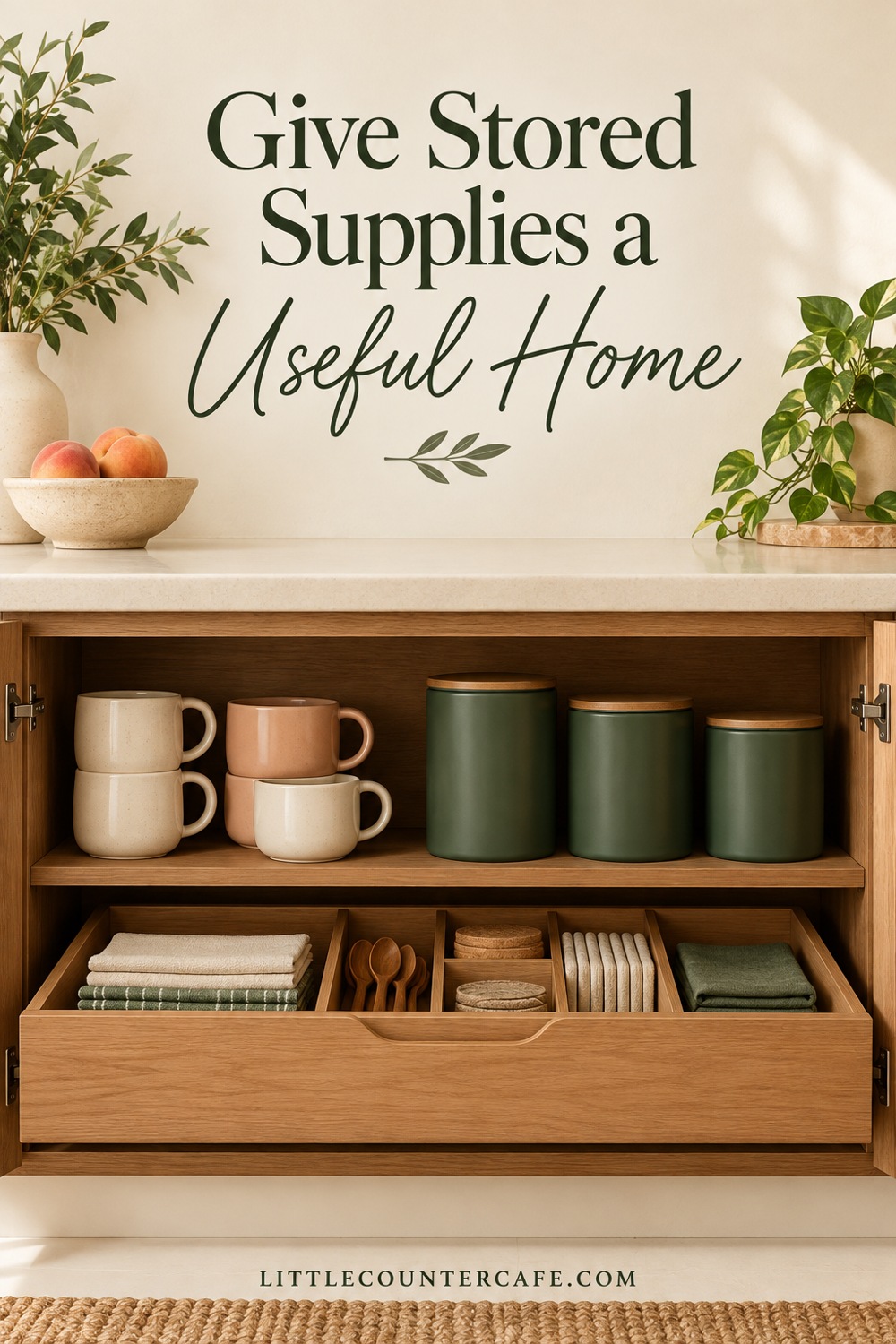
Putting something away should remove clutter without creating a new obstacle. Before buying baskets, decide where each group will live and measure the usable cabinet or drawer space. Check the opening as well as the shelf: a bin that fits inside but will not pass through the door is not helpful.
Store extras where you will look for them
Spare mugs can sit with the rest of the drinkware. Backup filters, unopened coffee, and extra tea can live together in a dry pantry or cabinet. Keep current supplies accessible and follow each product’s storage instructions. Preserve labels, allergen information, and dates rather than creating a row of anonymous matching jars.
Occasional serving pieces belong with hosting supplies. Travel-cup lids can have a divided drawer section instead of a permanent countertop basket. A seasonal mug can be enjoyed when it is in use, then returned to storage without earning a year-round place beside the brewer.
Here is a practical starting point; adjust it to your household rather than treating it as a shopping list.
| Item | Usually keep out when… | Usually put away when… |
|---|---|---|
| Brewer or kettle | It serves the regular routine and fits safely | It is an occasional second appliance |
| Grinder or scale | You use it for your normal brewing method | It belongs to a rarely used method |
| Mugs | They are the everyday cups you reach for | They are guest, spare, or seasonal cups |
| Coffee or tea | Its container and location suit storage instructions | Heat, light, moisture, or clutter make the counter unsuitable |
| Filters and pods | A small working supply improves access | You are displaying the entire bulk purchase |
| Syrups and toppings | They are used often and their labels allow that storage | They need refrigeration or are only occasional treats |
| Decor | It adds enjoyment without blocking work or access | You move it every time you make a drink |
Keep refrigerated ingredients in the refrigerator
Milk is a temporary visitor to the coffee counter. Return refrigerated ingredients promptly after pouring, including plant-based products when their labels require chilling. An unopened shelf-stable carton and the same carton after opening can have different instructions. Follow the label rather than deciding by appearance.
The FDA’s safe food handling guidance recommends a refrigerator temperature of 40°F (about 4°C) or below and prompt refrigeration of perishables. Its general limit is two hours outside refrigeration, reduced to one hour when the temperature is above 90°F (about 32°C). Those limits are not a target for leaving milk out all morning. Pour what you need and return it; do not turn a jug of milk into permanent styling.
Choose storage after the decisions
Try existing containers first. A shallow drawer section might solve the spoon problem without adding anything to the counter. A modest tray can define a group of small items, provided it is stable, suitable for the surface, and easy to clean. Keep an appliance on the surface its manufacturer permits; do not assume a decorative tray is an approved operating base.
If a specific gap remains, choose for that gap: a closed container for supplies, a divider for lids, or a tray that actually fits the available area. Matching sets are optional. Paying for three extra containers will not make unused accessories more useful.
This article includes paid links. As an Amazon Associate I earn from qualifying purchases. The Storage & Organization collection below is an optional place to look once you know what you need.
LITTLE COUNTER CAFE · Coffee & Tea Storage Favorites
A calmer counter starts with a place for everything.
Canisters, tea storage, shelf organizers, and small accessories to keep everyday café supplies easy to reach.
As an Amazon Associate I earn from qualifying purchases. This is a paid link.
Make a Small Counter Work for Everyone
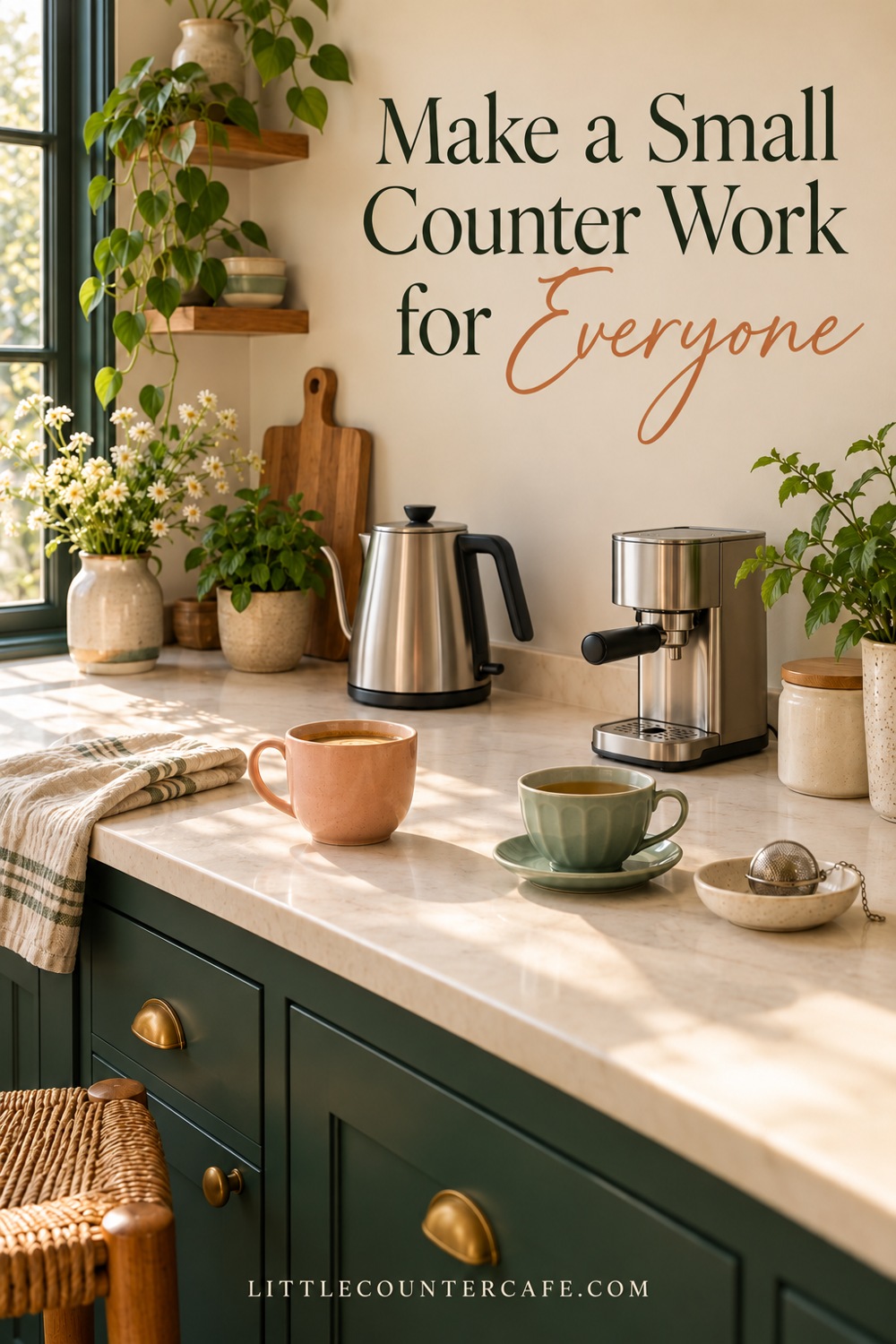
Shared stations often get crowded because each person adds a complete personal set. Start with what can be shared safely and conveniently, then give genuinely different supplies separate homes. One person may need decaf while another prefers regular coffee; those containers should remain unmistakable. Keep original labels where useful and do not rely on container color alone.
Plan for coffee and tea together
If the kettle serves both drinks, let it work for both. A nearby drawer can hold tea bags and an infuser, while a small closed coffee container lives in the cool cabinet. The counter does not need two decorative towers to show that everyone is included.
Keep enough working space for the busiest usual moment. If two people prepare drinks together, do a cold rehearsal with empty cups and switched-off equipment. Can each person reach their mug without crossing the other person’s pouring space? If not, move supplies rather than trying to fit another tier onto the same patch of counter.
For the wider layout decision, see Coffee Station Layouts for a Single-Wall Kitchen. This guide focuses on what stays out; that article helps with the position of the station itself.
Give the corner one small personal detail
Choose a detail you enjoy seeing: a favorite mug, a small print positioned away from the working area, or an attractive container already doing a job. Forest green, cream, and a little peach can feel coordinated without covering every surface.
Keep loose decor away from appliance openings, controls, heat, and required clearances. Skip anything that makes refilling or wiping the surface awkward. If you prefer more color, use the mug or tray you already need. Our home cafe color palette guide can help you choose accents that fit the rest of the kitchen.
Solve the habit before adding another organizer
When items keep gathering beside the brewer, notice which ones they are. A pile of lids suggests the lid storage is inconvenient. Spare coffee bags may need one clear pantry spot. A rotating collection of used cups may need a reliable route to the dishwasher, rather than a bigger mug rack.
Try the arrangement through your usual routines, then adjust one thing at a time. This is a practical trial for your home, not a promise that a particular number of items will suit everyone. If the counter feels too empty, return one useful favorite. If it feels crowded, remove the least-used resident before buying a larger tray.
Use the Keep-or-Store Checklist

Use this list while the station is cool and not in use. You can print this section or download the one-page keep-or-store worksheet.
- Identify the drink or drinks made here on a normal day.
- Keep only the appliances used regularly, with model-specific operating space preserved.
- Choose the everyday mugs that genuinely need to be within reach.
- Keep frequently used tools together and store occasional accessories nearby.
- Check coffee, tea, syrup, and topping labels before choosing their storage location.
- Return refrigerated ingredients promptly after use.
- Move spare mugs, bulk refills, and seasonal pieces to a named cabinet, drawer, or pantry spot.
- Leave a comfortable place to set down and prepare the drink.
- Add a personal detail only if it does not obstruct use.
- Recheck the arrangement during the next few normal routines and adjust it to what happens.
On your worksheet, list each item, how often you use it, its keep-or-store decision, and its exact new home. Add the appliance’s required working space from the manual and note any storage label you need to check. That turns “put it away” into an arrangement you can actually maintain.
If you need the next step after choosing your counter residents, How to Organize a Small Coffee Station covers grouping and everyday access. Start with what you already own, leave room for the drink itself, and let the pretty details fit around a corner that works.