
Six people are coming over, and the coffee machine that feels perfectly adequate on a quiet morning suddenly looks very small. You can still make this work. The useful question is whether everyone needs the same drink at the same moment—or whether a relaxed first round would suit the gathering better.
For six people, use a full batch if your drip machine can make the actual volume you need. With an espresso or single-serve machine, take orders first and serve in a clear sequence, usually in pairs. Keep the menu short, put finished drinks somewhere separate from the machine, and let guests know that milk drinks will arrive as they are made.
I love a home coffee corner that feels welcoming without taking over the kitchen. A little preparation gives you more time with your guests and less time searching for teaspoons. The ideas below are planning examples, not timed tests of a particular machine; your manual and your own practice run determine what your equipment can do.
Choose a Service Plan for Your Machine
Start with the machine you already have, rather than shopping for a second one. Write down its usable batch volume, whether it makes one or two drinks at a time, and any instructions about consecutive drinks, cooling, refilling, and milk-system cleaning. A tank that contains enough water for six drinks does not necessarily mean the machine is designed to produce six milk drinks continuously.
For a drip machine, the easiest plan is usually one batch of black coffee, with milk and sweeteners offered separately. Check the carafe volume against your intended pours. A manufacturer’s “cup” is not necessarily your mug: the Moccamaster KB quick guide describes a 1.25-liter machine as a 10-cup model. That does not make it ten large mugs. Its stated brewing time belongs to that model; it is not a promise for every brewer.
For a single-serve or capsule machine, prepare one drink at a time unless your model specifically supports something else. Check water and the used-capsule container before guests arrive. Keep a simple order list beside the machine so you do not have to remember who wanted decaf while it is brewing.
For an espresso machine, plan the coffee and milk stages together. A machine that switches between brewing and steaming may need recovery time. Use your manual’s sequence and limits. For example, the Nespresso Lattissima One manual limits consecutive milk beverages to five; it would be wrong to assume six back-to-back milk drinks are suitable for every machine. Follow the instructions for your exact model rather than treating a pause of an arbitrary length as a universal fix.
Offer two straightforward choices that your equipment already supports, such as black coffee and coffee with cold milk. If you are comfortable making lattes, offer them with the understanding that they will be served individually. Include a decaf option if you have the right coffee or capsules, and ask whether anyone would prefer tea. Tea needs its own appropriate hot-water method; do not put tea or milk into a coffee machine’s water reservoir.
A practical decision rule: if sitting down together matters most, favor a batch drink. If individual espresso drinks matter most, make the preparation part of a relaxed catch-up and serve each drink promptly. You do not need a café-sized menu to be a thoughtful host.
Calculate Six Servings Before You Brew

Count the people who actually want coffee, including yourself. Six people at the table might mean four coffees, one tea, and one decaf rather than six identical drinks. Ask about milk preferences and allergies before you choose the order. Decaf still contains some caffeine; do not describe it as caffeine-free.
For batch coffee, calculate volume from the serving size you intend to pour. These are arithmetic examples, not a tested brewing recipe or a recommendation to change your machine’s dose:
| First-round pour | Six servings need | What to check |
|---|---|---|
| 5 US fluid ounces (about 148 mL) | 30 fl oz (about 887 mL) | Leave headroom in the mug for additions. |
| 6 US fluid ounces (about 177 mL) | 36 fl oz (about 1.06 L) | Compare with the usable carafe volume. |
| 8 US fluid ounces (about 237 mL) | 48 fl oz (about 1.42 L) | A 1.25 L machine cannot provide six pours this large in one batch. |
Allow for practical yield differences: water used for brewing is not always the exact amount collected as drinkable coffee. Follow the brewer’s marked limits and dosing instructions. If one batch is short, offer smaller first pours or plan a second permitted batch. Do not overfill the reservoir or dilute coffee arbitrarily to make the numbers work.
For espresso drinks, count the shots or capsules required by your chosen recipe rather than multiplying a drip-coffee mug volume. Six double-shot drinks would require twelve shots; that is an order calculation, not a suggested dose. Use the recipe and basket size your machine supports. Count decaf separately and keep the beans, capsules, or prepared doses clearly separated.
Milk quantities depend on the drinks and the usable capacity of your pitcher or milk system. Plan the amount for each permitted batch, following its minimum and maximum marks. Do not multiply one drink’s milk amount by six and assume it will fit or steam well. Keep a small spare supply refrigerated and only take out what you need for the next stage.
Refills are a separate decision. Start by making sure the first round works, then ask whether anyone wants more. That avoids using all your counter space for backup mugs, oversized milk jugs, and supplies that nobody needs. Our four-guest coffee menu guide can help narrow drink choices; this guide focuses on getting the drinks through one machine.
Set Up a Clear Path From Brewing To Serving
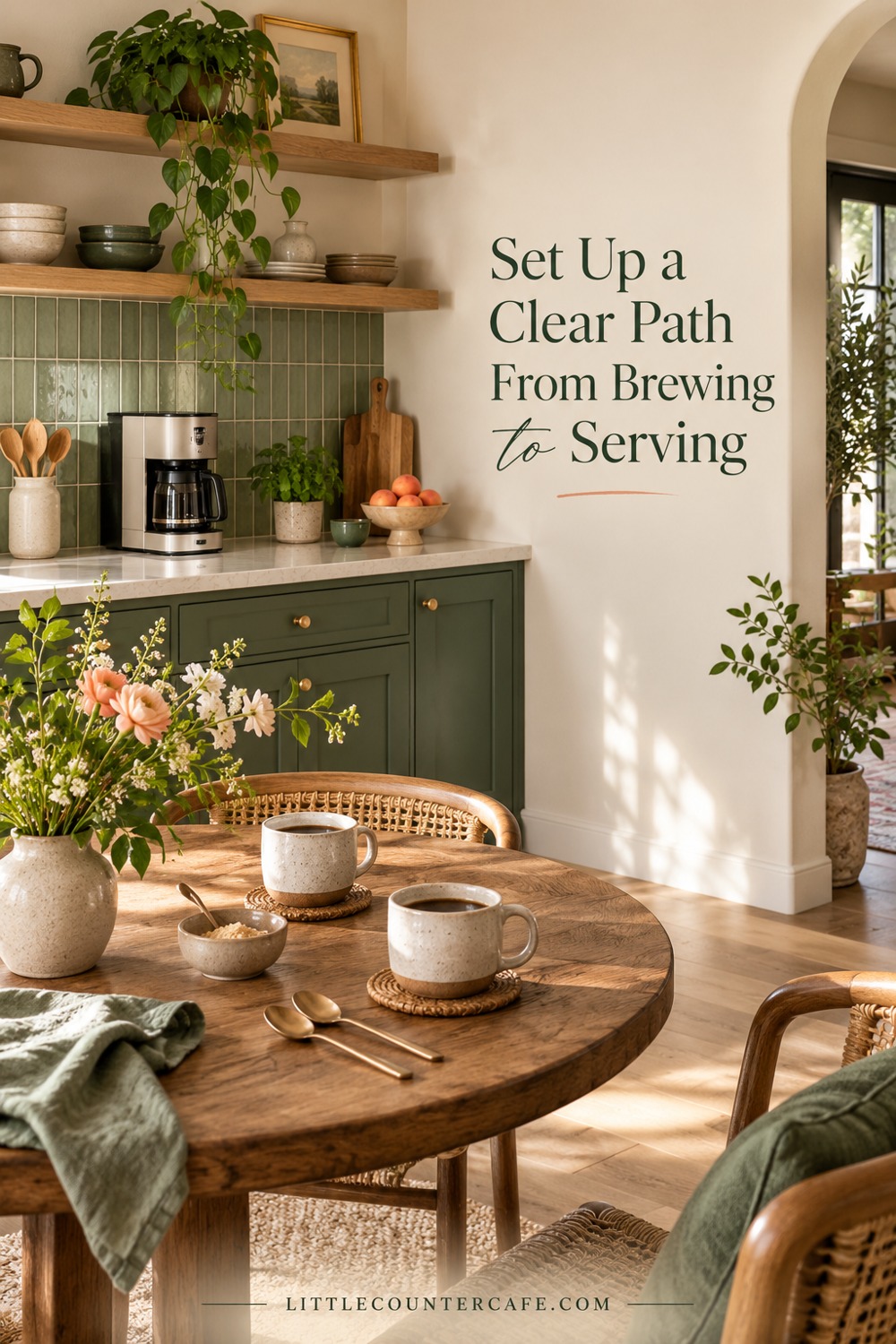
Divide the work into three small zones: preparation, brewing, and collection. They do not all need to occupy your coffee counter. Keep the machine on the level, stable surface and in the position required by its manual, with ventilation and refill access clear. A decorative tray should not compromise stability, drainage, or required clearance.
Put the next dose or capsule, your order list, and the tool you need within easy reach. Place six cups on a separate table or sideboard, bringing only the next cups to the machine. Set finished drinks on a clear, stable collection area away from the hot appliance. Keep that area away from edges and children’s reach, and avoid trailing cords or a path where someone could bump into you with a hot cup.
A useful arrangement for a narrow counter is the machine at its safe permanent position, preparation space beside it, and a dining-table tray holding spoons, napkins, and sweeteners. Guests can add their own extras there while you continue brewing. Do not encourage people to reach around the steam wand or open reservoir to collect a drink.
Set out one clean spoon per guest if people will stir their drinks, plus separate serving utensils where needed. Keep plant-based and dairy milk clearly identified. Shared pitchers, steam wands, and tools can create allergen cross-contact; a quick rinse is not proof of allergen removal. Ask guests what they need, check ingredient labels, and use an alternative sealed drink when you cannot provide the separation they require.
Bring milk out in small amounts and return it to refrigeration promptly. The FDA’s buffet guidance recommends keeping cold perishable food at 40°F (about 4°C) or below. Discard perishables left without temperature control for more than two hours, or one hour when the air is above 90°F (about 32°C). Keep track of total time out; topping up a warm jug with fresh cold milk does not restart the clock. Follow the product’s storage instructions for opened plant-based drinks too.
Use the fridge as your backup storage rather than leaving all the milk beside the machine. You can have a welcoming table without turning the coffee counter into a buffet. For more placement ideas, see how to plan a coffee station in a small kitchen.
Use a Simple Serving Order and Reset
Before anyone arrives, fill and prepare the machine as the manual directs, check the drip tray or waste container, gather the correct coffee, and run through your plan. If you want a time estimate, measure your own normal service sequence beforehand, including cleanup, refilling, and recovery. Do not use an advertised heat-up time as the time required to serve six complete drinks.
With batch coffee, start at the point that lets you serve it freshly brewed. Pour a consistent first round, leaving room for each person’s additions, then move the carafe only as its instructions allow. Use an appropriate insulated serving vessel if you already have one and its maker permits hot coffee. Keep a hot glass carafe off surfaces that could be damaged, and never put an unsuitable vessel on a warming plate.
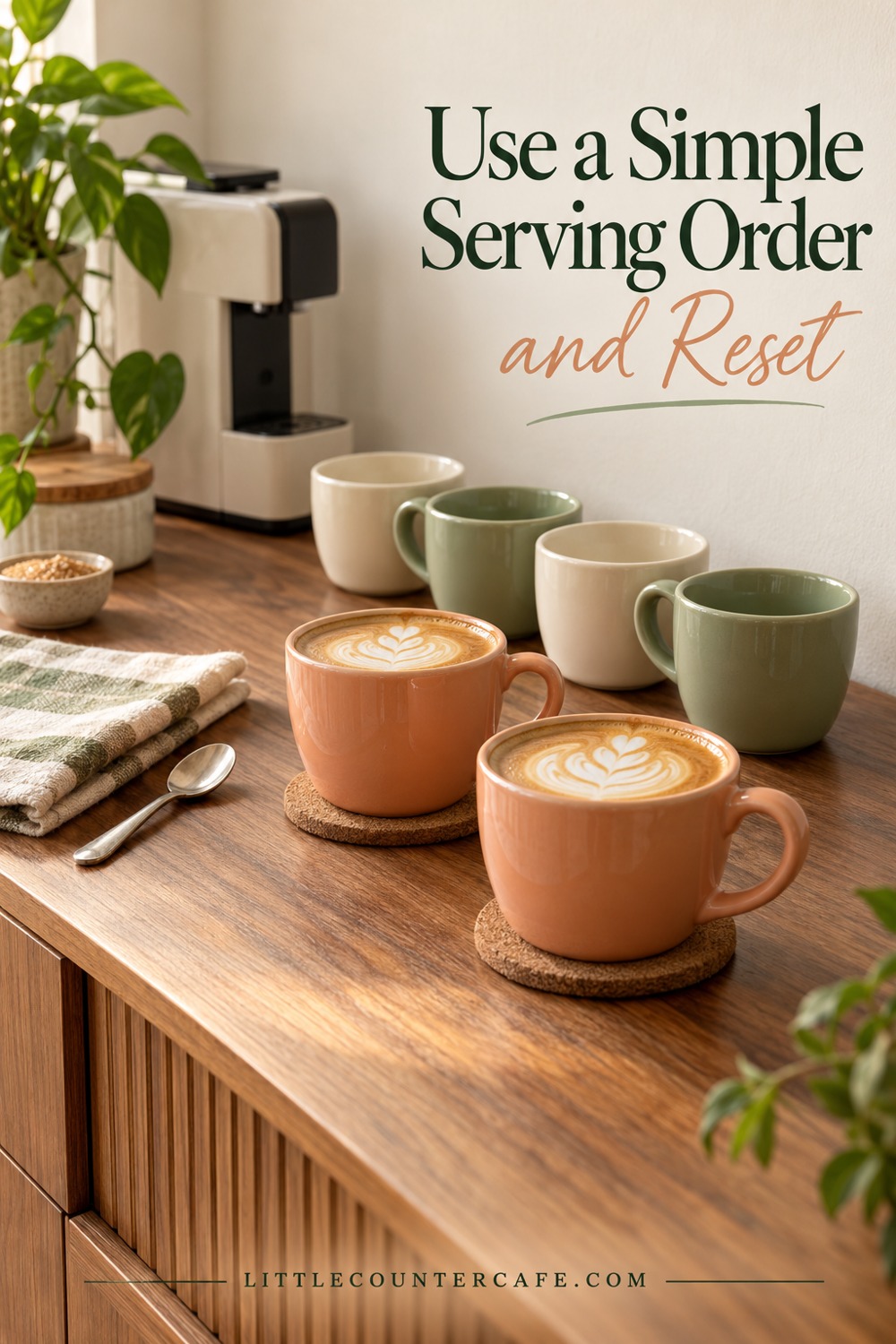
With single-serve or espresso drinks, agree on a simple order. One option is to serve the first two people, then the next two, then the last pair. Pairing is a way to organize orders, not permission to brew two drinks at once on a one-cup machine. Make each drink and hand it over promptly rather than leaving the first drinks cooling while you finish all six.
Prepare decaf and any specially accommodated drink with the correct separated supplies and clean equipment. Decide the practical order around your guests’ needs and your machine’s instructions. If the milk system needs cleaning between drinks or ingredients, include that time. Do not skip a required clean to make the queue look faster.
If service starts to feel slow, narrow the next round. Offer black coffee, a supported simple drink, tea prepared appropriately, or water while people wait. If the reservoir runs low, stop and refill in the permitted way. If the machine shows an alert, overheats, leaks, or behaves unexpectedly, stop and follow its troubleshooting instructions. A guest can wait longer for coffee; the appliance does not need to be pushed past its limits.
After the first round, put milk away, clear used tools, and wipe spills using the appliance and surface care instructions. Clean milk-contact parts as directed for your exact model. Keep hot components out of reach while they cool. Ask about refills once the space is ready again instead of starting another full round automatically.
Your quick service checklist: confirm six preferences; check actual batch capacity and consecutive-drink limits; choose a short menu; place clean cups at the serving area; keep milk chilled; make and serve each drink in the planned order; reset before refills.
Use the printable six-person service planner below to record orders, amounts, machine limits, and your serving sequence. The goal is a comfortable first round with the equipment you already own—not six identical café drinks delivered at the same second.
Download the six-person coffee service planner (PDF)

LITTLE COUNTER CAFE · Coffee Hosting & Gift Ideas
Make a small coffee moment feel special.
Thoughtful brewing gifts, serving pieces, and drink supplies for relaxed coffee catch-ups at home.
As an Amazon Associate I earn from qualifying purchases. This is a paid link.