
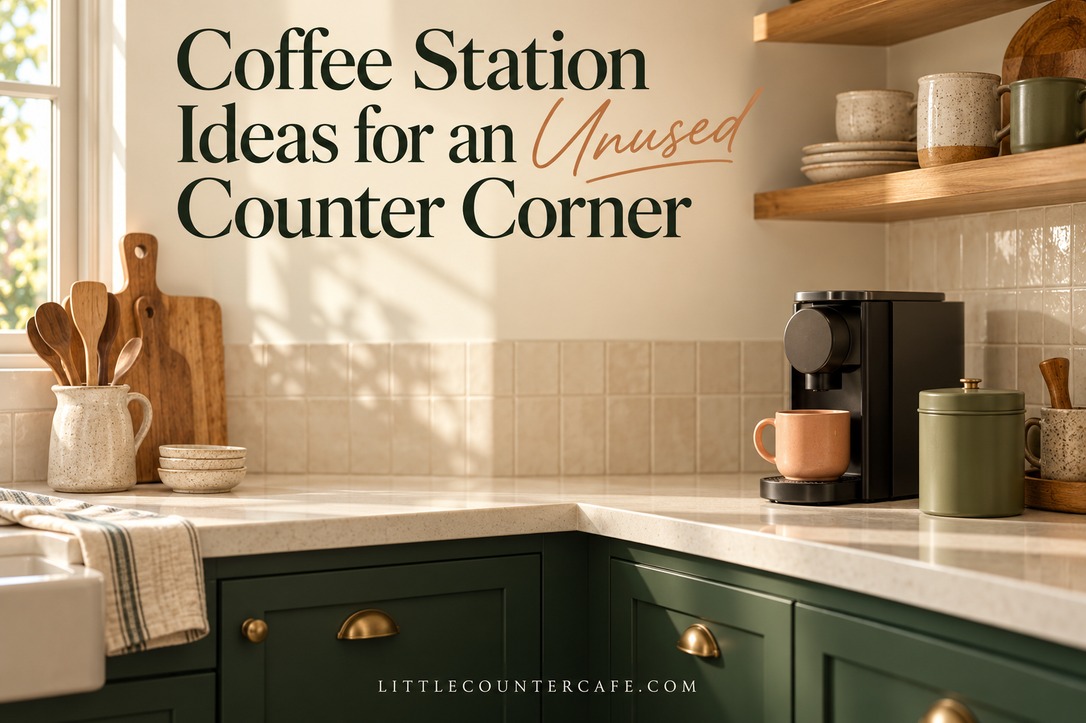
An empty kitchen corner can look like the perfect place for a coffee station. Then you put the machine there and discover that the water tank is hard to reach, the cabinet stops the lid opening, or every cup means leaning across the counter.
The useful space is the part you can comfortably work in. A corner coffee station usually works best when the brewer sits forward on one straight section of counter, with a small preparation area beside it. The deepest point can stay empty. You do not have to fill the whole corner to make it feel finished.
Here are three arrangements to consider, the checks that matter before shopping, and a printable corner-fit worksheet to help you plan with your own equipment. The pictured setups are concept illustrations for inspiration, not measured installations or product tests.
This article contains affiliate links. As an Amazon Associate I earn from qualifying purchases.
Check Whether the Corner Can Work
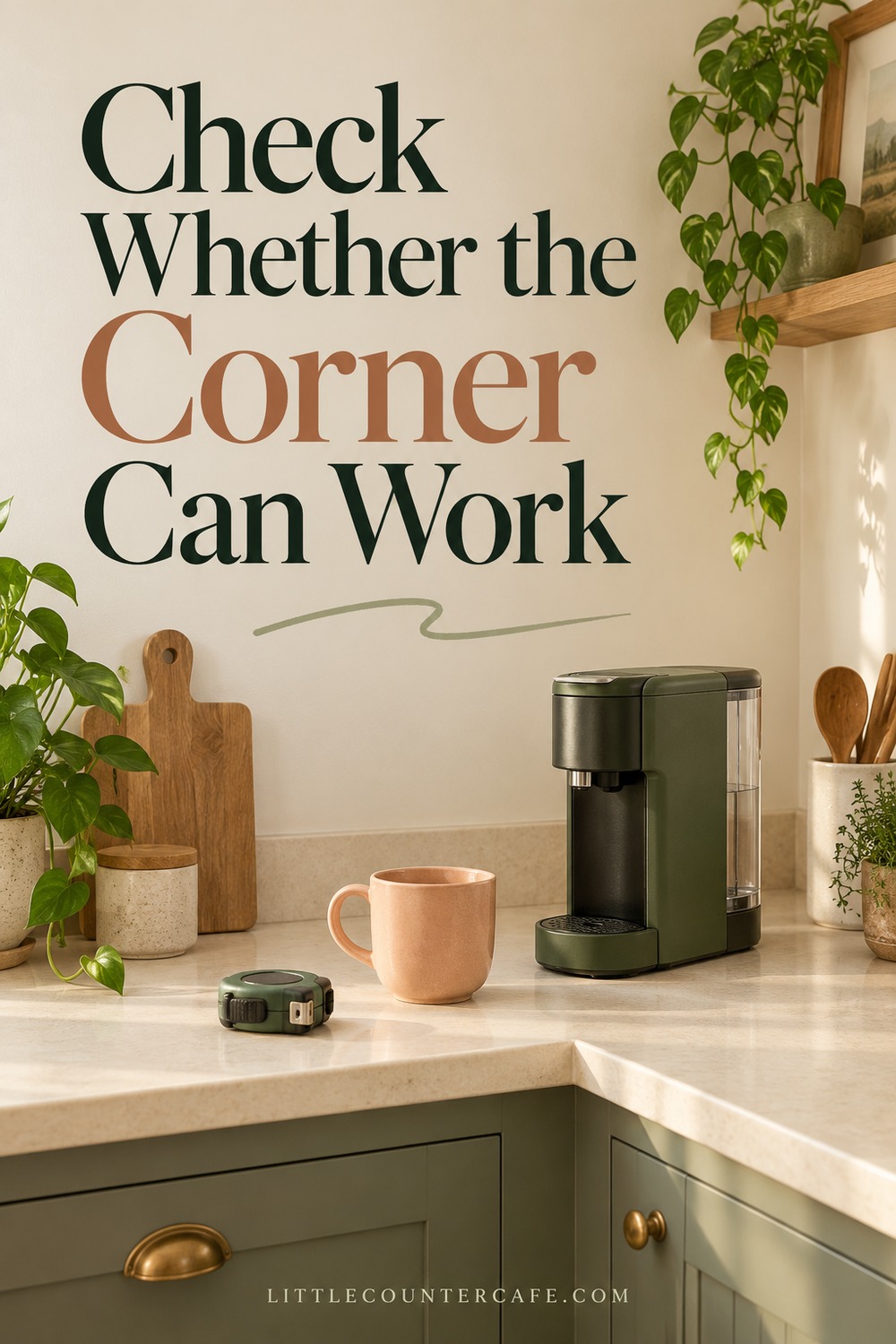
Before choosing a tray or a new coffee maker, clear the corner completely. Stand where you would actually make your drink, rather than judging it from across the room. Notice the counter edge, the upper cabinet, the nearest sink and the path other people take through the kitchen.
Check the front working area first
Place your usual mug on the counter where you would fill it. Can you put it down, add your ingredients and pick it up without stretching over another appliance? Could someone open the dishwasher or use the adjacent drawer while you stand there?
The usable section might be one side of the corner rather than its deepest point. That is still a successful coffee spot. Keep the brewer and the mug within comfortable reach and let the back area provide breathing room.
If you are planning the whole station from scratch, our guide to how much counter space a coffee station needs covers the wider equipment-and-preparation footprint. This guide focuses on the awkward corner itself.
Measure moving parts, not just the closed appliance
Record the available width along both counter legs, the depth from the front edge, and the height below any cabinet. Then check the machine with its lid, lever or tank in the position needed for everyday use. Include space to remove the drip tray and empty used capsules or grounds.
For example, the Nespresso Essenza Mini manual shows a top lever, water tank and removable waste components. Those access points are the reason a narrow-looking machine can still be inconvenient when pushed into a corner. Check the manual for your exact model and market; this is an access example, not a promise that one machine will fit your kitchen.
Use our coffee maker footprint guide if you need a separate checklist for the appliance itself. Do not substitute an arbitrary clearance number for the manufacturer’s instructions.
Make power, heat and surface suitability a go/no-go check
A nearby outlet does not automatically make a corner suitable. Check the appliance manual, the cord route and the counter finish before settling on the location. The cord should not trail across the mug-making area, be trapped under the machine, hang over the edge or touch a hot surface.
The Breville Bambino BES450 instruction book specifies a level, clean, dry counter away from its edge and says not to operate that model inside a cabinet. These are model-specific instructions, so read the version supplied with your own machine. An enclosed appliance garage and an open counter below a wall cabinet are different arrangements; neither should be assumed suitable without checking the equipment instructions.
Do not make a permanent coffee corner depend on an extension cord crossing the kitchen. The U.S. Consumer Product Safety Commission says extension cords are for temporary use and warns about overloading. If the location needs electrical changes, get appropriate professional advice or choose another spot.
Choose a different location if: you cannot reach the controls comfortably, a hot appliance must be moved to make a drink, a required opening is blocked, or the setup crowds the sink or cooking area. A corner can hold dry supplies without being the brewing location.
Try Three Corner Layouts
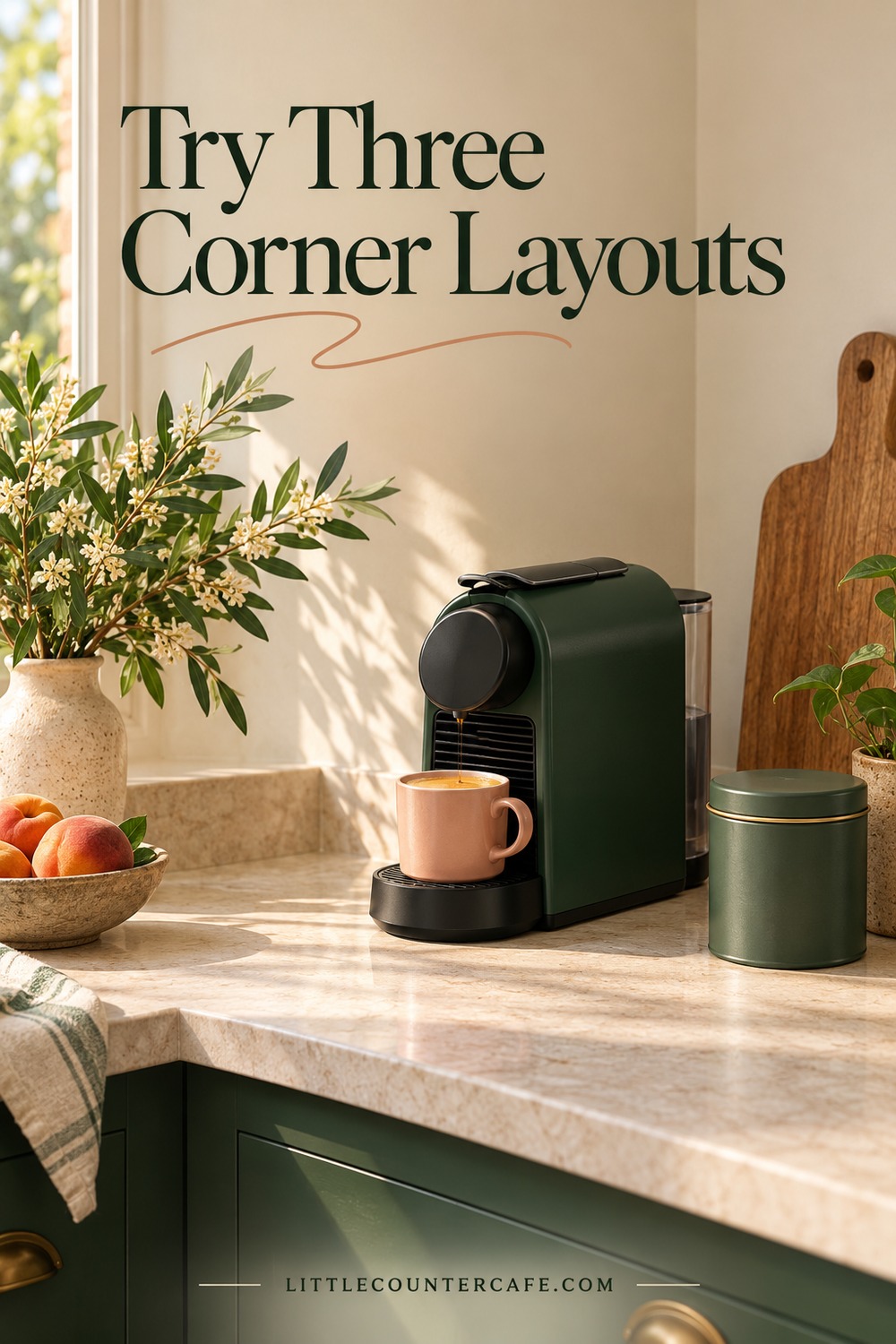
Start with the equipment you already use. Each option below is a planning concept to mock up at home, not a measured layout. Choose the one that leaves the clearest working area for your drink.
1. Put the machine on one straight leg
This is the most straightforward starting point. Position the machine on the left or right straight counter section, facing the front edge. Keep its feet fully supported and follow the required clearances. Leave the other leg available for setting down your mug or preparing tea.
Put a small closed coffee container or a few dry supplies beside the brewer, rather than wedging them behind it. A shallow tray can hold a spoon and your daily mug if the tray stays outside the machine’s operating area. Keep any decorative piece small enough to lift when wiping.
This arrangement is worth trying when the corner has a low cabinet overhead or a tank that must lift out. Move the unpowered, cool machine only as its instructions permit, and check the opening before you commit. If it works only when permanently pulled into the main preparation area, the chosen corner may not be gaining useful space.
2. Turn the machine diagonally, if access still works
A diagonal machine can face the room pleasantly and leave room on either side. It can also occupy more counter than expected. The rear corners of a rectangular appliance sweep outward when it rotates; a machine that looks compact head-on may take up a surprisingly broad footprint at an angle.
Cut a paper rectangle to the appliance’s actual width and depth. Rotate it on the counter and mark where the back corners land. Add the space its manual requires and check the top opening separately. Do not measure only the triangle behind it and assume the whole machine will fit.
Choose this option only if the machine stays fully supported, its parts remain accessible and you still have a clear place for the cup. Skip it if the drip tray ends up near the edge or you have to lean around a wall to reach the tank. A diagonal pose is a styling choice, not extra counter space.
3. Make the corner a manual-brew or supply station
If the corner is awkward for a powered brewer, use it for a small tray of dry tools: a dripper, filters, a scoop and one or two mugs. Bring the needed items forward to a clear, stable preparation surface when making coffee. Pour hot water where you can stand comfortably and see what you are doing; do not pour at arm’s length into the back corner.
Tea can share this arrangement. Keep tea bags or dry leaves in their appropriate closed storage and give the infuser a place to dry after use. Use the kettle only where its instructions, outlet access and surrounding space allow. A tray of tools does not mean the kettle also belongs on the tray or in the corner.
This option can avoid buying another appliance simply to fill a gap. It also makes sense when the corner is better at storing than brewing. Store wet tools only after they are clean and dry, and keep the tray light enough to move comfortably.
Keep Everyday Supplies Within Reach
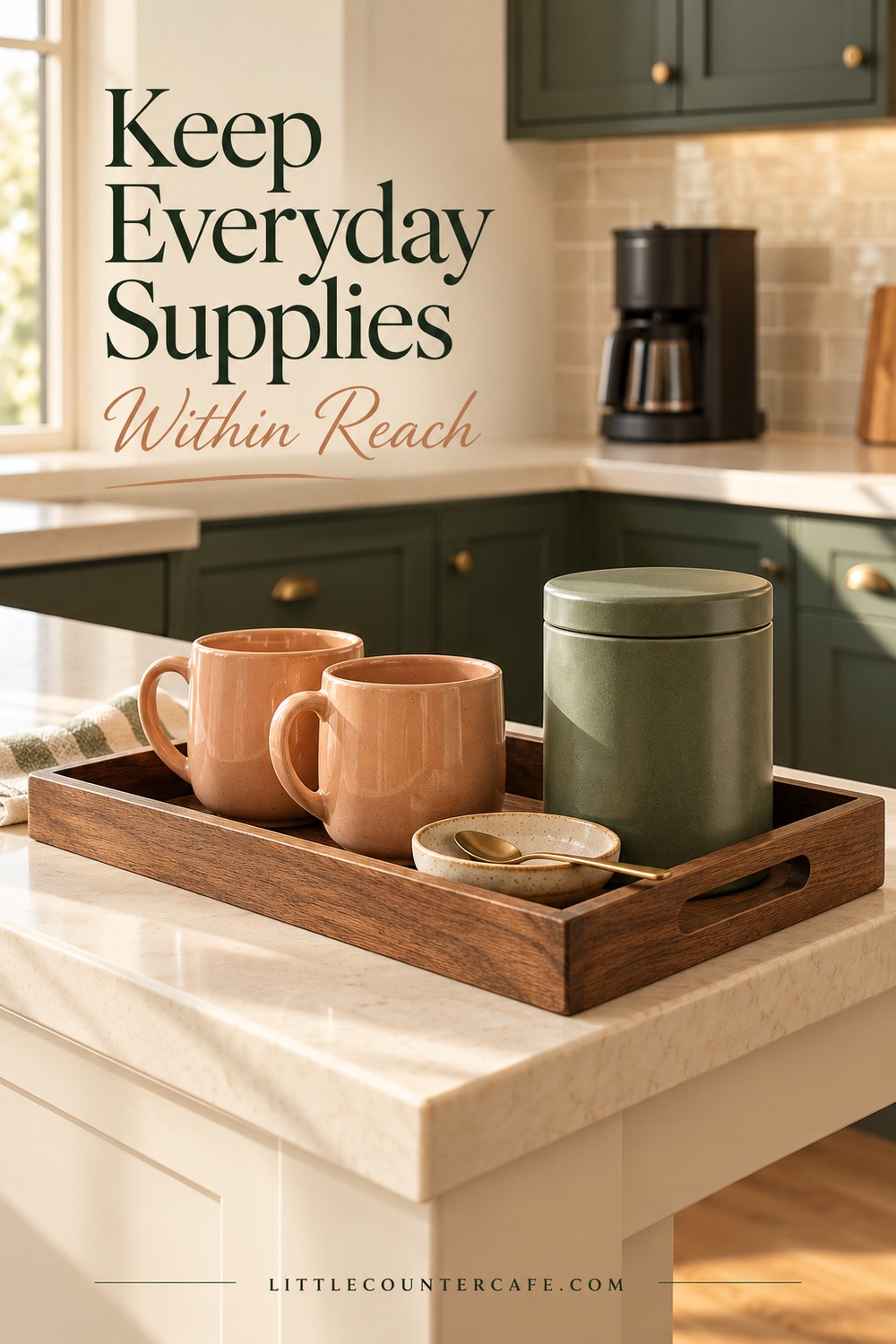
Once you choose a layout, limit the corner to what supports it. One mug you use, the coffee you need, and the right spoon are a better starting point than a full display of everything you own.
Give the front and back different jobs
Use the front for frequent actions: picking up a mug, opening the coffee container and setting down a spoon. Keep the deep point empty or use it for one lightweight, occasional item that can be reached without leaning over hot equipment.
Do not put the item you use every morning in the hardest spot because it makes the display look balanced. If retrieving a tea tin means moving a hot brewer, move the tin. Keep spare cups, unopened supplies and seasonal accessories elsewhere. Our daily and backup supplies guide can help decide what deserves the nearby space.
Choose organizers after checking their footprint
A rectangular tray on one straight leg may use less practical space than a deep corner organizer. Measure the outside dimensions, including handles and raised edges, and test that shape with paper before buying. A tray is useful when it groups small items and makes wiping easier; it is less useful when the rim blocks your hand or creates another thing to lift before brewing.
A turntable is best considered for lightweight dry supplies. Check its full rotating circle, not just how it looks parked against the wall. Do not use it as a moving base for a hot or operating appliance. Tall tiers can make a corner feel organized while hiding the outlet or interfering with openings, so check those conflicts before adding height.
Start with a tray or dish you already own. The relevant Small-Space Coffee Station Essentials list below offers shopping ideas if you identify a real gap; no organizer is necessary simply because the corner is empty.
Keep styling easy to undo
Repeat one color from the kitchen in a mug, tin or washable accessory. Forest green and cream with a little peach can look warm without filling every inch. A small picture on a nearby wall can add personality while leaving the working counter open, provided its placement and fixings suit the wall and rental rules.
Keep paper, trailing greenery and fabric away from steam outlets, hot surfaces and controls. Avoid stacking mugs on an unverified shelf or hanging a heavy rack simply to complete the look. If a new shelf is necessary, confirm the shelf and wall-fixing requirements instead of guessing at a load limit.
The easiest corner to live with is one you can wipe without dismantling a display. If the setup becomes a collection of small obstacles, remove the least useful piece first.
Mock Up the Space Before You Buy
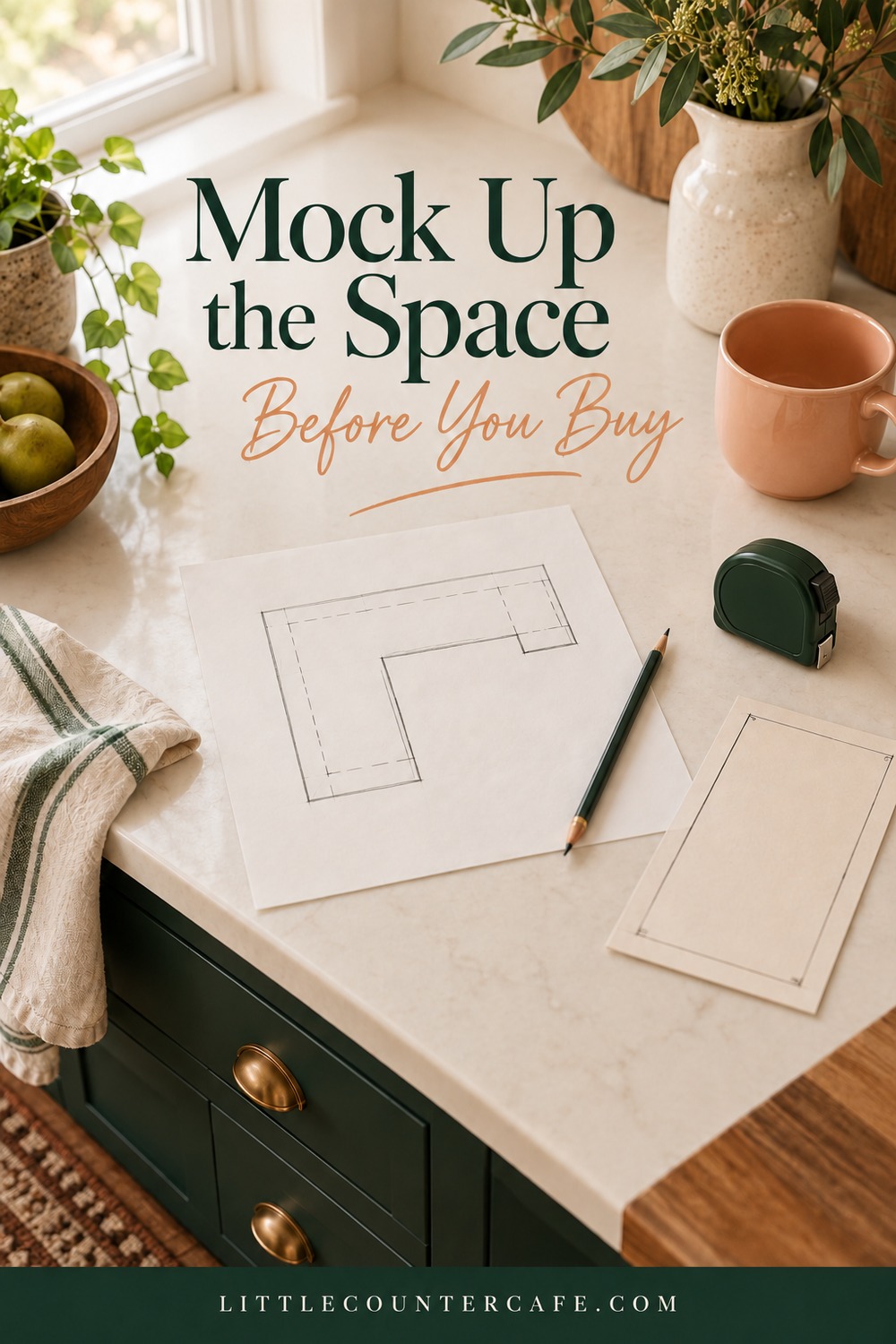
Use the printable corner-fit worksheet to compare two arrangements with the same equipment. You can also make these notes on scrap paper. The goal is to identify the practical problem before spending money on its supposed solution.
- Draw the corner. Mark the two counter edges, wall, upper cabinet, outlet and any nearby sink or cooktop. Write down your own measurements, with units.
- Add the real footprint. Use the dimensions of your equipment or a current manufacturer’s specification. Make a paper template and keep every foot fully supported.
- Check openings. Add notes for the lid, lever, tank, drip tray and controls. Check them with a cool, unplugged appliance where the manual permits. A flat template cannot prove vertical clearance.
- Rehearse the routine without hot water. Reach for an empty mug, pretend to refill, remove the waste container and return the dry tools. Keep nearby doors and drawers usable.
- Compare the options. Which needs fewer items moved? Which leaves a clear mug-making area? Which can you clean without reaching around an appliance?
Choose the layout that works with ordinary use, even if it leaves an empty patch at the back. If neither version works, use the corner for accessible dry storage or leave it clear and keep brewing elsewhere.
Quick fixes for common corner problems
The cabinet blocks the lid: change the position or choose another location after checking the manual. Do not operate the machine jammed under a cabinet or pull it around while hot to complete a brew.
The counter looks tidy but feels awkward: move everyday supplies toward the front, remove one organizer and repeat the empty-mug rehearsal. Comfortable reach matters more than a symmetrical display.
The diagonal layout eats the work area: try a straight placement on one leg. Keeping the rear point empty can preserve more usable space than filling it with a machine.
The only outlet is across the sink or walkway: choose another brewing position rather than stretching a cord across the route. Keep this corner as a dry-tool station if it is otherwise useful.
The corner keeps collecting unrelated things: give the tray a clear purpose and return everything else to its normal home. At the end of the day, put away dry tools and wipe the accessible counter using care suitable for its finish.
A good coffee corner earns its place by making your usual cup easier. Start with one workable arrangement, keep the supplies close and let the space you do not need stay open.
Download the two-page Corner Coffee Station Fit Check worksheet (PDF).
LITTLE COUNTER CAFE · Small-Space Coffee Station Essentials
Make room for your daily coffee ritual.
Space-saving organizers, compact brewing tools, and simple measuring essentials for planning a practical coffee corner.
As an Amazon Associate I earn from qualifying purchases. This is a paid link.