

A small plant can make a coffee corner feel finished: a little softness beside the mugs, a green shape against a plain wall, and something lovely to notice while the kettle heats. The trick is choosing a spot where both the plant and your morning routine can work.
Start with one plant, match it to the light, and give it a contained home outside the machine's working space. You do not need a shelf full of greenery or a bigger counter. If your best plant-growing spot is beside the coffee station rather than on it, that still counts.
This guide will help you choose the location, plan the pot and leaf space, and build a simple care habit. The arrangements shown are concept illustrations for inspiration; use the printable planner to check your own corner before buying anything.
Choose a Plant for the Light You Have
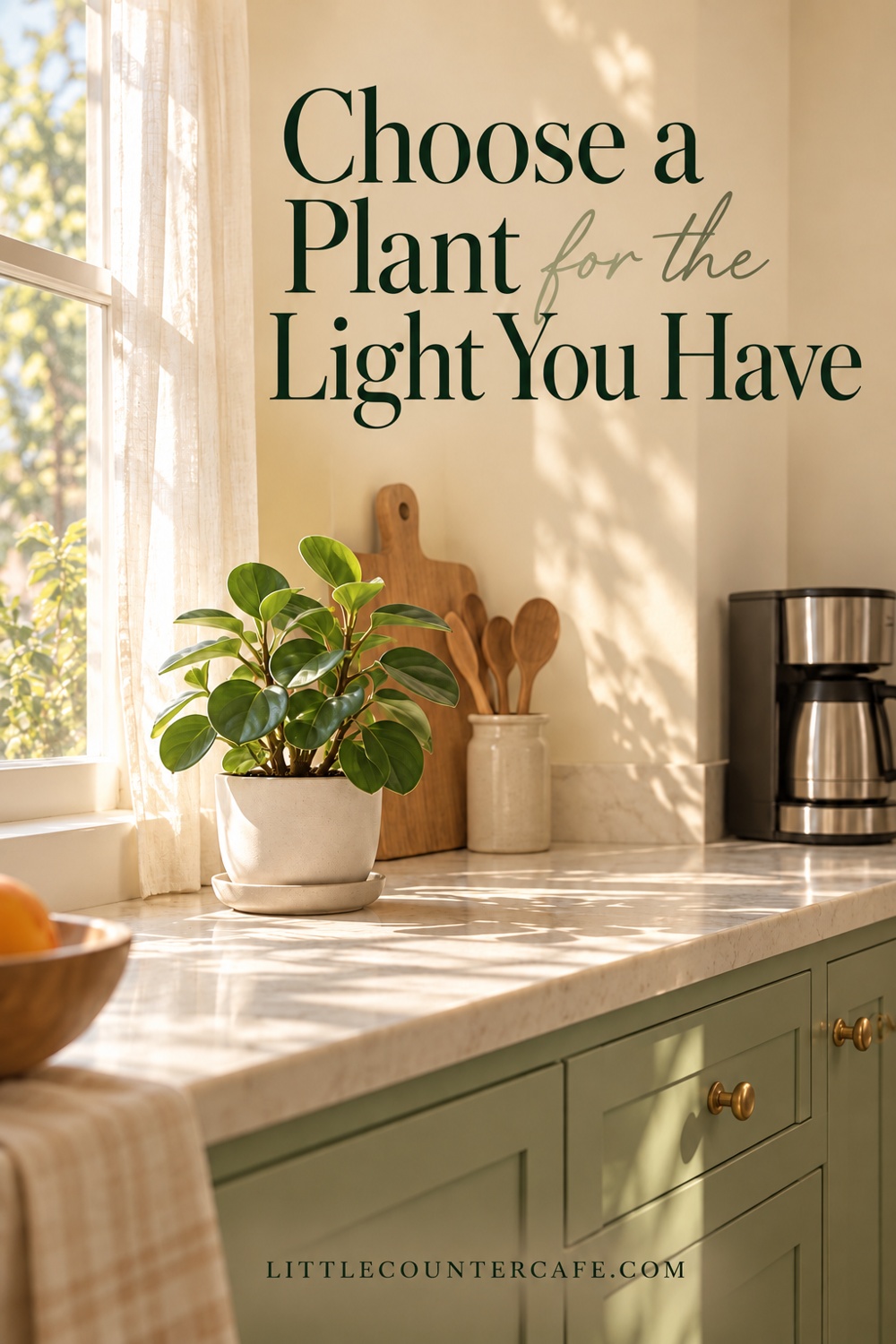
Before you choose a planter, look at the exact place you want the plant to live. The bright window across the kitchen and the shaded counter under a cabinet can offer very different conditions. A spot that looks cheerful with the ceiling lights switched on may still be a poor match for the plant you had in mind.
The University of Minnesota Extension recommends assessing the quality and hours of natural light first, then matching the plant to those conditions. Its indoor-light guide distinguishes low, medium, and high light; it also explains that tolerating lower light is different from producing dense growth there.
Check the proposed position in the morning, around midday, and later in the day. Note whether sunlight falls directly on it, whether nearby buildings or curtains block the window, and whether the plant would sit beneath an overhang. This is a useful observation exercise, not a substitute for the care instructions for a particular plant.
For a first attempt, consider a small peperomia if its label matches the conditions you have. University of Maryland Extension includes peperomias among plants suited to medium light and describes them as an approachable option for beginners. Buy by the botanical name as well as appearance, especially if pets share the home.
For example, the ASPCA lists Peperomia obtusifolia, often called baby rubber plant, as non-toxic to cats and dogs. That listing applies to that identified plant, not everything sold under a similar common name. Check the exact ASPCA entry, keep pots and soil away from curious pets, and do not treat any decorative plant as something to nibble. Get specific advice if you cannot identify what you are buying.
Choose a healthy specimen rather than rescuing the most discounted pot as your first coffee-corner project. The University of Maryland's selection guide recommends checking foliage and leaf undersides for insects or disease. Take a moment in the store to look beneath the leaves and around the stems.
If the corner has too little suitable light: use a small faux plant, choose a nearby brighter location, or leave greenery out. A kitchen light is not automatically a grow light. There is no need to buy extra equipment just to make a decorative idea work.
Give Greenery Its Own Safe Spot
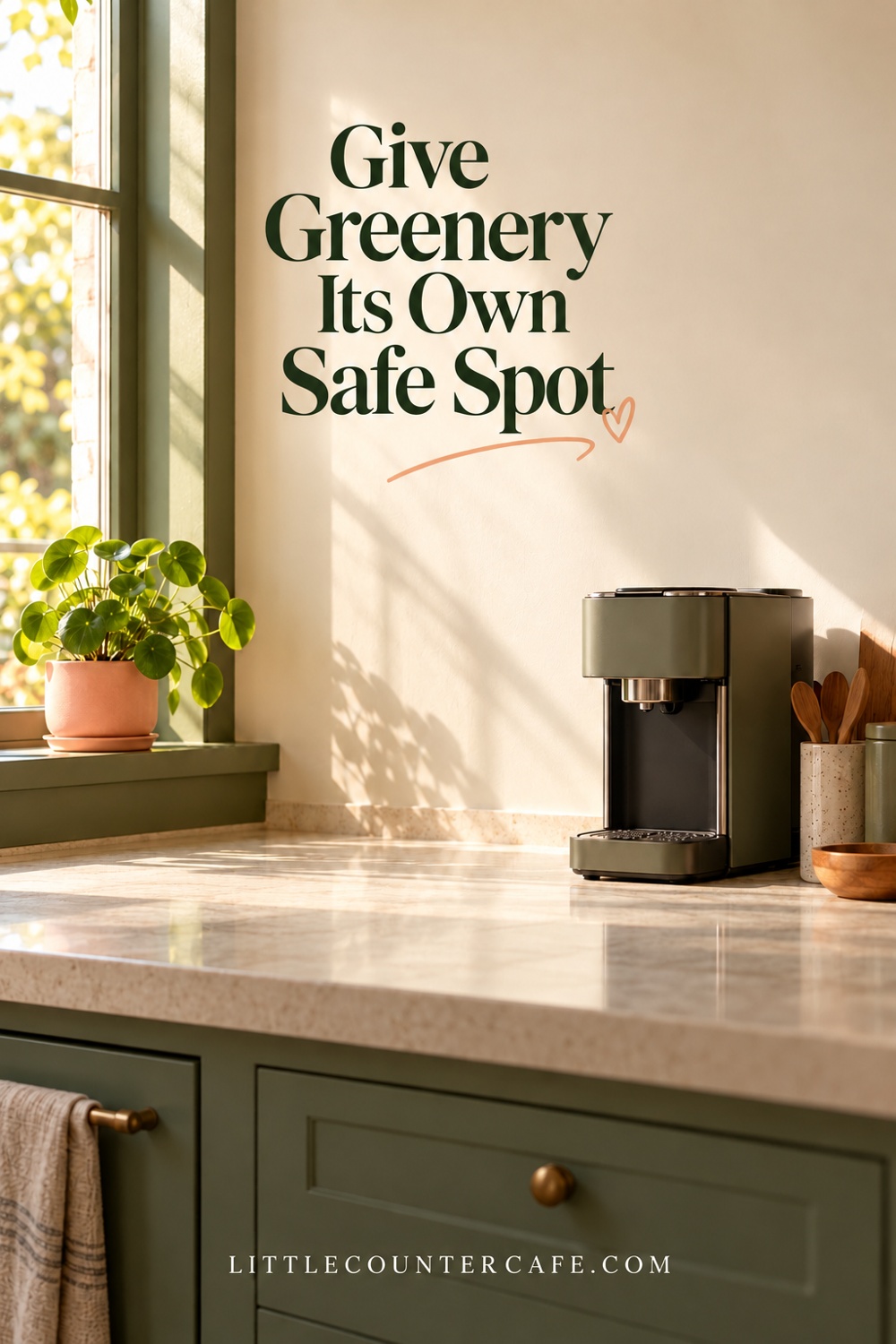
Put the plant outside the steps you take to make a drink. You should be able to fill the reservoir, open the lid, remove the drip tray, use the kettle, and pick up a mug without brushing through leaves or moving a pot. Check the operating instructions for your actual appliance; there is no universal plant-to-machine distance that works for every setup.
Try the arrangement with an empty, dry pot first. Leave the equipment off and cool while you check the layout. Open each lid and door, imagine carrying a full water tank, and use your normal mug. If you have to tilt the pot out of the way, that position has already asked too much of your morning.
Three positions are worth considering:
- Beside the station: a small pot near a suitable window, with an open stretch of counter between greenery and equipment. Keep it away from the front edge and the food-preparation area.
- On a nearby stable surface: a separate sideboard or windowsill can provide the green view without taking away the spot where you pour. Check that the full pot rests securely on the surface.
- On an existing suitable shelf: only where the shelf and fixings are rated for the wet pot's load, the plant can be reached safely, and no water or leaves can fall onto appliances, outlets, or open cups. A shelf directly above the coffee maker is a poor default choice.
Keep trailing stems away from plugs, controls, hot surfaces, and places where sleeves or mug handles might catch them. Do not use the top of a coffee maker as a plant stand or squeeze a pot behind a machine where it hides access to the outlet. Moving the plant a little farther away is easier than redesigning the appliance's ventilation.
Think beyond the pot's footprint. The leaf spread and the room your hand needs to lift the pot matter too. On the planner, record the widest point across the foliage as well as the container. Check the plant's expected mature habit before deciding that a tiny nursery pot means a tiny long-term arrangement.
Choose a growing pot with drainage and an outer container or saucer that contains drips without leaking onto your surface. Check the underside of the decorative pot and follow your countertop's care instructions. A decorative finish or a cork base does not prove that a pot is watertight. Keep the growing pot removable so it can be watered somewhere suitable.
A useful go/no-go rule: if the only available position is in the steam path, above electrics, balanced on a narrow edge, or across the space needed for brewing, use nearby greenery instead.
Style One Plant Without Crowding the Counter
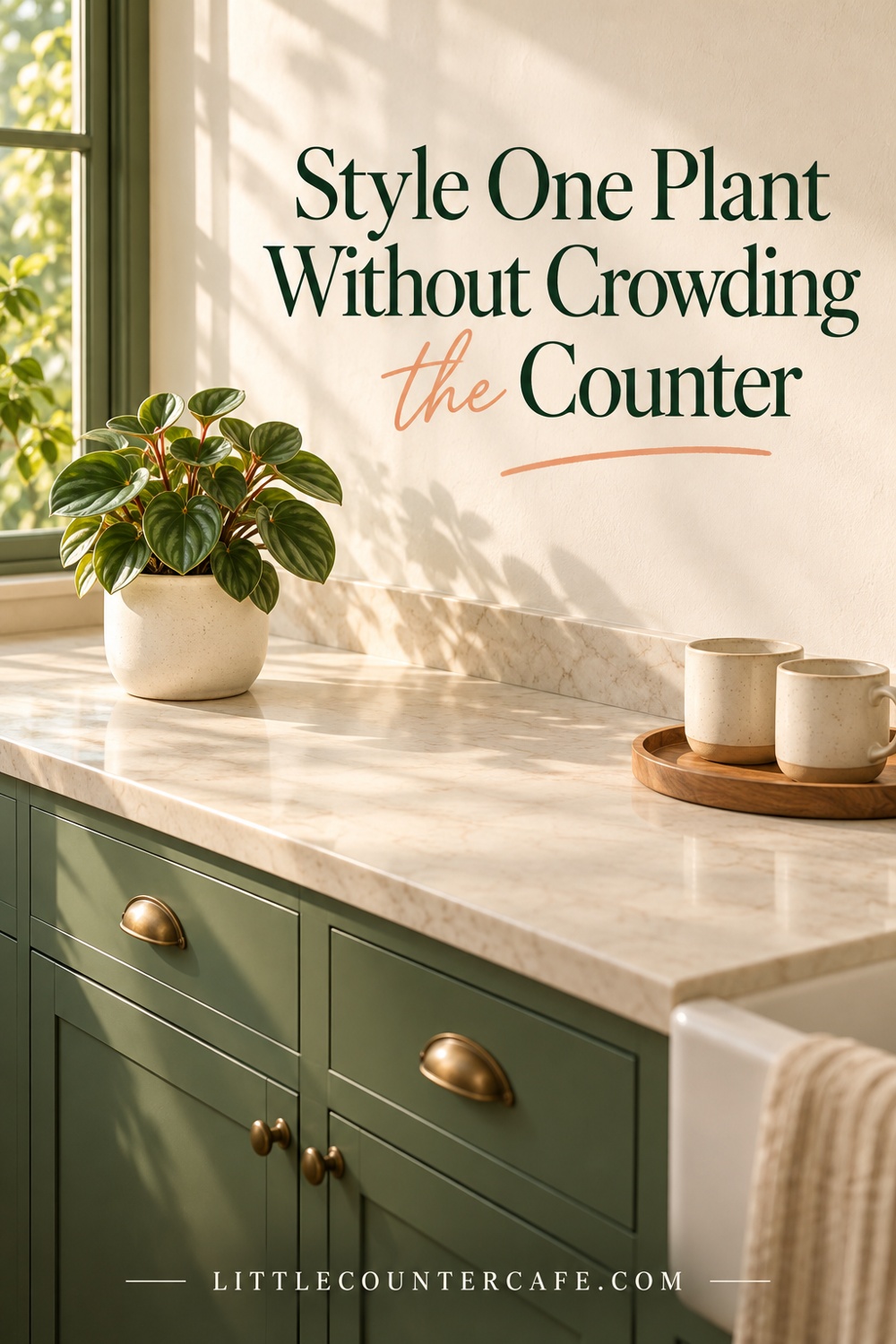
One well-placed plant often gives a small corner all the greenery it needs. Let its shape be the decorative feature, then repeat one color or texture elsewhere. A peach planter can connect with a folded napkin; a cream pot can echo the mugs; glossy leaves can soften a dark green cabinet without introducing another color scheme.
Start by removing one existing decoration before adding the pot. You are making space for a new feature, not building a second layer around everything already there. Keep the tools you actually use visible and reachable. If the plant looks good only after you hide the kettle you use every morning, revise the arrangement.
Try one of these concept combinations with pieces you already own:
- Warm and simple: a cream planter, two everyday mugs, and a peach cloth stored away from the appliance while brewing. Let the plant provide the color contrast.
- Forest green and natural texture: a small peach or stone-colored pot beside a green cabinet. Keep woven texture on a dry storage basket, not as the only protection beneath a wet pot.
- Quiet tea corner: one compact plant beside a closed tea tin and a cup, with the kettle's filling and pouring space left clear. The same placement checks apply whether you drink coffee, tea, or cocoa.
A tray can make mugs and supplies look intentional, but the plant does not have to join them. A separate pot is easier to lift for watering and keeps soil away from the items you handle while preparing a drink. If you do share a decorative tray, make sure every item remains stable and that the plant's own containment protects the tray material. Avoid balancing a pot on a stack of books beside hot drinks.
Stand back and look from the doorway, then check from your normal brewing position. The first view tells you whether the corner feels balanced; the second tells you whether you can use it. Take a quick photo for your own comparison if that helps, then remove anything that seems to crowd the controls or the mug landing space.
For more help choosing the surrounding pieces, see how to style a small coffee corner. If the greenery is part of a shelf arrangement, the coffee station shelf guide can help you plan the rest of the display.
You can browse coordinating styling pieces in the shopping collection below. Measure the actual pot and usable space before choosing; an attractive cover image does not establish the size or suitability of an individual item. As an Amazon Associate I earn from qualifying purchases.
Keep the Plant and Coffee Corner Easy to Care For
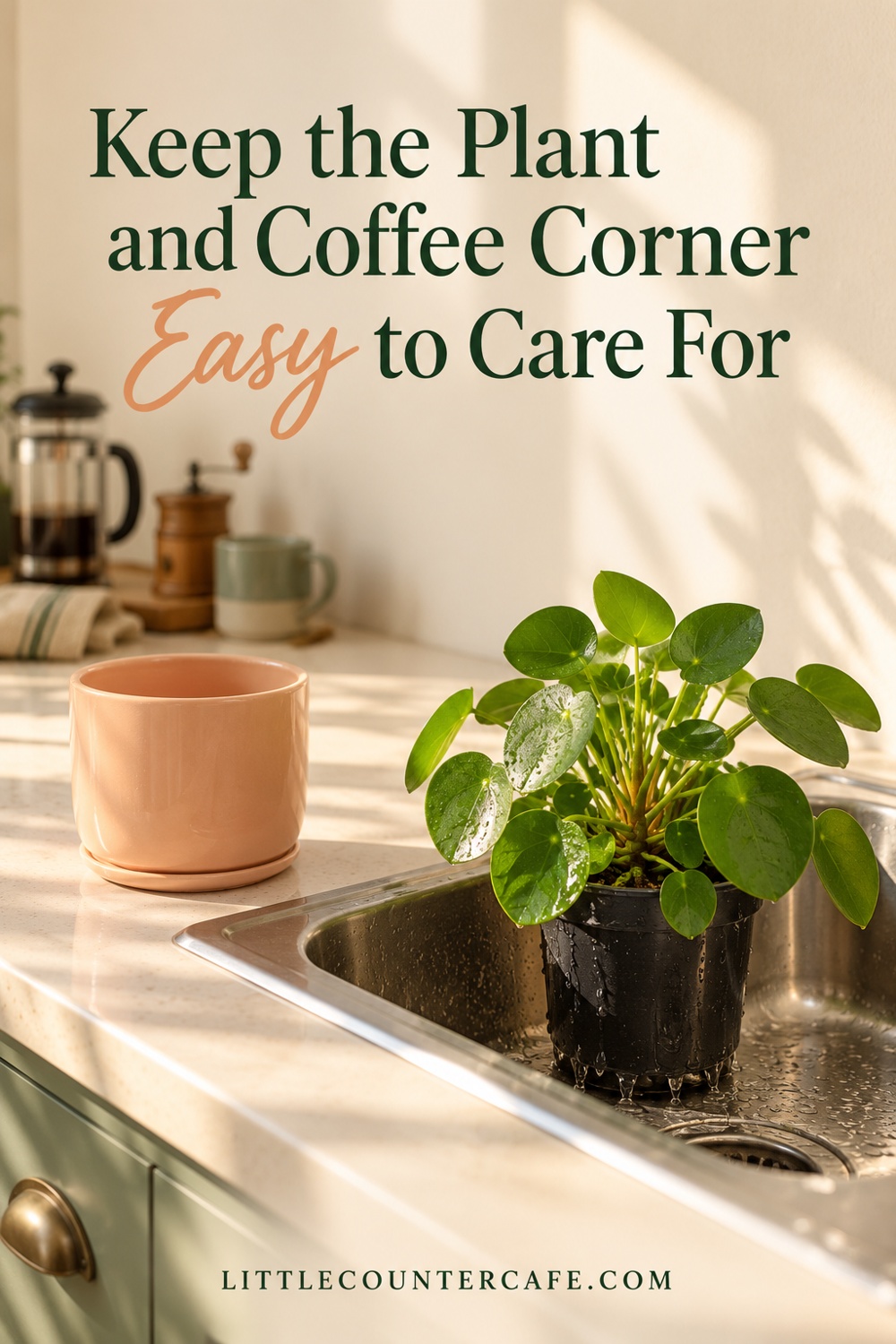
Give the plant a care routine that fits the room, rather than adding watering to every coffee-making session. University of Maryland Extension advises watering according to the plant's needs, because potting mix, humidity, and temperature affect how quickly it dries. Its watering guide recommends letting excess water drain and emptying water from saucers.
Make a reminder to check, not automatically water. Use the care instructions for your identified species and potting setup to decide when watering is needed. A universal weekly drink of water can be too much for one plant and too little for another. A calendar reminder is useful for noticing the plant; it should not overrule what the potting mix and plant need.
When it is time to water, lift the growing pot out of its decorative container and take it to the sink or another suitable watering place. Let it drain, empty collected water, and dry the outside before returning it to the counter. Keep watering, fertilizer mixing, and repotting away from the machine and clean cups. Wash your hands after handling soil and before preparing drinks.
During your ordinary counter reset, look for fallen leaves, dampness beneath the pot, or stems creeping into the working area. Wipe the surface using a method suitable for its finish, with the plant lifted away. Clean the outer pot according to its material, and keep dusty faux foliage clean too. Neither a living plant nor a faux one should become the object you have to clean around indefinitely.
If something looks wrong, change one relevant condition at a time:
- The plant is stretching toward the window: reassess its light requirements and location rather than simply turning the pot to hide the shape. Seek species-specific growing advice.
- The outside pot holds water: empty it and check that the inner pot can drain and be removed easily. Do not leave roots sitting in the collected water.
- Leaves keep touching the machine: move the plant to a separate surface. Rearrange for its present size rather than forcing it into its original space.
- You keep knocking it with a mug: the location is too close to the working route, even if it looks balanced in a photograph.
- Care feels like one task too many: keep the pot you like and try a modest faux plant, or leave the space open. A cozy corner should suit the way you live.
Use the downloadable Coffee Corner Plant Planner to record the light, pot measurements, appliance access, and care notes. Start with one dry-pot trial, live with the layout for a few mornings, and buy only when the spot makes sense. A small amount of greenery is enough when it has a proper place to live.
Download the Coffee Corner Plant Planner (PDF)

LITTLE COUNTER CAFE · Cozy Coffee Corner Decor
Give your coffee corner a little café charm.
Warm accents, attractive mugs, trays, and practical styling pieces for a welcoming coffee corner.
As an Amazon Associate I earn from qualifying purchases. This is a paid link.