
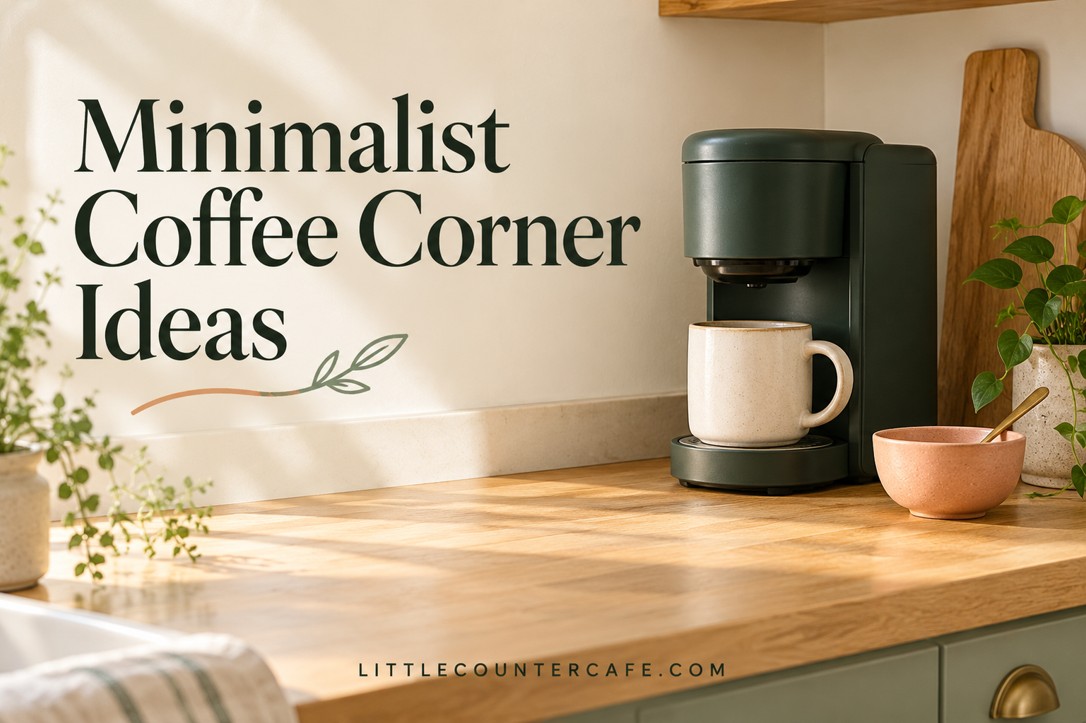
A minimalist coffee corner starts with a small question: what do you actually need to make the drink you enjoy? Your answer might be a machine, a mug and a spoon. It might include a grinder, a tea infuser or two different cups. The aim is a useful little setup with fewer things competing for attention.
You can get that calmer look without replacing your mugs or buying matching containers. Begin with what you own, choose a home for the extras, and leave enough clear counter to prepare a drink comfortably. These ideas work for coffee and tea, including a shared corner where everyone likes something different.
The pictured arrangements are styling concepts to adapt to your own kitchen. They are not measured installations. Check your appliance manual and your actual counter before copying a placement.
This article contains affiliate links. As an Amazon Associate I earn from qualifying purchases.
Keep Only What Your Routine Uses

Start by writing down the steps of your usual drink, from getting a clean cup to putting the last ingredient away. Use that sequence to choose your visible essentials. If you make black coffee, a display of syrup bottles may be taking up space without helping. If you make a milky drink every morning, the frothing pitcher deserves a convenient home even if a simpler-looking picture leaves it out.
For your first edit, sort the corner into three groups: used most days, used occasionally and no longer used. Put the occasional pieces in accessible storage nearby. Deal with unwanted duplicates separately rather than hiding them in the same crowded cupboard. Keep a favorite mug even if it does not match; familiarity is part of what makes the corner welcoming.
Give each visible item a job
A small tray can hold a spoon and your current mug, but it should make cleanup or access easier. Leave it out if its raised edges crowd the cup or it introduces another surface you have to work around. An appliance can stay directly on its suitable counter rather than being squeezed onto a decorative tray.
Try this starting arrangement, then adjust it to your routine:
- The brewing equipment you actually use, with its required working space.
- The cup or cups needed before the next washing-up cycle.
- One small holder for loose tools or packets, if those items would otherwise spread.
- Clear counter where you can set down the drink and prepare it.
That is a starting point, not an item limit. Two people who use different brewing methods may need more pieces. Choose the arrangement that makes the routine straightforward instead of repeatedly unpacking equipment for the sake of an empty photograph.
Let packaging stay practical
You do not need to decant every ingredient into matching jars. Keep storage instructions, ingredient information and dates with anything you transfer. Coffee deserves suitable storage rather than a clear display jar in a sunny spot: the National Coffee Association’s coffee storage guidance recommends opaque, airtight containers in a cool, dark location. Decorative jars should not dictate where your usable beans live.
Keep spare supplies in their own nearby home rather than filling every gap around the machine. For a fuller restocking plan, see daily and backup coffee supplies. This also keeps the minimalist edit from turning into a hunt for things you still need.
Choose One Calm Visual Thread

Minimalist does not have to mean white mugs against a white wall. Choose one detail already in your kitchen and repeat it once or twice. An oak shelf can connect to a wooden spoon; a green mug can pick up a green cabinet; a cream bowl can echo the backsplash. The repetition gives unrelated pieces something in common.
Before shopping, place your useful items together and look for a thread that already exists. You might find that the dark machine, dark mug rim and dark cabinet handle are enough. Adding a collection of matching accessories can make a small corner busier even when every item is attractive.
Try a simple color pairing
Choose a base from the permanent kitchen finishes, then one accent you enjoy. Cream and forest green feel grounded alongside warm wood. Sage and cream give a softer effect. Peach can be a small accent in a mug or bowl rather than an instruction to recolor the whole counter.
These are styling suggestions, not rules about what belongs in your home. If your machine is bright red, let it be the main accent and keep the nearby accessories quiet. If the backsplash is patterned, a few plain useful pieces may feel more settled than another print leaning in front of it.
Use texture where another object would add clutter
A matte mug, an existing wooden shelf or the surface of a ceramic canister can provide interest without adding a decorative ornament. Try leaving the wall empty first. A coffee sign is optional, and a second shelf is not necessary just to make the area look finished.
If the corner feels bare, change the position of one useful piece before adding more. Bring the favorite mug forward, place the spoon beside it, and leave the remaining space alone. You can also remove one visually fussy container for a few days and see whether the arrangement feels easier to live with. Keep the piece if it serves your routine better than the quieter replacement.
For more help connecting your corner to the rest of the room, use the home cafe color palette guide. Choose your actual colors in daylight and in the lighting you use for your morning drink.

LITTLE COUNTER CAFE · Cozy Coffee Corner Decor
Give your coffee corner a little café charm.
Warm accents, attractive mugs, trays, and practical styling pieces for a welcoming coffee corner.
As an Amazon Associate I earn from qualifying purchases. This is a paid link.
Try Three Simple Coffee Corner Layouts
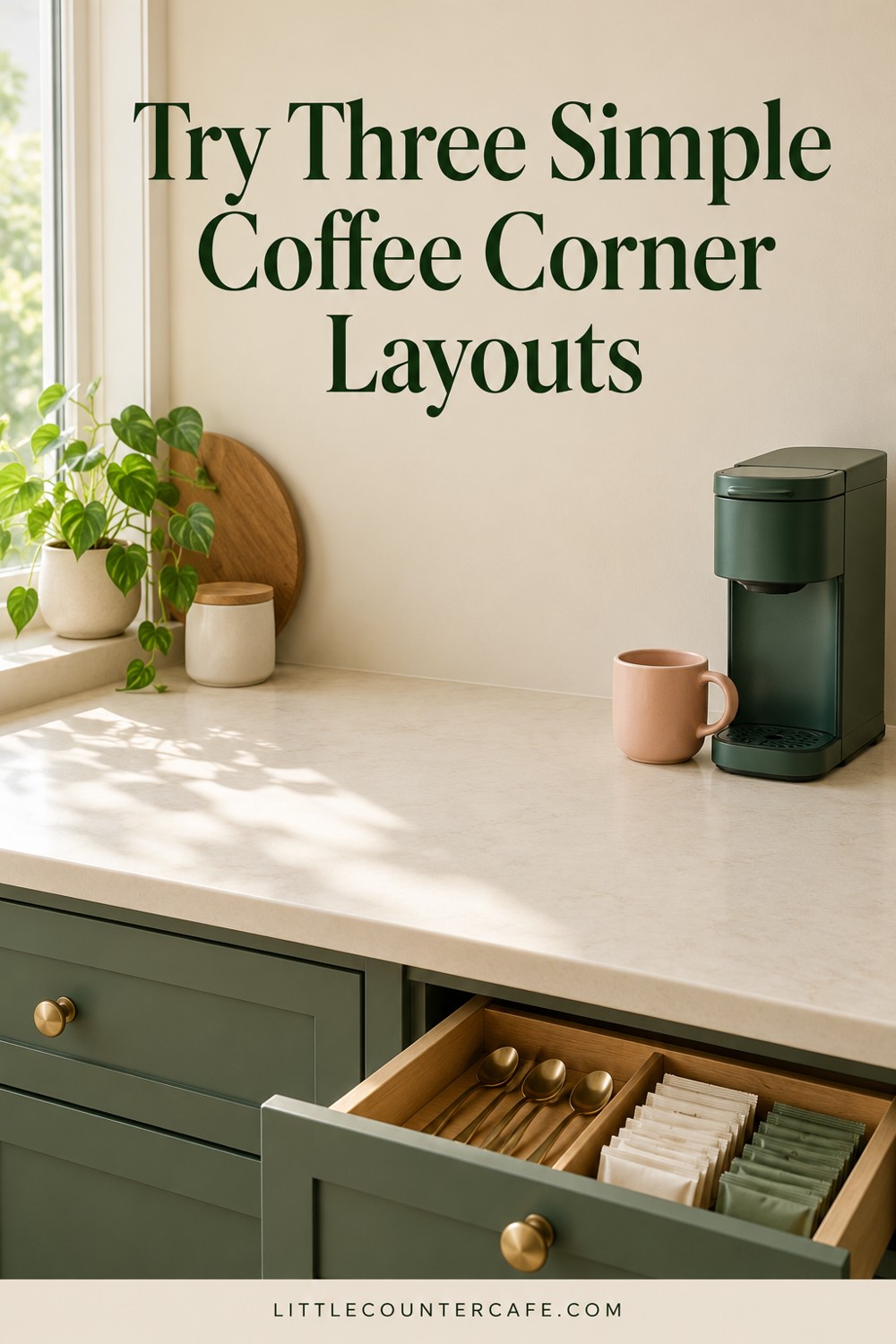
Choose a layout from how you use the space. These are concept arrangements, so there is no universal width or clearance measurement attached to them. Open lids, removable tanks, drawer travel and access to controls matter as much as the machine’s closed footprint.
1. The machine and one small accessory group
Keep the machine in its suitable operating position and place a small mug-and-spoon group alongside it. Leave a clear landing spot in front or to the side where you can prepare the drink without moving decorative objects. Put extra cups in the nearest appropriate cabinet.
This works well when you brew the same way most days. It becomes awkward if the tray sits where you need to remove a drip tray or fill a water tank. Move the accessory group to the other side or remove it rather than sacrificing access. The machine is the fixed working piece; the styling can change around it.
Check the manual for your own model. For example, Breville’s Bambino Plus instruction book calls for a level, clean surface free of water and says to keep the cord away from hot surfaces and counter edges. Those are model-specific instructions, not proof that an illustrated placement suits every brewer. Do not tuck an operating appliance into enclosed storage just to hide it.
2. The clear counter with a nearby supply drawer
Keep only the brewing equipment visible and use a convenient drawer for spoons, filters and other small supplies. Place the items you reach for together, with a separate space for anything that tends to roll or scatter. Use a divider you already own before buying a fitted organizer.
Check the drawer while standing where you make your drink. Can it open without hitting you, the dishwasher or a neighboring cabinet? Can you remove a tool without moving something else? If reaching into the drawer feels awkward, a small visible holder may be the better minimalist choice.
This layout suits a counter that also handles breakfast or food preparation. The clear area can return to another task when your cup is ready. IKEA’s kitchen organization guide is useful for thinking about storage around household routines; choose the location before deciding whether another organizer is needed.
3. The shared coffee-and-tea corner
Give both drinks an easy place in the same arrangement. A compact holder with separate sections can keep wrapped tea bags and compatible coffee pods distinct. Loose tea can stay in suitable closed storage with its own scoop or infuser nearby. Leave labels or original packaging accessible where people need them.
Keep the mugs together if that helps both drinkers, and agree on what belongs in the visible holder. A small shared supply can work better than displaying every flavor. If you need a kettle and a brewer, allow their actual operating space rather than placing them together just to make the corner appear smaller.
There is no need to buy new equipment to fit these concepts. For an existing machine, start with the counter footprint measuring guide and record the access your particular model needs.
Make Your Minimalist Corner Easy to Reset
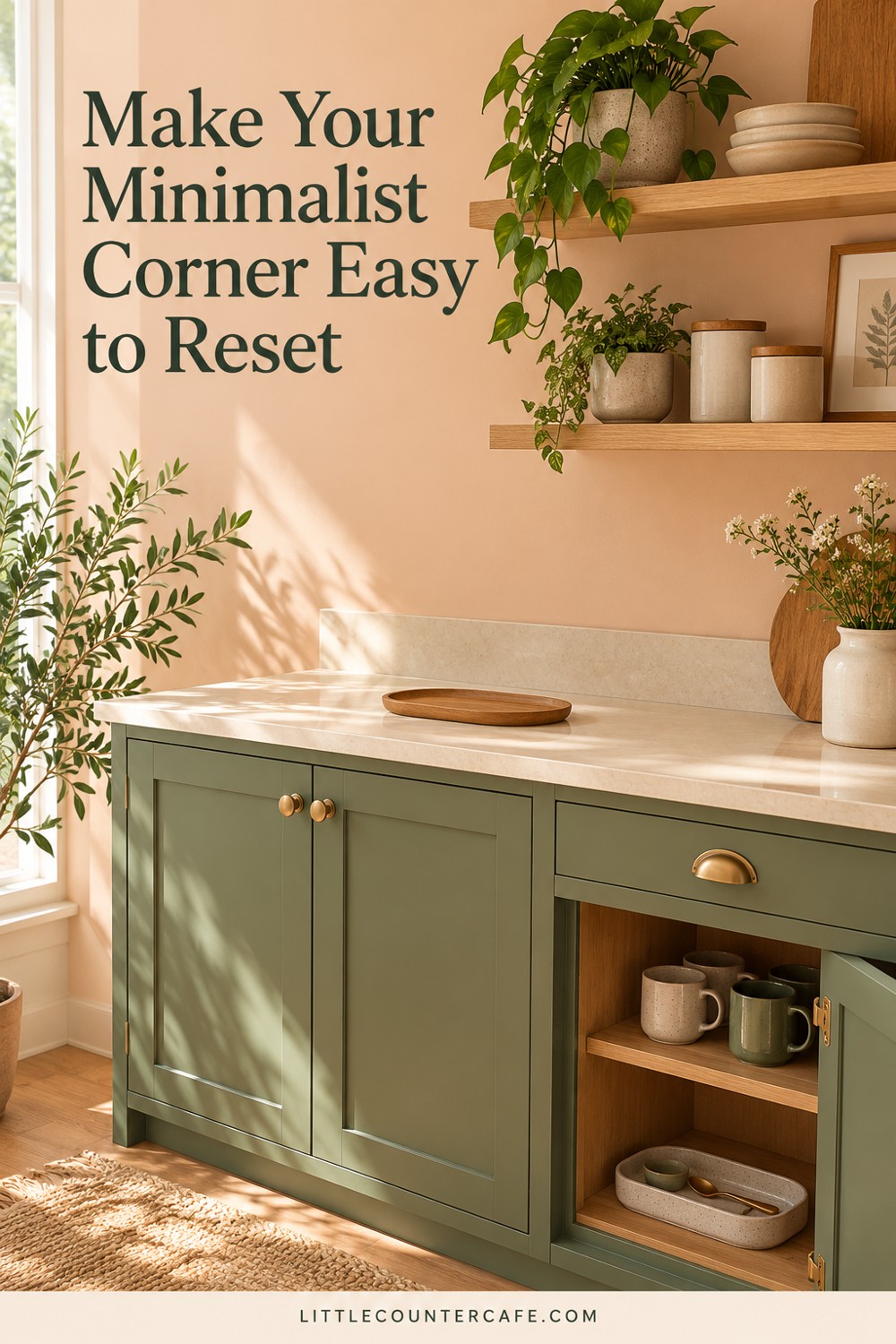
The best version is one you can return to after making a real drink. Give every loose item an obvious home, including the spoon that otherwise lands beside the sink. A calm arrangement should still make sense when the mug is in the dishwasher and the coffee bag needs replacing.
After your drink, put ingredients back in their proper storage, take the used cup and tools to be washed, and follow your appliance’s care instructions. Let hot equipment cool and unplug as the manual requires before cleaning or moving it. Keep a suitable cloth nearby for the counter, stored separately from clean drinkware. Use a cleaning method appropriate to the counter material rather than treating every finish the same.
Fix the thing that keeps drifting
If packets keep collecting beside the holder, decide whether you need a slightly larger daily allowance or a more convenient backup location. If mugs multiply on the counter, agree on a realistic number between washing cycles. If a tray keeps migrating into preparation space, try a smaller accessory group without it.
When the corner looks busy again, remove the newest addition first. Sometimes an extra sign, seasonal ornament or spare bottle has quietly occupied the working space. Keep things that earn their place; move occasional decoration elsewhere when it makes the everyday routine harder.
Use the free two-page planner
The printable below helps you plan your visible essentials, nearby storage and one visual thread. The second page gives you space to sketch the arrangement and record equipment access, your reset steps and anything you want to change after using it. Take your own measurements; the worksheet does not supply universal appliance clearances.
Download the minimalist coffee corner planner.
Start with one small edit today: remove a duplicate, give the loose spoon a home or clear a landing spot for your cup. Leave the arrangement in use for a few mornings before buying anything. A minimalist coffee corner can feel personal, warm and lived in while still giving your counter a little breathing room.