
A coffee and pastry brunch is a lovely excuse to sit down together without cooking a full breakfast. A few good pastries, familiar drinks and somewhere comfortable to put a cup can feel generous even when your kitchen counter is small.
The easiest starting point is a short menu and a realistic guest count. Choose the food first, give the hot drinks a separate working spot, and put out a modest first serving. You can refill a small plate much more comfortably than squeeze a whole bakery display beside your coffee maker.
This guide includes an illustrative four-person plan, counting the host, plus a printable menu and preparation worksheet. Adjust the quantities to the actual pastry sizes and your guests’ appetites. The room scenes are concept illustrations for inspiration rather than photographs of a measured hosting setup.
Choose a Pastry Menu That Fits Your Guests
Decide whether this is a light midmorning gathering or the main meal. Tell guests what you are serving so nobody expects eggs and a cooked breakfast when you have planned croissants and coffee. An invitation such as “Coffee, tea and pastries at 10:30” sets a useful expectation without making the morning formal.
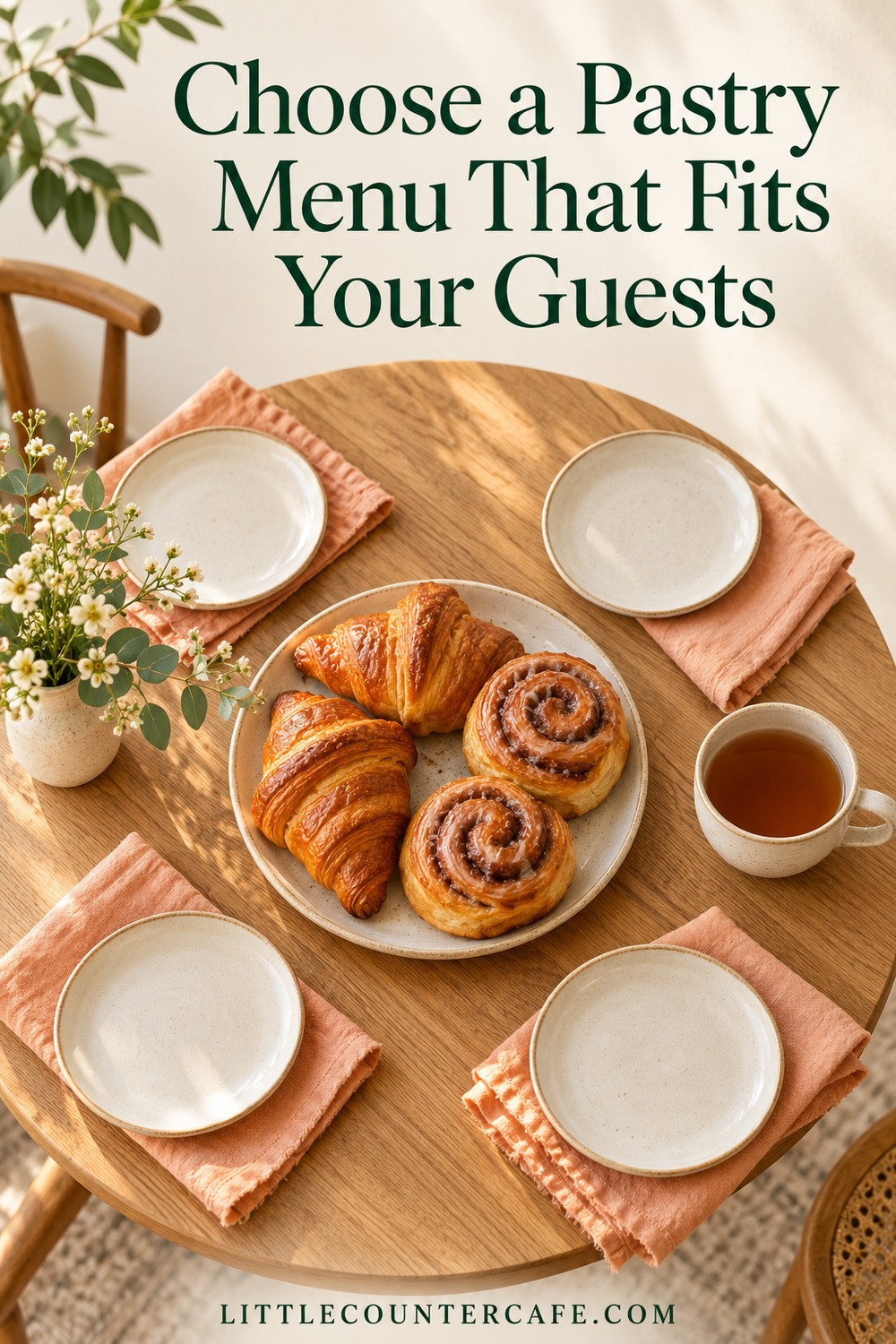
For a small kitchen, begin with two pastry choices. A plain croissant and a cinnamon roll offer different textures without requiring several serving dishes. Alternatively, choose one sweet pastry and one savory bake from a bakery you know. Purchased pastries are perfectly suitable; the point is to make a welcoming gathering you can manage.
Pick foods that need similar handling where possible. Two pastries that can be served according to their room-temperature storage instructions are simpler than one that needs warming, one that must stay refrigerated and another that needs last-minute assembly. Follow the bakery’s directions or the package label; appearance does not tell you whether a filling is perishable.
Ask about dietary needs before placing an order. Keep the original ingredient labels or ask the bakery for ingredient and cross-contact information. The FDA’s food-allergy guidance explains the importance of identifying ingredients. Use separate utensils and discuss shared preparation surfaces honestly with guests. A pastry’s name, a plant-based label or the absence of visible nuts is not enough to establish suitability.
If a guest needs a particular packaged option, keep it covered and separate until serving. Ask what arrangement works for them rather than transferring it onto a shared crumb-covered board. There is no need to make every item on the table identical.
Keep the drinks equally focused: one main coffee method, tea and water. Ask whether decaf is wanted. A familiar brewer is more useful than a long list of drinks that keeps you at the machine all morning. If you serve espresso drinks individually, offer a narrow choice and tell guests that the cups will arrive one at a time.
Think about flavor balance without buying extra ingredients. A rich sweet roll can be served beside plain coffee, tea or whichever drink a guest enjoys; there is no required pairing. Offer sugar separately so guests choose their own sweetness. If you want something fresh alongside the pastries, a small bowl of washed whole grapes or berries is an optional addition, not another menu category you must fill.
Write the final menu in one line before shopping. For example: “Croissants, cinnamon rolls, filter coffee, tea and water.” If the line keeps growing, remove one choice. You can find broader invitation and room-planning help in our home cafe morning guide; this brunch plan concentrates on the food and serving sequence.
Give Drinks and Pastries Their Own Space
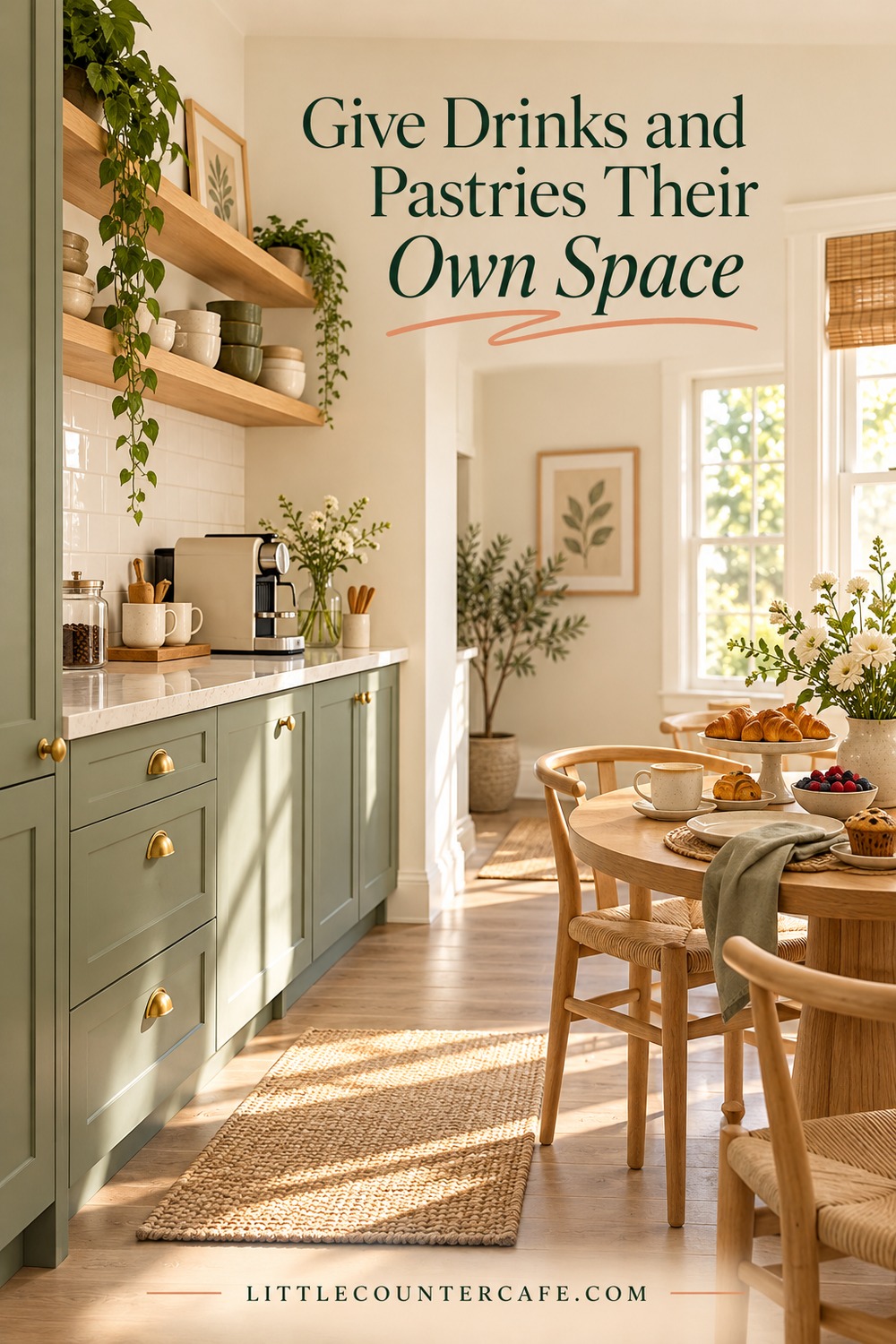
Keep the coffee maker on its suitable operating surface, with the access and clearance its manual requires. Let guests collect food somewhere else. Someone reaching for a pastry should not have to lean over a hot carafe, kettle or steam wand.
You do not need a separate buffet. Use the kitchen counter for brewing and the dining table for pastries, or keep food on one end of a table and seat guests along the remaining sides. The important test is whether each person can collect a plate and sit down without crossing the host’s hot-drink route.
Lay out the empty serving pieces before adding food. Put four side plates, a low platter, napkins and serving tongs on the table. Add a mug at each seat and check that there is still a stable landing place for the drink. Pull the chairs out. Open the refrigerator and the cabinet you will use. If anything is blocked, adjust the layout while the dishes are empty.
A low platter is often easier to reach across than a tall tiered stand. Check the actual footprint and stability of whatever you own. Keep handles and utensils within reach, with no plate balanced over an edge. Use a clean food-safe platter for food; a decorative wicker tray can carry plates without becoming the food-contact surface.
Place tongs beside the matching pastry rather than between two varieties. A small separate plate can catch crumbs under each utensil. Keep any dietary-specific serving arrangement apart from shared pastries, following the guest’s needs. Do not treat separate tongs as a guarantee against allergen cross-contact.
Use one small decorative detail if there is room: a peach napkin, a sage runner or a little vase well away from the food and appliance. If a centerpiece takes the space needed for a cup, leave it out. Mismatched plates can look thoughtful when grouped on a simple cloth, so there is no need to buy a matching brunch set.
Choose a place for used dishes before people arrive. A clear end of the table or a washable tray works better than asking guests to reach past the brewing equipment to your sink. Keep used utensils away from the clean serving pieces.
If your everyday station is already crowded, first put away unopened supplies and accessories you will not use. Our guide to what to keep on a coffee counter helps you clear the working area without buying more storage.
Plan Portions and Keep Chilled Foods Cold
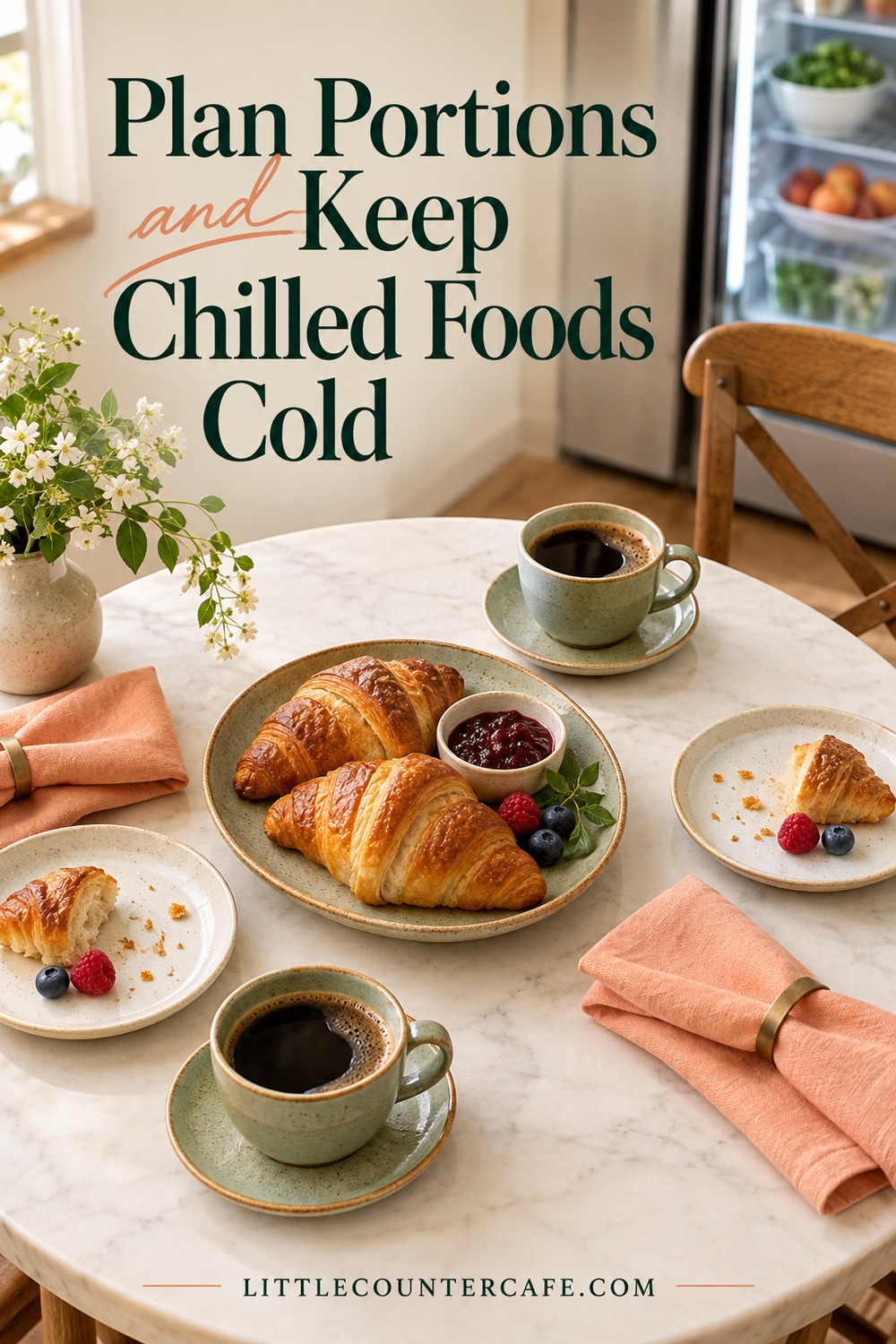
Use a serving example as a starting point, then adjust for the occasion. For four people having a light brunch, you might buy four standard croissants and four small cinnamon rolls, offering one of each per person. That is eight pieces in total. Large bakery rolls may be generous enough to share; tiny pastries may need a different allowance. This is planning arithmetic, not a tested appetite standard.
If the pastries are large, ask the bakery whether they can be divided neatly. Cut them with clean equipment before serving rather than leaving everyone to pull pieces apart. Decide how many portions a whole pastry will make, and count portions instead of mixing full-size and mini pieces in the same total.
For a main meal, discuss appetites and add one suitable savory option if needed, then reduce another choice. Do not simply double every sweet pastry. Check the storage and reheating instructions for the added food before deciding it fits your plan.
Estimate coffee from your actual cups and preferences. Four people choosing 8-fluid-ounce coffee servings would need 32 fluid ounces, about 950 mL, of finished coffee for the first round. If two choose tea, the planned coffee serving total falls to 16 fluid ounces, about 475 mL. These are drink-volume examples, not brewing-water recipes; use your brewer’s directions and capacity markings. Ask before making a second round.
Serve a small first platter and retain any backup according to its storage instructions. Keep milk and foods requiring refrigeration cold until needed. Cream- or custard-filled pastries need particular attention: confirm the bakery’s directions rather than assuming every pastry can sit on the table all morning. A small decorative pitcher does not keep milk cold.
For home entertaining, the FDA’s buffet guidance advises cold holding at 40°F (about 4°C) or below. Discard perishables left at room temperature for more than two hours, or one hour above 90°F (about 32°C), unless safely held hot or cold. Track preparation and display time together. Replace serving dishes instead of adding fresh food to used platters.
Write down when chilled foods leave refrigeration and set a reminder. Bring out small quantities as needed, and refrigerate suitable leftovers promptly within the safe limit. Returning food to the refrigerator does not erase earlier time spent out. Follow product-specific instructions when they are stricter, and discard food if you cannot establish that it was handled safely.
Do not buy a bulk pastry box just because it costs less per piece if you have no realistic plan for the excess. Ask about freezing and storage suitability for those specific pastries before buying extras; filled and decorated items can have different requirements.
Prepare Ahead and Enjoy the Brunch
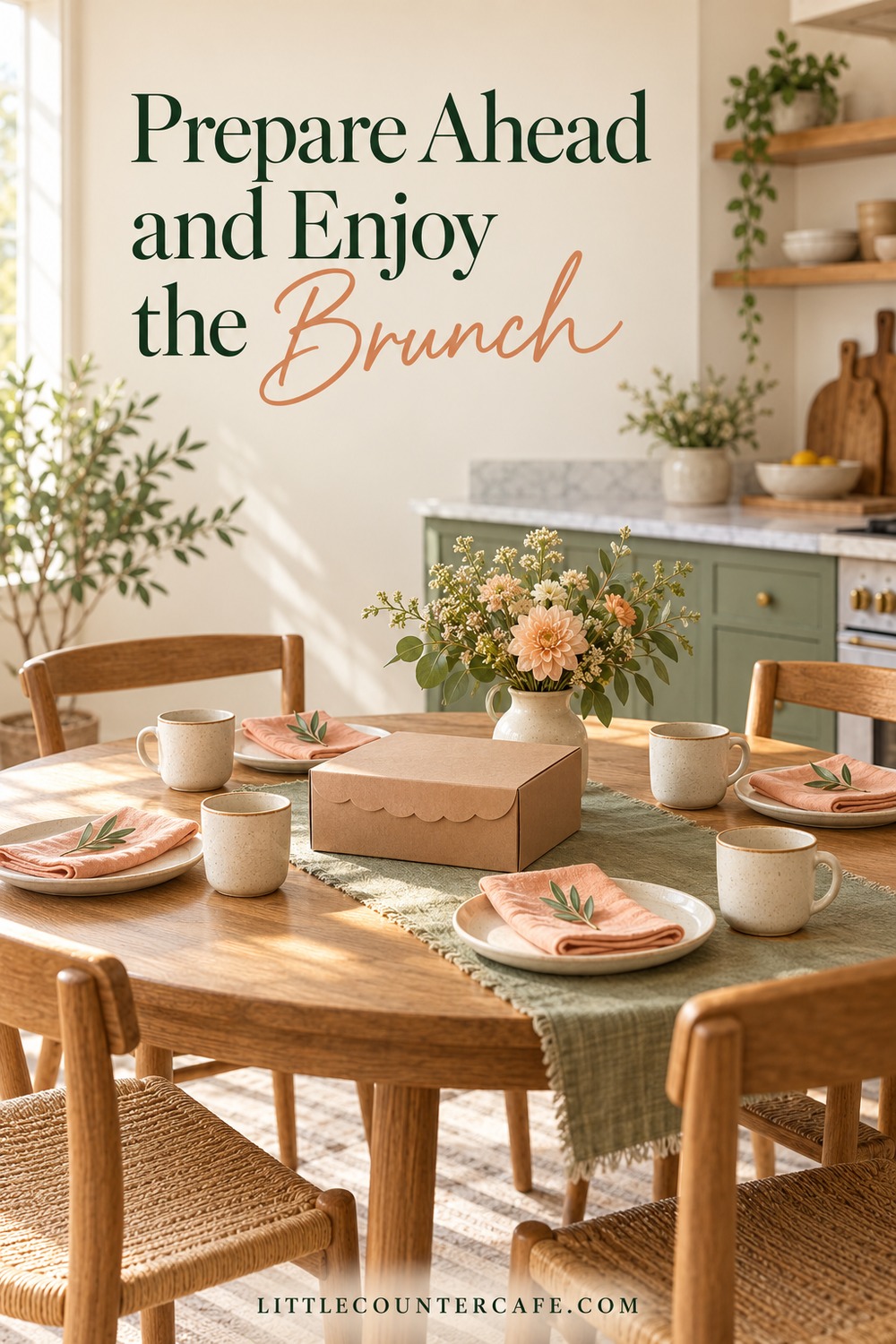
The day before, confirm the order, guest count, dietary arrangements and drinks. Check that you have enough clean cups, plates and serving utensils. Clear refrigerator space for anything chilled. Fill in the printable planner so the food quantities, pickup details and preparation jobs live on one page.
Set out empty dishes and folded napkins ahead of time if your table can stay clear. Keep them covered or stored cleanly as appropriate. Do not pre-fill milk pitchers or leave pastries requiring refrigeration on the counter overnight.
On the morning, collect or prepare the pastries according to their instructions. Leave enough time for any prescribed reheating or cooling; there is no universal oven temperature for all bakery items. Keep the menu simple enough that you are not trying to warm several different foods in a single small oven.
About 20 minutes before guests arrive, make the final space check, set out water and arrange the shelf-stable serving items. This timing is an illustrative prompt, not a measured preparation schedule. Start drinks when it suits your machine’s actual cycle and the guests’ arrival, with chilled ingredients remaining refrigerated until needed.
As people arrive, offer seats and water while the first drinks are prepared. Let them choose a pastry without crowding the machine. Put out a small second platter only when the first one is running low, using a clean dish and fresh utensil where needed. Ask who wants another drink before brewing more.
Use this final check before opening the door:
- The menu matches what guests were told to expect.
- Dietary-specific food and ingredient information are available.
- Every guest has a seat and a stable place for a drink.
- Hot-drink preparation is separate from pastry collection.
- Serving pieces sit flat, and walkways and appliance access remain clear.
- Chilled food has a storage plan and an out-of-refrigeration reminder.
- Backup food, clean utensils and leftover containers are easy to find.
If the table feels crowded, serve the pastries on individual plates rather than adding a larger stand. If your brewer is slow, offer the first cups as they are ready and keep the menu short. If someone arrives late, retain their portion safely according to the food’s instructions instead of leaving a full platter out.
After brunch, deal with perishable leftovers first. Then clear crumbs, gather dishes and reset the coffee corner for its normal daily use. Keep a note of what was left over and what guests actually chose; that is more useful for your next gathering than a generic catering quantity.
Download the two-page coffee and pastry brunch planner below for a menu-and-portions sheet and a preparation-and-service checklist. A short plan leaves more of the morning for sitting down with the people you invited.
As an Amazon Associate I earn from qualifying purchases. The hosting collection below contains paid links. Check your own plates, trays and mugs before buying serving pieces.
Download the coffee and pastry brunch planner (PDF)
LITTLE COUNTER CAFE · Coffee Hosting & Gift Ideas
Make a small coffee moment feel special.
Thoughtful brewing gifts, serving pieces, and drink supplies for relaxed coffee catch-ups at home.
As an Amazon Associate I earn from qualifying purchases. This is a paid link.