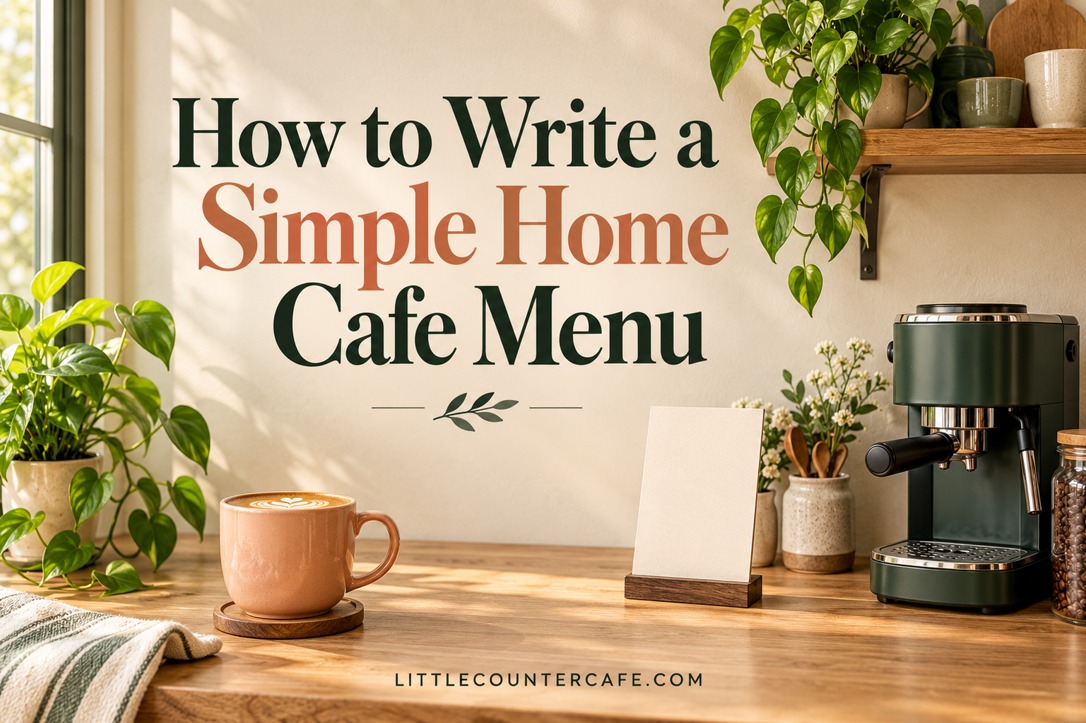
A home cafe menu can be a small card beside the cups. It only needs to answer three questions: what can I have, what is in it, and how do I ask for it? You do not need a long drinks list or a new collection of syrups to make people feel welcome.
I like a menu that makes the morning easier for the person making the drinks, too. Start with what your equipment and ingredients can comfortably provide, describe those choices plainly, and give the card enough breathing room to read. A few thoughtful options feel more inviting than a crowded list that needs explaining.
The examples below are menu-writing suggestions, not tested drink recipes. Adapt the wording to the drinks you already know how to prepare. The pictured arrangements are styling concepts rather than measured installations.
Choose Drinks You Can Reliably Offer

Begin away from the pretty paper. Write down your brewing equipment, the drinks you already make, and the mugs or glasses you can use. A drip coffee maker, for example, gives you a different starting point from an espresso machine. Your menu should describe your actual preparation rather than the equipment you hope to buy later.
For a first menu, try three main choices: one straightforward coffee, one familiar variation you can make without a complicated extra step, and one tea or other alternative your guests enjoy. Three is an editorial starting point, not a rule. Two dependable choices may suit a small gathering better. If every option requires a different appliance or a cupboard full of ingredients, shorten the list.
Walk through one order in your head. Where will you find the cup, brew the drink, add any finishing ingredient, and set it down? Then consider a second person ordering something different. A menu that sends you repeatedly between the freezer, coffee counter and storage closet needs editing before it needs decoration.
Use a quick planning list:
- Already available: the coffee or tea, suitable cups, working equipment and ingredients you keep on hand.
- Easy addition: one familiar flavor or a milk choice a guest has requested.
- Leave for another visit: an unfamiliar recipe, an extra appliance or a drink that needs several last-minute steps.
Choose either hot or iced service for each drink unless both are realistic for your setup. Writing “hot or iced” beside every line quietly doubles the decisions. If you can only make a milk drink one at a time, that is fine; offer to bring those drinks over rather than implying immediate self-service.
Keep coffee strength and caffeine wording honest. Only offer decaf when you have it, and identify which option uses it. Do not describe decaf as caffeine-free. You can simply write “Decaf coffee available” without giving an unsupported caffeine amount.
For guest numbers, timing and serving quantities, use the separate coffee menu guide for four guests. This page focuses on the words and layout that communicate your choices.
Write Clear Drink Names and Ingredient Notes

Use the name people recognize first. “Vanilla iced coffee” tells a guest more than “The Weekend Cloud.” If a playful name suits your gathering, put a short plain-language description underneath it. Guests should not need to ask what every line means.
Build each entry from a drink name and a short description: Vanilla iced coffee — brewed coffee, ice, milk and vanilla syrup. Change that description if you use different ingredients. An espresso-and-water drink should not be described as filter coffee, and coffee mixed with cold milk should not be presented as a drink made with steamed milk.
Here is an illustrative menu for a household that can already prepare these drinks:
| Menu entry | Useful description |
|---|---|
| Hot brewed coffee | Served black; milk available on request |
| Vanilla iced coffee | Brewed coffee, ice, milk and vanilla syrup |
| Peppermint tea | Peppermint herbal infusion; served hot |
Check your own tea package before copying that last entry. A blend may contain other ingredients, so its name and any caffeine claim need to match what you actually have. Add “Decaf coffee available” only when it is true. These examples are wording models, not a promise that this is the right menu for every kitchen.
Put choices where they belong. If one drink comes with a particular milk, say so beside that drink. If the same milk choices apply throughout, one short line below the drinks can be clearer: “Milk choices today: whole milk or oat drink.” List only what is actually stocked. Avoid a trail of tiny symbols that forces guests to search for a key.
Ingredient notes need a little more care than flavor descriptions. The FDA’s food allergy guidance explains why checking packaged ingredient information matters. Read the labels on the milk alternatives, syrups and toppings you will use, retain the packaging, and ask guests about allergies before preparing drinks. A plant-based choice alone does not establish that the finished drink is suitable for a particular allergy.
Keep wording factual: “Made with almond drink” describes an ingredient; “allergy-safe” promises something much broader. Shared jugs, spoons and preparation surfaces can matter as well as the written ingredient list. If you cannot confidently meet a guest’s needs, explain that openly and agree on an alternative with them. A menu card cannot establish that an entire kitchen is free of an allergen.
For a casual gathering, a note such as “Please tell me about ingredient needs before I prepare your drink; packaging is available to check” invites a useful conversation. It does not replace checking ingredients and handling them appropriately. Avoid filling the card with legal-looking claims or unsupported dietary labels.
Lay Out a Menu Guests Can Read

Choose the card size after you know how many words it needs. A half-sheet of US Letter paper, or A5 paper, is a useful starting point for a short tabletop list. Those are practical design suggestions, not accessibility guarantees. Use a larger sheet if the menu must be read from farther away.
Start with one clear heading, then the drink names, then their descriptions. Make names visibly more prominent than the smaller supporting text. Use one straightforward body typeface and reserve decorative script for a short heading if you like it. A handwritten title can look lovely; a paragraph of fine cursive is harder to scan.
Try dark forest green on cream paper, cocoa on warm white, or another combination that stays easy to see in your room. Avoid pale sage lettering on a similarly pale background. Print one actual-size draft before making the final card. A layout that looks roomy on a laptop can become cramped when it is printed small.
Group the content according to the choices you have. For three drinks, one list is usually enough. For a longer menu, “Coffee” and “Tea” may help. Do not add headings for empty categories just to make it resemble a commercial cafe. Leave a clear gap between entries and keep decorative drawings away from ingredient notes.
Place the card where a guest can read it before reaching the hot preparation area. A table or the cool side of the serving setup may work better than behind the machine. Keep paper and stands clear of heat, steam, spills, controls and appliance access; follow your equipment’s own placement instructions. A stand should sit securely rather than leaning against an appliance.
Use what you already own: folded card, a small freestanding frame with a removable insert, or a clipboard placed on a separate table. You can also handwrite the list neatly. A reusable holder earns its space when changing the menu is simple; it does not need to become permanent countertop clutter.
The free two-page menu planner includes a host worksheet and a clean three-drink card. Fill the worksheet first, then transfer only the guest-facing information to the card. Keep your shopping reminders, serving sequence and equipment notes on the host page. Guests need the finished choices, not your preparation list.
If you want ideas for a small gathering around the drinks, the home cafe morning guide covers the wider setup. Keep this card focused enough to read at a glance.
Check Your Menu Before Guests Arrive

Read the printed card as if you have never seen your kitchen. Does each name tell you what is being offered? Are hot or iced choices clear? Can you tell which milk is used? Is the smallest line comfortable to read from the place a guest will stand? Ask someone else to read it if you can, and use their actual questions to improve the wording.
Next, match every entry against the ingredients and equipment you have ready. Remove an unavailable drink instead of covering its line with a confusing note. If a milk or syrup changes, update the ingredient description and check the replacement package. Keep a spare blank card or an editable copy so the next gathering starts with a useful template.
Plan chilled ingredients before bringing them out. FoodSafety.gov’s home food safety guidance recommends a refrigerator at 40°F (4°C) or below. Do not leave perishable ingredients out for more than two hours, or one hour above 90°F (32°C). Follow package storage instructions, including those for opened milk alternatives. A decorative serving pitcher does not replace refrigeration.
Do one last practical check:
- Every listed drink is available and matches its description.
- Guests have a tea or other suitable alternative you have agreed on.
- Ingredient packaging is available, and individual needs have been discussed.
- The card is readable, stable and clear of the brewing area.
- Cups and tools are ready without blocking everyday kitchen use.
- Chilled ingredients have an appropriate storage and serving plan.
If the list still feels like too much work, remove one choice. You can serve a welcoming coffee morning with a small menu and a friendly explanation. After the gathering, note the questions guests asked, the drink they actually requested, and anything that was awkward to prepare. Use those observations to edit the next card rather than adding options automatically.
A useful home cafe menu makes choosing a drink comfortable and preparing it manageable. Start with familiar drinks, describe them accurately, and leave enough room on the paper and the counter for the morning you want to have.
LITTLE COUNTER CAFE · Coffee Hosting & Gift Ideas
Make a small coffee moment feel special.
Thoughtful brewing gifts, serving pieces, and drink supplies for relaxed coffee catch-ups at home.
As an Amazon Associate I earn from qualifying purchases. This is a paid link.