
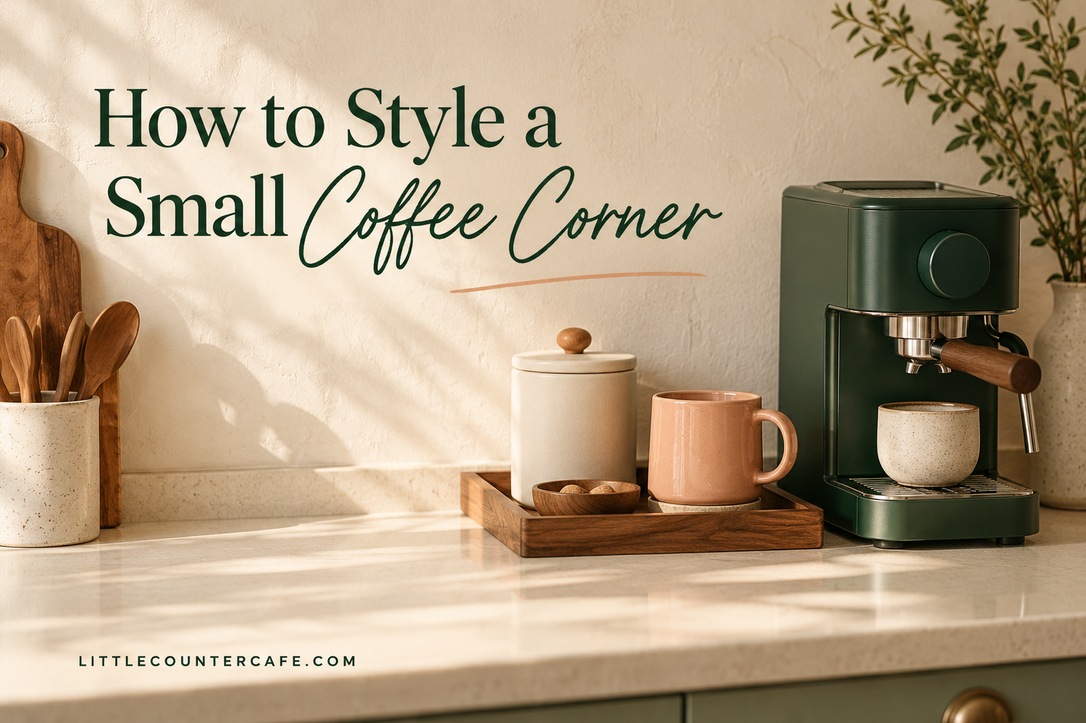
A small coffee corner feels inviting when the things you use every morning look as though they belong together. You do not need a second appliance, a matching set of jars, or a shelf full of decorations. Start with a comfortable place to make your drink, gather a few useful pieces, and leave enough empty space for the corner to breathe.
I like a coffee corner that gives the morning a gentle start. My coffee before work is part of that rhythm, and a favorite mug can bring more personality to a little counter than a whole collection of accessories.
This guide walks through a practical styling method: make room for the routine, create one visual group, add a useful finishing detail, and edit the arrangement after living with it. The pictured arrangements are styling inspiration; check the fit and appliance instructions in your own kitchen. Use the printable styling worksheet below to plan your corner before buying anything.
Give Everyday Essentials Room to Work
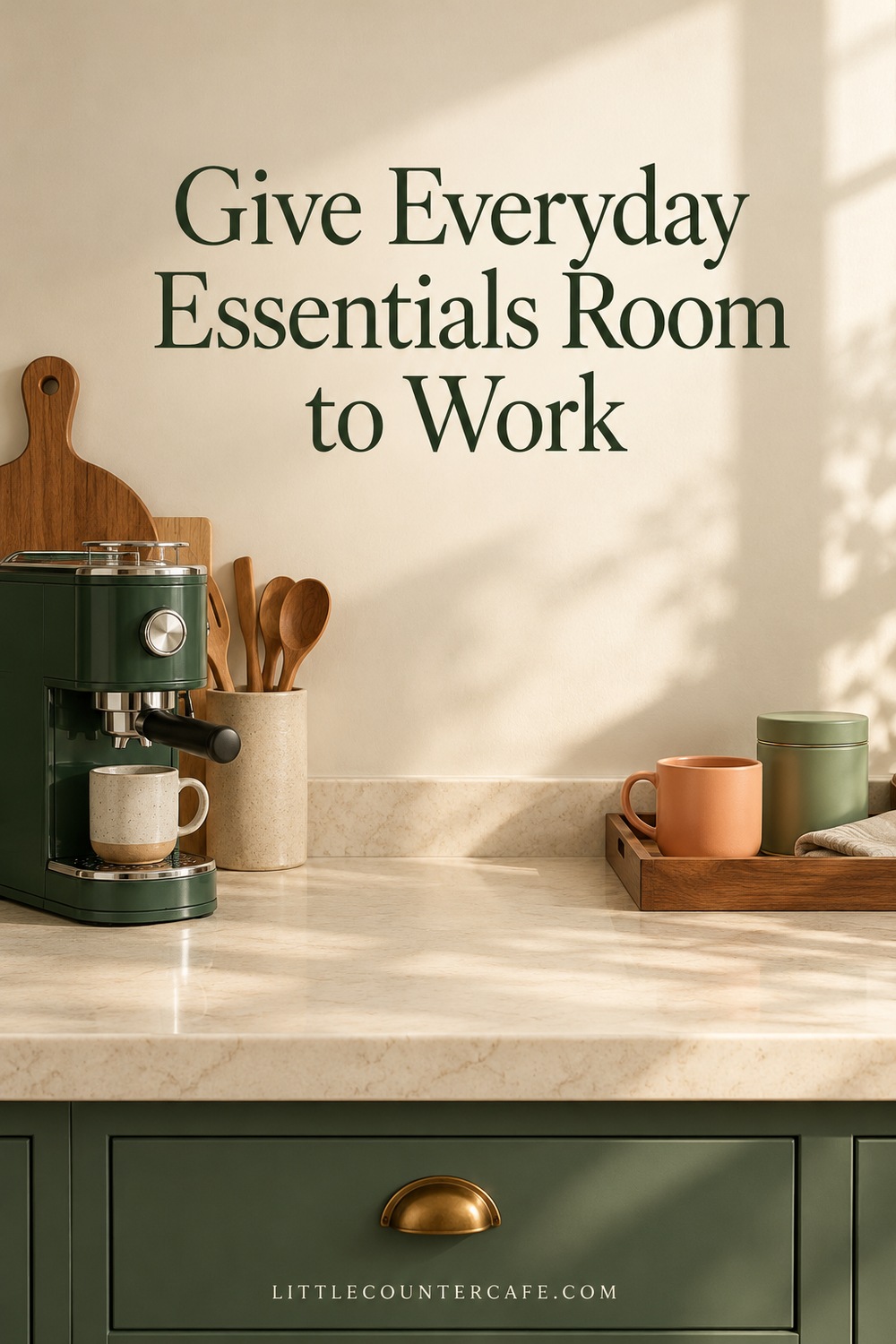
Begin with an empty, clean section of counter and put back the equipment you actually use. This might be a coffee maker, a French press, or a kettle and tea infuser. The machine is usually the largest visual element, so let its position guide the smaller pieces rather than squeezing it into a finished display.
Choose a stable, level location suitable for your appliance. Keep access to its controls, water tank, lid, drip tray, and ventilation clear. Check the manual for the exact model: decorative trays, cloth runners, and tight shelving can change how an appliance sits or how easily you can use it. For example, Nespresso’s Essenza Mini instructions call for a level, stable surface resistant to heat and fluids. That is model-specific safety guidance, not a universal clearance measurement.
Keep a patch of counter available for setting down a cup, adding a tea bag, or preparing a drink. A corner that looks lovely but requires you to move a vase each time is asking too much of an ordinary morning. If the setup already feels tight, remove an accessory before searching for a smaller version of everything.
Try this with the equipment switched off and cool: place your usual mug where you would prepare it, then check whether you can reach the supplies and open the machine normally. Follow the manufacturer’s instructions for any appliance movement. Notice where your hand wants to go. That is working space to protect, not a gap that needs filling.
Decide which everyday items deserve to be visible. One or two regularly used mugs, a spoon container, and a closed supply tin may be enough. Store spare mugs and backup supplies elsewhere. The separate guide to what to keep on a coffee counter can help with those decisions; here, the aim is to make the visible essentials feel composed.
If you are setting up a station from scratch, begin with planning a coffee station in a small kitchen. Styling works best once the basic location and equipment fit have been settled.
Build One Calm Visual Group
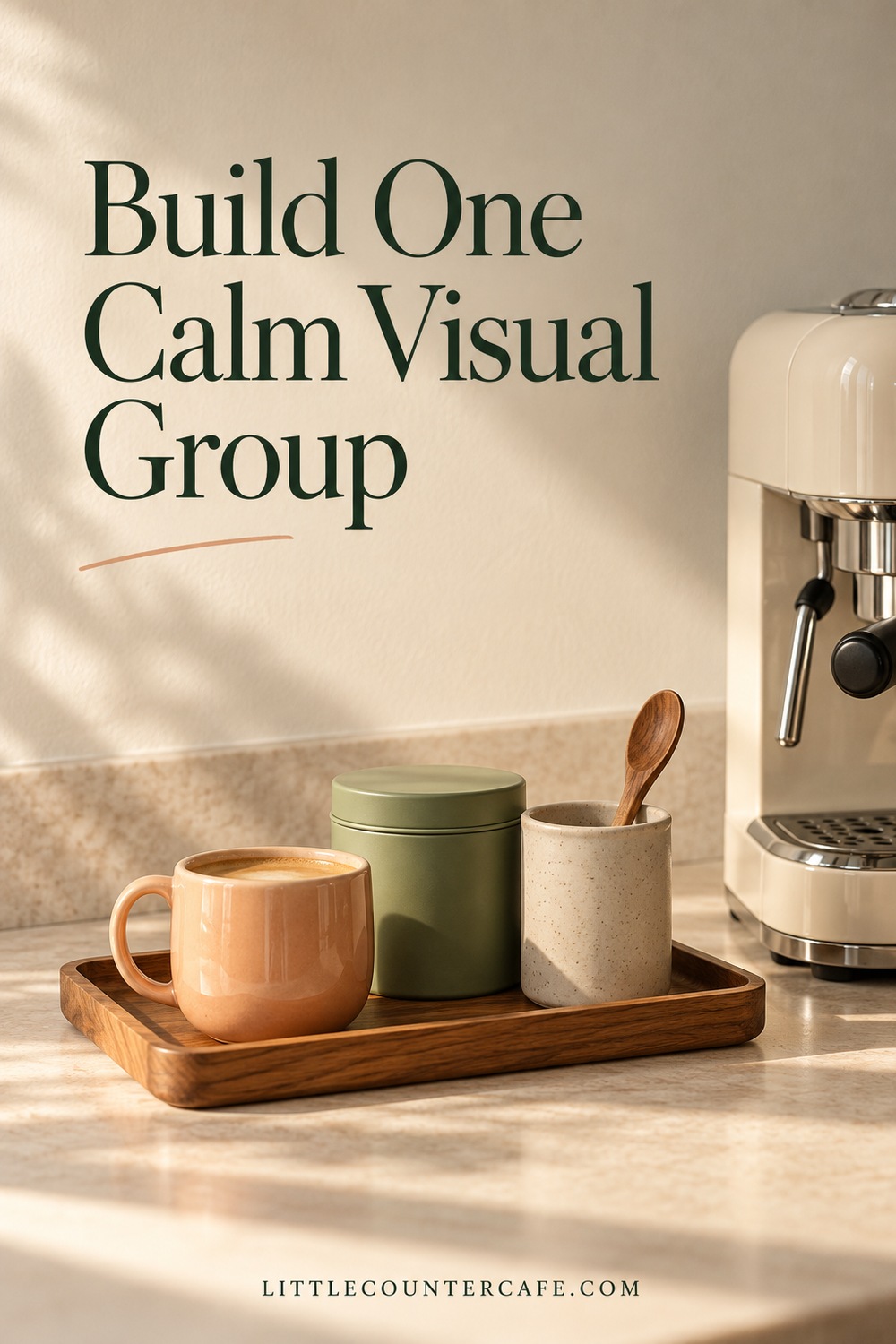
Once the essentials fit, choose one small group for the eye to settle on. A useful starting point is a mug beside a closed canister, with a spoon cup slightly behind. The pieces do not have to match. Repeating one color or material can make them feel connected: a green mug with a sage tin, or a wooden spoon with a small wooden tray.
A tray can give loose accessories a clear boundary. Choose one that fits the pieces without needing them to balance at the rim. Keep the tray easy to lift for wiping, and check the care instructions for both the tray and the counter. An accessory tray does not automatically make a suitable base for an operating appliance. Let the machine sit on the surface its manual requires.
If a tray takes up too much space, use the arrangement itself as the boundary. Place two useful items together near the back of the counter and leave an obvious clear area beside them. A small corner can look finished without a tray at all.
Vary height gently. A closed tin can sit behind a lower mug, or a small framed print can bring attention to the wall instead of adding another object to the counter. Keep art away from heat, splashes, controls, and any lid’s opening path. Do not add a shelf or heavy wall hanging without checking suitable fixings, load limits, and the wall construction.
There is no rule that every group needs three objects. If two pieces give you a clear, useful arrangement, stop there. Odd-number styling can be an optional visual prompt, but it should never make you add something that blocks the routine.
Three arrangements to adapt:
- Machine-led: the coffee maker is the main feature; a mug and tin form a smaller group beside it. Leave their working area clear.
- Mug-led: a favorite cup supplies the color, with a neutral canister and simple spoon cup supporting it. Useful when the machine is visually plain.
- Shared coffee-and-tea: a mug, tea tin, and infuser sit together in a small accessory zone. Keep the kettle’s operating space separate and follow its instructions.
These are conceptual arrangements, not measured plans. Use your own equipment and counter dimensions before copying a position. If a tall piece makes the corner feel crowded, lowering the group may be more effective than buying a narrower tray.
Add Warmth With Useful Details

Choose a detail that earns its space. A peach mug, textured ceramic spoon cup, or wooden accessory tray can soften a plain counter while still doing an everyday job. For a quiet look, repeat a color you already enjoy and let most of the other pieces stay neutral.
You can work with mismatched mugs. Choose the one you reach for most, then repeat a small part of its color elsewhere. A floral mug might sit beside a plain green tin; a striped cup might work with a simple cream canister. You do not need to replace a usable set to make the corner look considered.
Texture can create warmth without another decoration. Try smooth ceramic beside wood, or a matte tin beside a glazed mug. Keep surfaces practical: a beautiful container still needs to close properly, and a tray still needs to suit occasional drips. Follow care labels rather than assuming that wood, stone, and ceramic tolerate the same treatment.
Store coffee for freshness before thinking about how it photographs. The National Coffee Association recommends opaque, airtight storage in a cool, dark location. A clear jar of exposed beans is not a good everyday styling solution. If your chosen counter gets strong sun or sits beside a source of heat, a cupboard may be the better home for the coffee itself.
Use the wall carefully if the counter is tiny. A small, securely mounted print can bring personality without another item at the cup-making spot. Avoid resting an unsecured frame where it could fall onto equipment. A plant is optional; keep soil, water, leaves, and trailing stems clear of hot equipment and food preparation. A mug you already own is often a simpler finishing detail.
A budget-friendly order: arrange what you own first, remove the pieces that do not help, and write down one specific gap. Perhaps your spoon cup is awkward to clean, or the open tea packet needs a suitable closed container. Shop for that job rather than an entire styled collection. The home cafe color palette guide can help if color is the part that still feels unsettled.
This article contains affiliate links. As an Amazon Associate I earn from qualifying purchases. If a useful piece is missing, the LCC Decor & Styling collection below offers a place to browse; compare dimensions and care information before choosing anything.

LITTLE COUNTER CAFE · Cozy Coffee Corner Decor
Give your coffee corner a little café charm.
Warm accents, attractive mugs, trays, and practical styling pieces for a welcoming coffee corner.
As an Amazon Associate I earn from qualifying purchases. This is a paid link.
Edit the Corner for Real Mornings
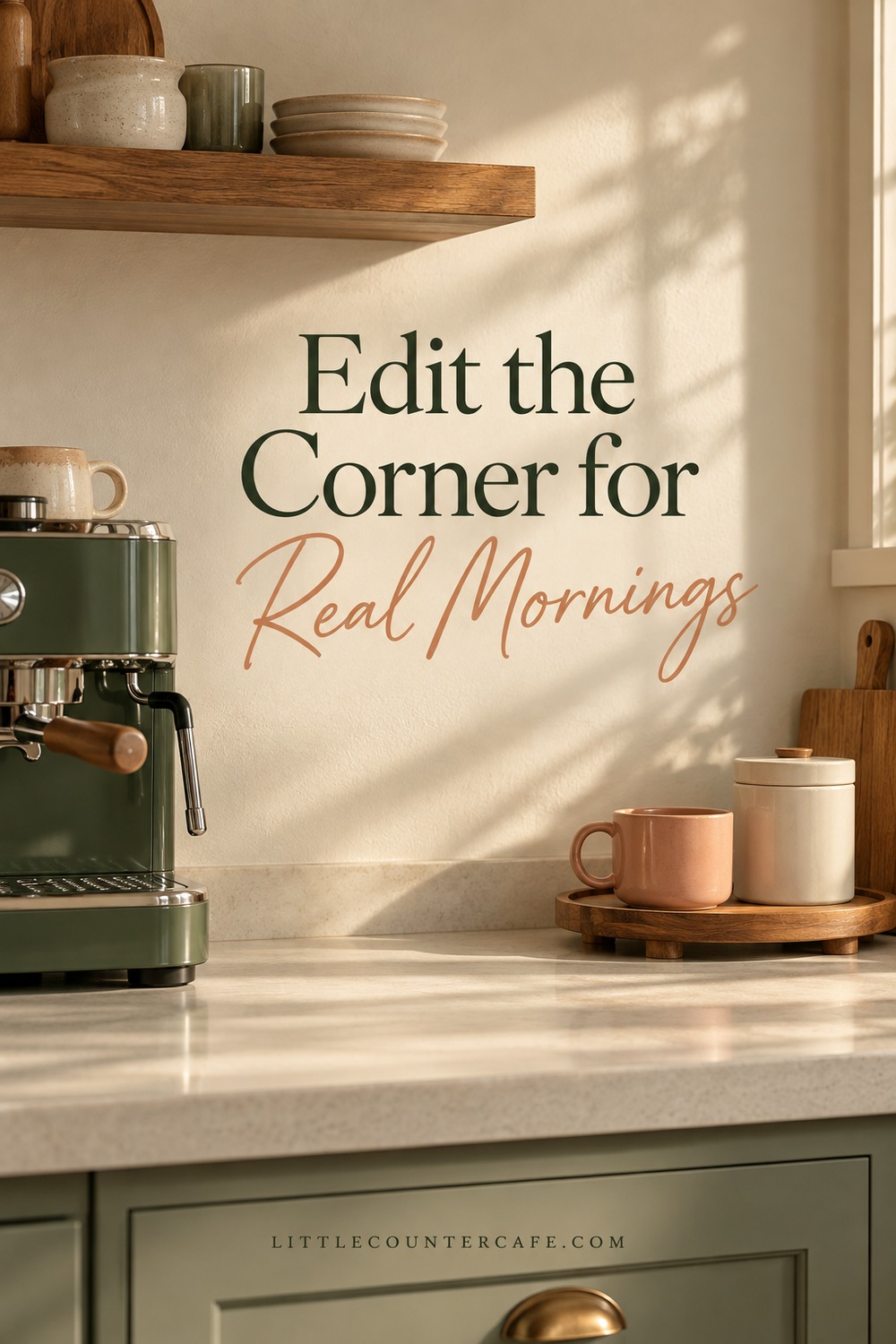
Leave the arrangement in place for a few ordinary mornings before adding more. Notice what you move, what stays unused, and where the counter becomes awkward. A styling idea has worked when the corner is pleasant to use as well as pleasant to see.
If the corner looks busy, remove the tallest optional object and one small extra, then look again from the kitchen doorway. A display can feel balanced close up but crowded from the place where you usually see it. Keep the item you love most and simplify around it.
If everything feels flat, try moving an existing closed tin behind the mug rather than adding another item. If the machine looks disconnected, repeat one of its colors in a cup or container. If the tray always collects clutter, reduce what it is expected to hold. Decorative boundaries work only when the contents still have clear jobs.
For a shared kitchen, agree on the few visible essentials. Tea drinkers should not have to reach through coffee accessories, and the person making breakfast should still have usable preparation space. Put occasional extras away after using them. A shared corner can feel personal without displaying every person’s favorite mug at once.
A simple evening reset: return the everyday pieces to their places, put away anything temporary, and leave the drink-making space clear. Follow the machine’s care instructions; this is an arranging checklist, not a substitute for appliance cleaning. If the reset requires lifting several purely decorative items, simplify the arrangement.
Use the printable worksheet to record the everyday essentials, the space that must remain open, your one visual group, and a finishing detail you already own. It also includes a short review after a few mornings, so you can decide what to change without starting over.
Download the small coffee corner styling worksheet
Your corner does not need to look identical every day. A familiar mug, a useful place for the supplies, and a little clear space are enough to make it feel welcoming. Finish when the arrangement supports your routine and gives you something lovely to notice on the way to that first cup.
Sources and useful guidance: Nespresso Essenza Mini user manual for its model-specific surface and operating precautions; National Coffee Association coffee storage guidance for opaque, airtight storage away from heat and light. Accessed October 22, 2026. Styling arrangements are editorial suggestions, not tested product reviews.