
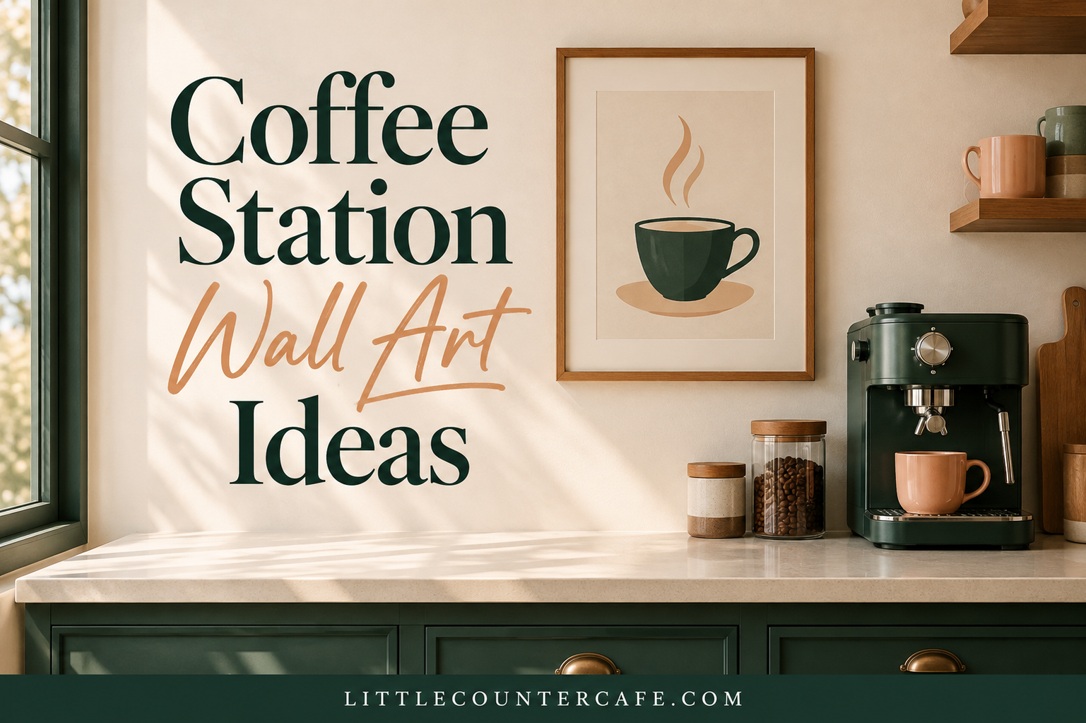
A coffee corner can have everything it needs and still feel a little unfinished. Often the missing piece is on the wall: one picture that gives your eye somewhere to settle without taking away the space where you make your drink.
For a small counter, start with one framed print beside the brewing area, a tidy pair of related illustrations, or a simple menu on a nearby dry wall. Choose the arrangement after checking the machine’s open-lid space, splashes and the wall surface. You do not need a gallery wall to make your morning coffee or afternoon tea feel more inviting.
I like a coffee corner that feels personal and easy to live with. The ideas below are styling suggestions to adapt to your home. The accompanying scenes are concept illustrations, rather than measured installations. Use the printable wall-art planner to check your actual space before buying frames or hanging anything.
Choose Art That Fits Your Coffee Corner
Try one of these six directions
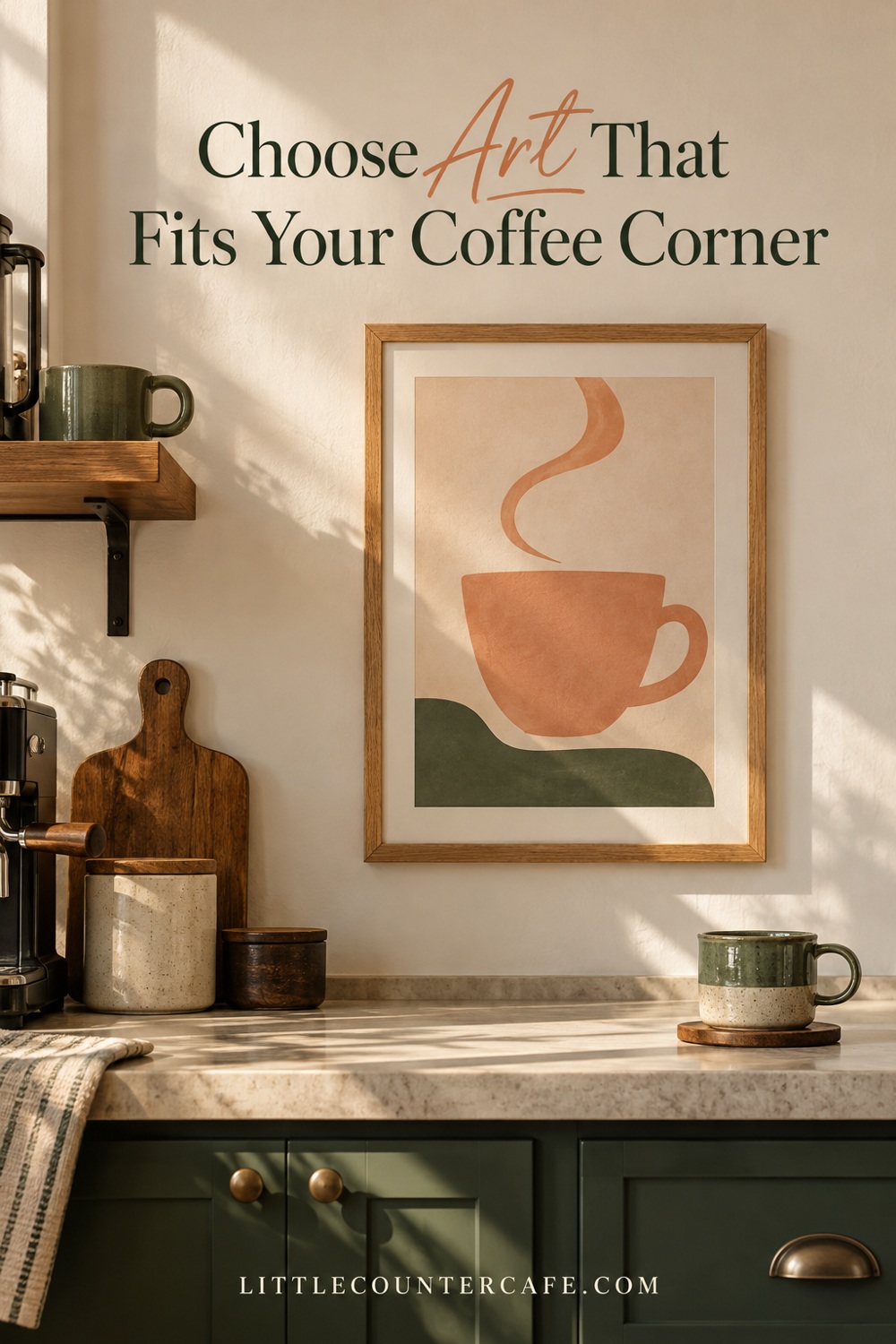
A simple cup illustration. A line drawing or block-color cup gives the station a clear focal point. Look for generous blank space around the drawing, especially if your backsplash already has a strong pattern. A cream print with a forest-green cup can connect with everyday mugs without requiring matching accessories everywhere.
A coffee-and-tea pair. Two illustrations with the same paper tone and frame style can represent both drinks. Choose a cup and teapot, coffee branch and tea leaf, or two different vessels. The common frame makes the pair feel intentional even when the subjects differ. Keep each image readable from the doorway; tiny details can disappear behind equipment.
A personal cafe menu. Write the drinks you actually make: filter coffee, black tea and cocoa are enough. You can leave off prices entirely. A short menu works especially well on a nearby wall where guests can read it without reaching across the machine. Avoid adding complicated drinks simply because they look attractive on the page.
A botanical or landscape print. Your art does not have to say coffee. A quiet landscape, leaf study or abstract shape can give a busy kitchen a softer focal point. Repeat one existing color from the room and let the subject be something you enjoy. If you already have several printed mugs, a picture without words can balance them.
A meaningful photograph. A cafe you visited or a place you love may feel more personal than a shop-bought slogan. Use a copy rather than an irreplaceable original in an area exposed to kitchen life. Choose a frame and protective covering suitable for the location, and keep the picture outside the brewing plume and splash area.
A small piece of your own artwork. A cup sketch, watercolor wash or handwritten line can be the whole feature. You do not need to pretend it is a professional print. Start with an existing frame, use a generous mat if it suits the work, and see how it feels in the room before buying more.
Match the mood before matching every object
Choose one link between the artwork and your station: the green in a mug, the warmth of a wood tray, or the cream of the cabinets. Everything else can be quieter. Repeating every color in every accessory usually creates more work and more shopping than a little counter needs.
If you enjoy a warm palette, try a peach cup illustration in an oak frame against a cream wall. For a calmer arrangement, choose a green line drawing with plenty of unprinted paper. A black-and-white photograph can also work with green and wood; it does not need a coffee slogan to belong.
If choosing the colors feels difficult, start with the room you already have. Our guide to choosing a home cafe color palette can help you narrow the options. The frame should support the picture, rather than becoming another finish you now have to repeat throughout the kitchen.
Plan the Arrangement Before You Hang Anything
One picture for a narrow station
A single portrait frame can suit a narrow patch of wall because it introduces height without spreading the display sideways. It does not have to sit directly over the machine. An adjacent dry wall may be a better choice, particularly when the machine opens upward or releases steam toward the wall.
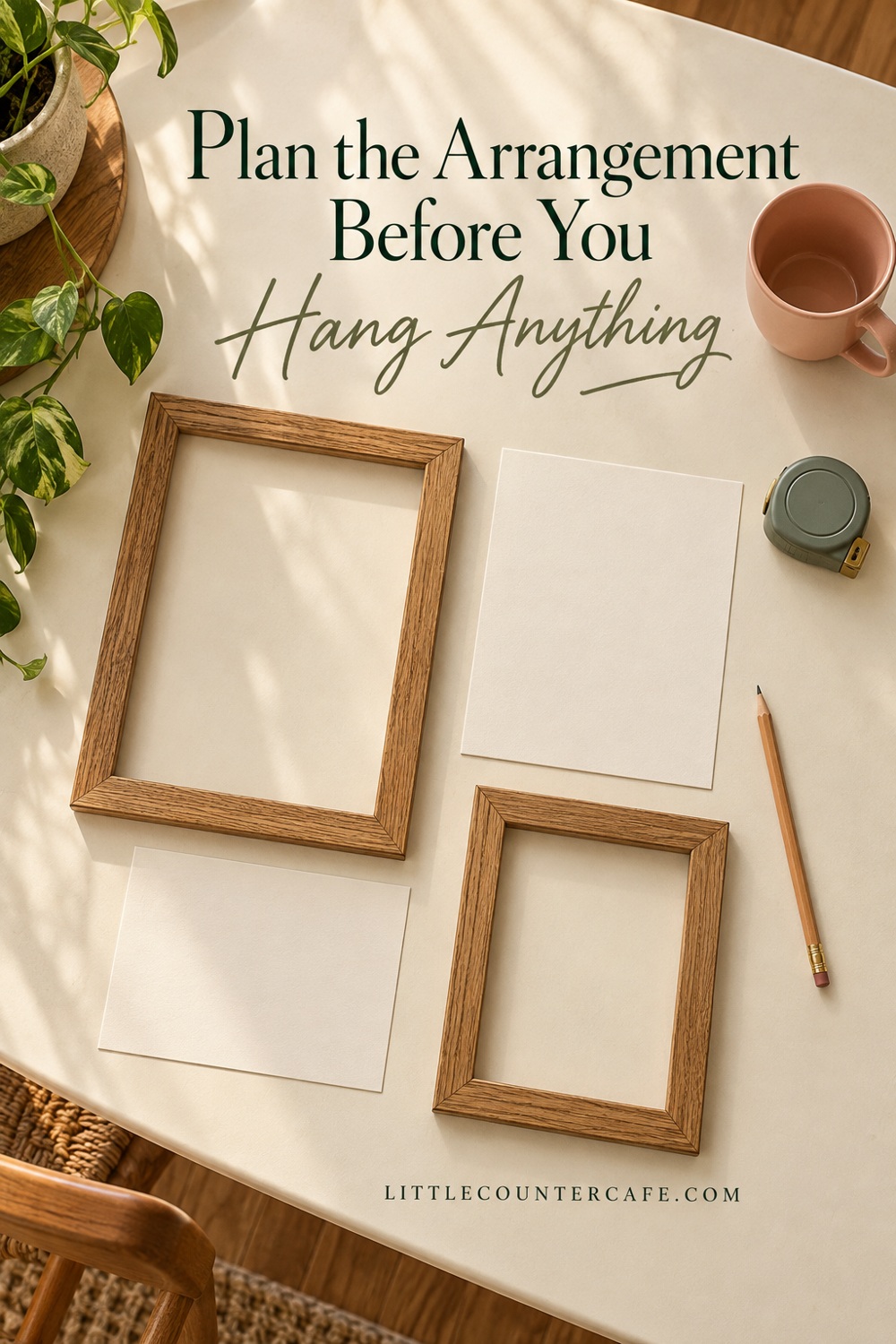
Use the outside frame measurements when planning. An 8-by-10-inch image may have a substantially larger frame and mat. For a paper mockup, cut paper to the frame’s full outside dimensions, not just the print size. Position the template, step back, and check whether it looks connected to the station from where you normally enter the room.
A pair for a wider blank wall
Place two related pictures side by side when the wall has more width than height. Align their tops, centers or bottoms deliberately; do not try to align all three if the frames differ. Keep the gap consistent when using matching frames. There is no universal gap that fits every frame and kitchen, so compare the grouping on paper rather than treating a styling rule as a requirement.
For an illustrative planning exercise, two 8-inch-wide frames with a 2-inch gap need 18 inches of wall width, about 46 cm, before adding any outside breathing room. These are example frame dimensions, not a recommended mounting specification. Substitute your own measurements and include switches, sockets and cabinet edges in the sketch.
A small grouping for a separate wall
A three-piece grouping can work when the coffee station has a dedicated wall nearby. Choose one larger piece as the anchor and add two smaller companions. Keep a clear relationship between them: a shared color, subject or frame finish is enough. Arrange them on the floor first, then transfer the outer shapes to paper templates.
On a short backsplash, adding more pictures may create a cramped strip behind the equipment. One picture on the side wall can be more satisfying than squeezing a collection into the only available gap. If shelves are already the feature, use our coffee station shelf styling guide to coordinate the display without making every surface compete.
Check the station in use
Open the brewer’s lid, remove the water tank as directed, and check every door that swings toward the wall. Picture the space your hand needs for refilling and cleaning. The artwork should not require you to move the frame whenever you make a drink.
Then check your view from the kitchen entrance and your usual standing position. A picture centered on the full wall may look disconnected from a narrow tray below it. Centering over the usable station, or placing it deliberately to one side, can make more sense. The paper mockup lets you compare those options without making holes.
Pick Frames and Hanging Methods for Your Wall
Start with the surface and the location
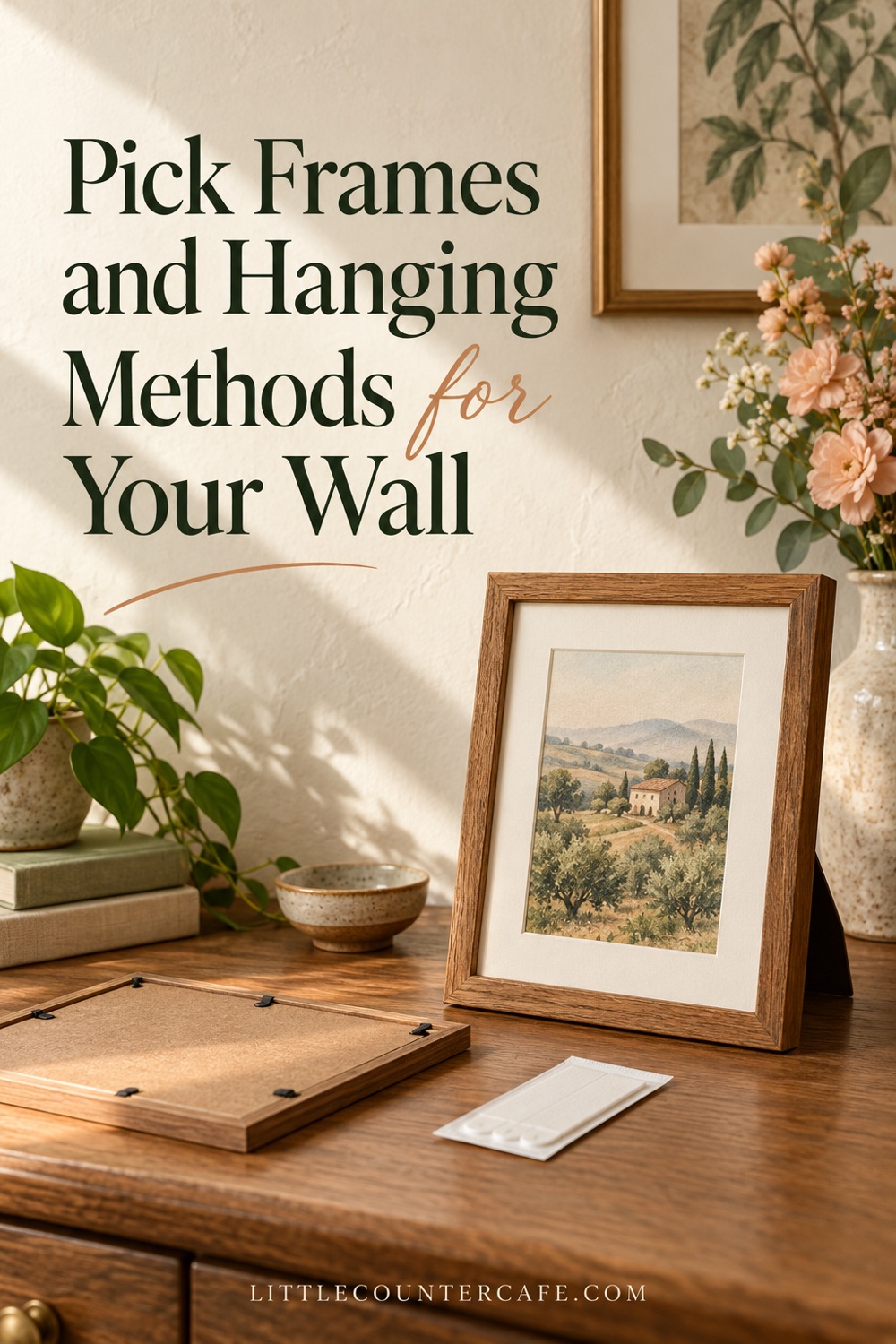
Identify whether the wall is painted drywall, plaster, tile, wallpaper or another finish. Read the hanging product’s current instructions for that exact surface, frame size and complete frame weight. A method suitable for one wall is not automatically suitable for the wall beside it. Check your rental agreement or obtain permission when needed; a removable product label is not a promise that every finish will remain unchanged.
Keep art outside appliance clearances, direct steam, splashes and hot surfaces. There is no single safe frame-to-machine distance for every appliance. Follow your own machine’s manual and move the display to a neighboring dry area when the proposed position conflicts with operation. Do not cover outlets, put fixings into electrical fittings, or drill where hidden services may run. Get appropriate help when the wall construction or fixing location is uncertain.
Treat removable strips as a specific system
For example, the US Command picture-hanging strip instructions specify surface preparation, frame preparation and a waiting period before rehanging. They exclude wallpaper and valuable or irreplaceable items. Read the exact pack for its frame and weight limits; extra strips do not make an unsuitable surface suitable. Follow removal directions too, leaving access for the release tabs. These instructions describe that product, not every adhesive hanger.
For a heavy frame, textured wall or uncertain finish, choose another display location or ask for advice about a fixing suited to the wall. Do not improvise a heavy overhead display just to avoid a visible hole.
Choose a frame you can maintain
Simple, relatively smooth frames are easier to wipe around than deeply carved ones. Check the manufacturer’s care directions for the frame, glazing and print. Keep cleaning spray off the artwork and avoid soaking the edges. If marks return repeatedly, reconsider the location rather than cleaning a delicate print more aggressively.
A leaning frame is only an option on a stable, dry surface where it cannot slide, tip or obstruct drink preparation. A little counter may not have that spare depth. A wall-mounted picture in a suitable adjacent position can keep more usable space free. Never lean a frame against a hot appliance or balance it behind a kettle.
Finish the Display Without Crowding the Counter
Build around one useful detail
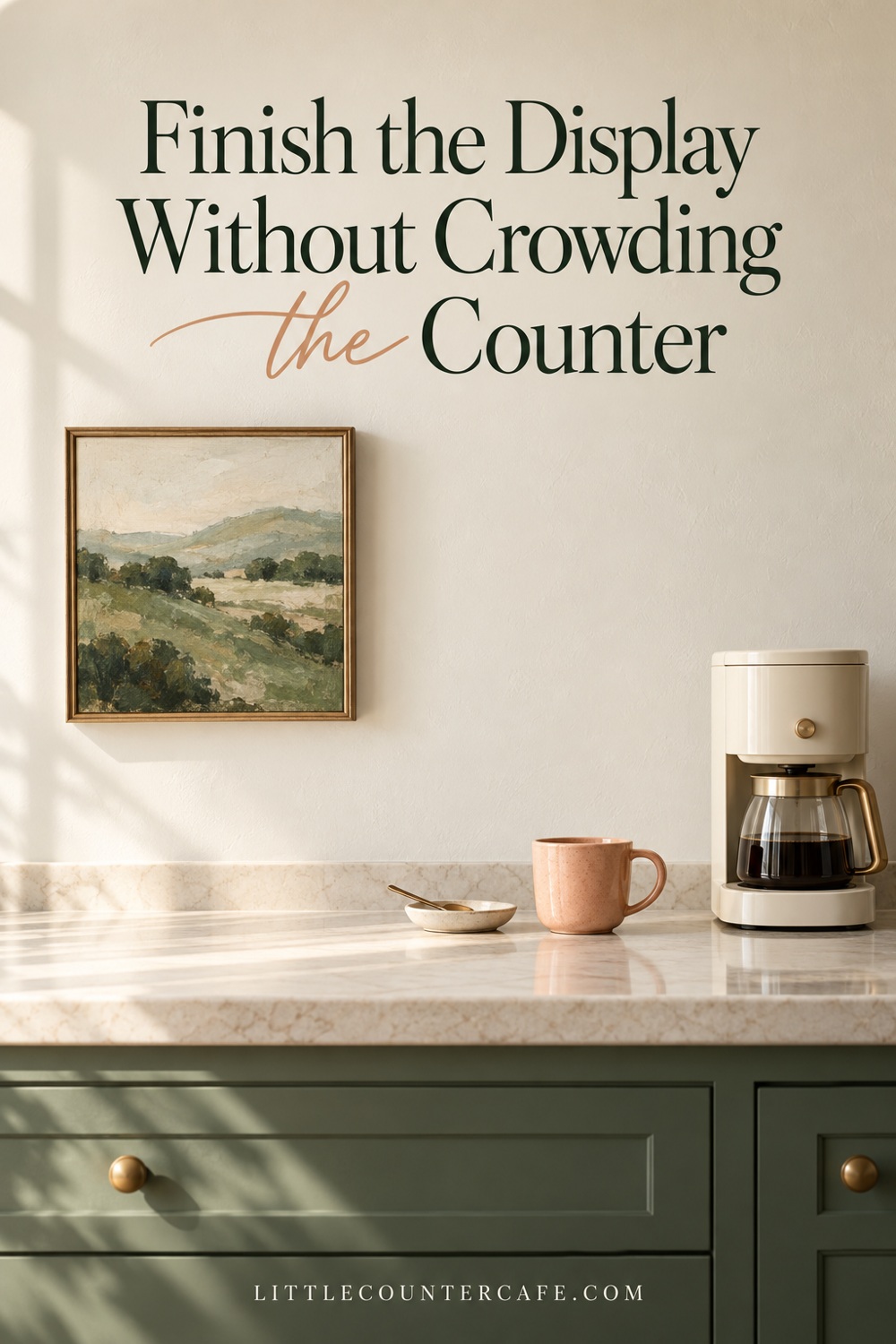
Once the artwork is in place, stop and look before adding anything else. One mug that echoes the picture, a small spoon dish or an existing tray may be enough. You do not need a new canister, plant, sign and shelf to make the picture look intentional.
Try a simple three-part arrangement: artwork on the wall, the equipment in its permitted operating position, and one clear place to set down a cup. This is a styling prompt, not a demand to fit three objects into a space that cannot accommodate them. Keep the working area first.
Solve the common sticking points
The picture disappears behind the machine. Move the template to the side or choose a different wall. Raising the artwork is only useful if it remains comfortable to see and does not conflict with cabinets or other fittings.
The corner feels busy. Remove one sign or small decorative object before replacing the artwork. A wordy print, labeled canisters and patterned mugs can all compete. A picture without text is a simple option when the station already contains plenty of lettering.
The art looks too small. Try an existing larger frame with a mat, or pair it with one related piece. Compare paper templates first. Buying several extra small pictures may fill the wall while leaving the overall arrangement just as unsettled.
You like seasonal changes. Keep the frame and change the paper insert, provided the frame is designed to be reopened. Store spare prints flat in a labeled folder elsewhere. Leave seasonal accessories out of the brewing area, and avoid creating a display that needs dismantling every morning.
Use the printable wall-art planner
The two-page planner below gives you space to record the usable wall, frame dimensions and weight, hanging instructions, and two layout options. It also includes a final check for machine access, wall compatibility and a clear cup-making area. It is a planning worksheet; it does not provide a universal fixing specification or verify your wall’s load capacity.
Start by sketching what you already own. Make full-size paper templates, compare one-picture and two-picture arrangements, then choose the simplest layout that feels right. If the result makes your daily coffee or tea corner feel more welcoming while everything remains easy to use, the wall has done its job.
Download the two-page Coffee Wall Art Planner (PDF)
For useful frames and styling pieces, browse the approved collection below. As an Amazon Associate I earn from qualifying purchases.

LITTLE COUNTER CAFE · Cozy Coffee Corner Decor
Give your coffee corner a little café charm.
Warm accents, attractive mugs, trays, and practical styling pieces for a welcoming coffee corner.
As an Amazon Associate I earn from qualifying purchases. This is a paid link.