

A coffee pod collection can take over a little kitchen surprisingly quickly. There is the open box beside the machine, a few loose capsules in a drawer, and the backup pack that never quite fits in the cabinet. Before buying a spinning rack or another basket, give the pods you already have a small, deliberate home.
The most useful system has two parts: a modest selection where you make coffee, and reserve stock in a cool, dry cabinet. The organizer should suit your actual capsules and the space you can spare. A shallow drawer, the original sleeves, or a small bin may work better than a large countertop display.
I love a cozy coffee corner, but being able to find the coffee matters more than filling it with accessories. Start with one reliable place for your everyday pods, then make refilling it easy. The free Coffee Pod Storage Planner below helps you work out quantities, measurements, and a simple rotation plan before shopping.
The images in this guide are concept illustrations, not photographs of a measured or tested installation. Check your own pod packaging, appliance instructions, and organizer dimensions.
Start With Your Pod Type and Daily Supply
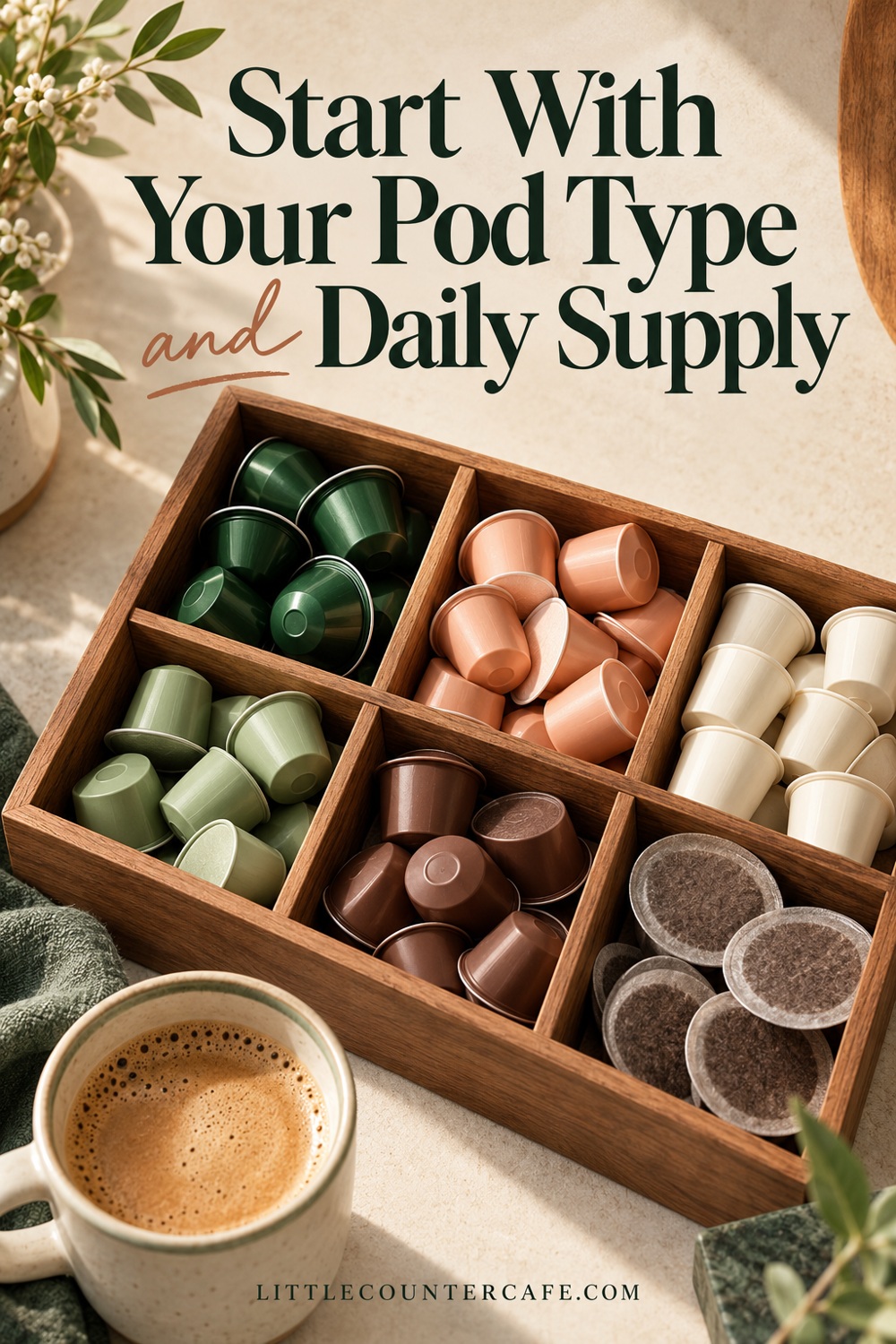
First, gather the unopened pods, loose capsules, and open boxes from every place they have landed. Keep used capsules separate. You are making an inventory of fresh supplies, rather than mixing them into the machine’s used-capsule collection.
Sort by the system you actually brew with. K-Cup-style pods, Nespresso Original capsules, and Nespresso Vertuo capsules have different shapes; a holder designed for one is not automatically suitable for another. Even within a system, check the organizer’s stated compatibility and how it accommodates the sizes you buy. A decorative rail that holds one capsule neatly may not accept a larger capsule from the same household’s collection.
Next, sort into choices that change someone’s morning: regular coffee, decaf, and any other drinks your household uses. Keep the product identity available. Foil color alone is a fragile labeling system when you buy several brands or someone else refills the station. Retain the relevant box panel or sleeve with the variety, brewing instructions, ingredient information, and date. Do not imply that a shared brewer is allergen-free simply because different pods have separate compartments.
Choose a daily supply based on your habits, not on the organizer’s advertised capacity. As an illustrative planning calculation, a household using two pods a day would need 14 for seven days. That does not mean every home needs a week’s worth on the counter. A tiny drawer may comfortably hold a three-day selection, with a regular refill from the cabinet. Your available space and the balance of regular and decaf matter as much as the total.
Count each category, then decide how much deserves the easy-access spot. If one person uses decaf occasionally, give it a clearly marked section rather than equal space by default. Keep an unfamiliar guest option identifiable instead of combining every variety in one attractive bowl.
Try this before buying anything: place your intended daily selection in a container you already own. Use the arrangement for a few mornings, noticing whether you can find a pod, refill the machine, and return supplies without moving unrelated items. This is a household trial you can do; it is not a test performed for this article.
Choose Storage That Fits Your Kitchen

A drawer near the coffee station is often a useful starting point because it leaves the work surface free. Measure its usable inside width, depth, and height, including any obstruction from hinges or the drawer above. Then measure a real pod at its widest point. An organizer’s outside measurements describe whether it fits in the drawer; its interior compartments determine whether your pods fit inside it.
Leave room to grasp a pod without crushing or scraping the lid. A neat single layer makes varieties and quantities easier to see. If the drawer is deep, a removable shallow bin can contain the pods without encouraging a hidden lower layer. Keep sharp tools in a separate compartment so they cannot puncture the seals. Check that the drawer closes freely before treating the arrangement as finished.
Original sleeves can also work well in a narrow cabinet. Stand or lay them in a stable bin, with names and dates facing where you can read them. This keeps product information together and may remove the need to transfer pods at all. Measure the full sleeve and the cabinet opening, not just the shelf. A bin that technically fits can still be awkward if you must lift it over a raised lip to reach the coffee.
For a countertop arrangement, keep the footprint modest. A small tray or divided container beside the machine can hold the day’s choices without becoming the storage location for every unopened pack. Position it away from splashes, cooking heat, and direct sun. The empty space used to fill the water tank, open the machine, or set down a mug is working space, even when nothing permanently lives there.
An under-machine drawer needs an extra check. Confirm that the organizer is intended to support your machine and that its load limit, surface, and stability are suitable. Raising the machine changes the height needed to open its lid, operate its lever, or remove the tank. Follow the machine manual’s placement and clearance requirements; a capsule drawer is not a reason to squeeze an appliance beneath a low cabinet. If those details cannot be confirmed, keep the machine on its normal supported surface and store pods elsewhere.
Wall-mounted rails and adhesive holders need the same practical judgment. Confirm the pod system, mounting instructions, load limits, surface compatibility, and any landlord restrictions. Avoid locations over a stove or where a falling capsule holder could land in water. There is no requirement to use vertical storage just because the kitchen is small.
For a broader approach to choosing containers, see Coffee Station Baskets: How to Choose Sizes That Fit. If the coffee corner already feels busy, What to Keep on a Coffee Counter and What to Put Away can help you decide what earns that space.
Keep Pods Dry and Easy to Rotate
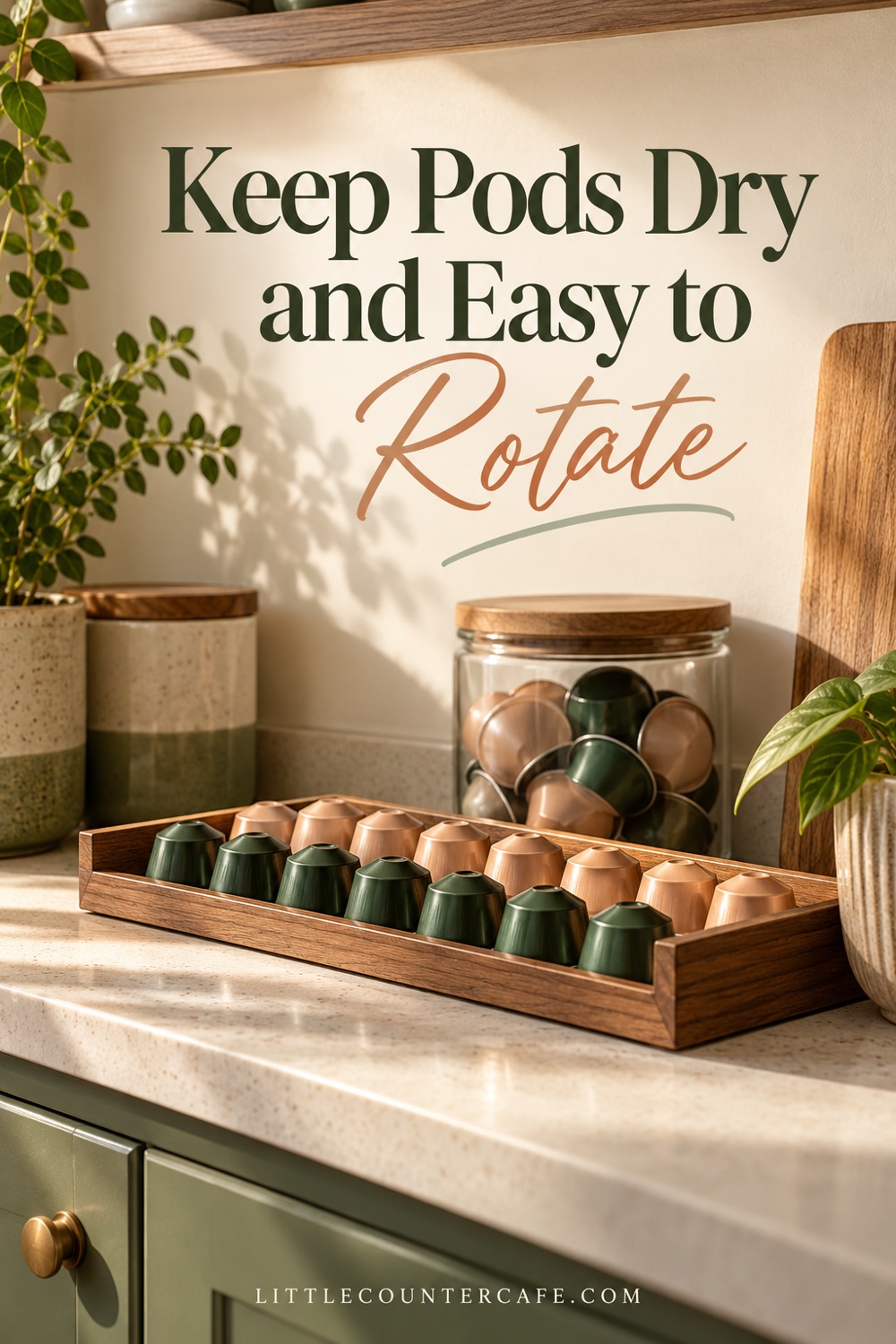
The storage conditions matter more than whether the holder is open or closed. Keurig recommends a cool, dry place away from direct sunlight for its K-Cup pods. Nespresso explains that its sealed aluminum capsules protect the coffee aroma. Those manufacturer statements support a simple arrangement: keep intact capsules in an appropriate dry location and preserve the information needed to use them correctly.
A decorative jar is optional; an airtight canister is not automatically necessary for every sealed capsule. Follow the instructions on your specific product. If pods come individually wrapped or have special packaging directions, keep that protective packaging until use. Do not open, puncture, or repackage the coffee itself to make a storage display look tidier.
Check dates before mixing a new purchase into your daily section. Both Nespresso and Keurig describe the dates on their capsules or packs as guidance for freshness or quality. Use the wording on your own product rather than treating every date as the same kind of expiry instruction. This guide does not set a universal period for using pods beyond the printed date.
Put the earliest appropriate date at the front or top of each variety and refill behind it. If dates differ, rotating by date is more useful than assuming the most recent purchase is always the newest batch. Keep a dated box panel with loose pods when their own markings are difficult to read. Do not combine regular, decaf, and different drinks into an unmarked container just to save one small piece of cardboard.
Set aside capsules with a punctured lid, leaking contents, broken seal, or unexplained damage; do not brew them simply because they fit the machine. Follow the maker’s advice if there is uncertainty about a product. A damp storage spot also deserves attention before more pods go back into it. Move the supply to a dry place and address the source of moisture.
Fresh supplies and used capsules need different homes. Follow your machine’s instructions for emptying and cleaning its collection container. Let used pods cool before handling them, and follow the capsule brand and local program’s current disposal or recycling directions. A recycling symbol alone does not establish that your local collection accepts that pod.
Set Up a Simple Pod Restocking Routine
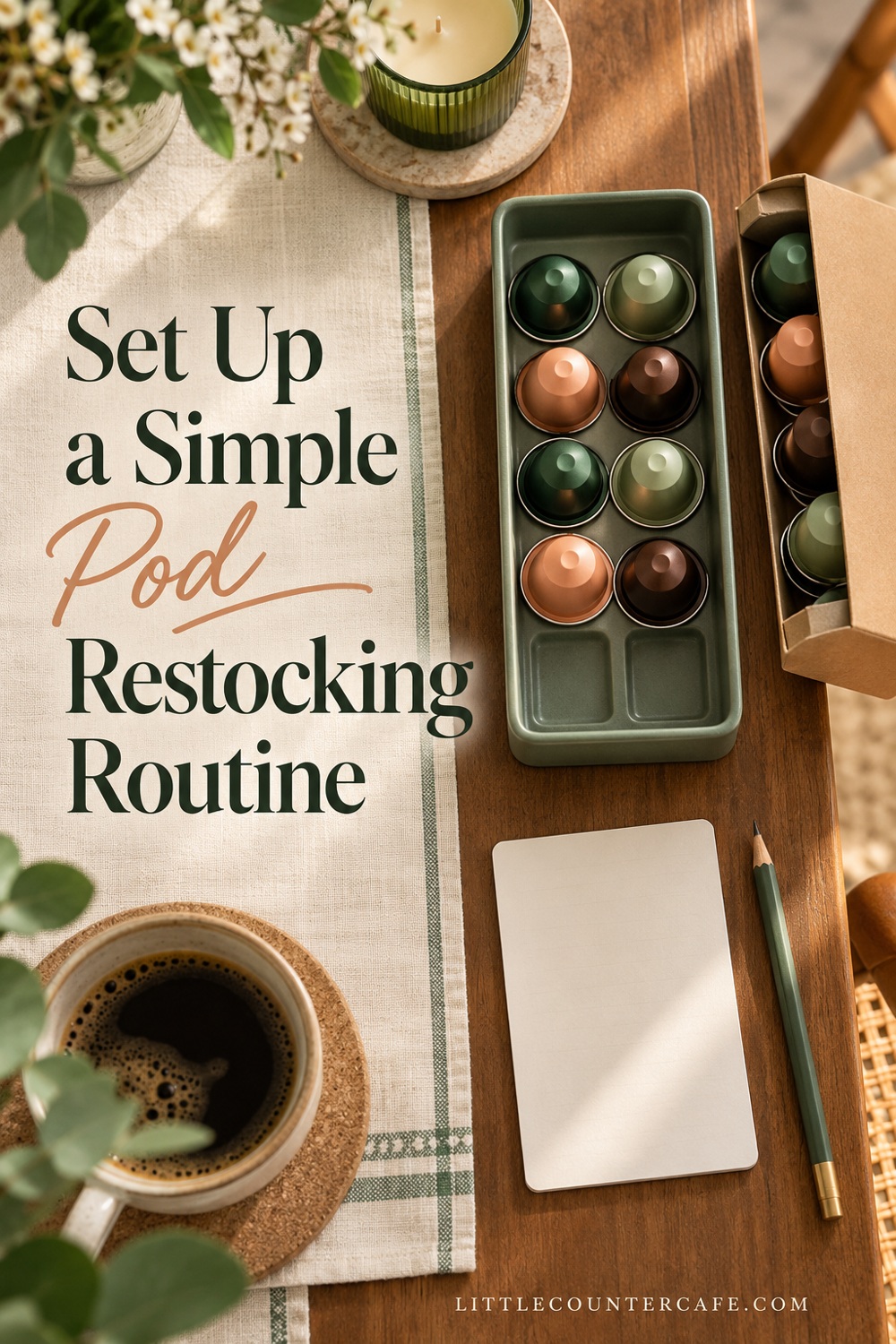
Once the daily section has a home, make refilling it part of something you already do. You might check it when writing the grocery list or when returning a clean mug to the cabinet. Pick a cue that suits your household rather than adding another elaborate chore.
A useful refill takes three short decisions: which varieties are running low, which dated supply should be used next, and whether the reserve stock needs replenishing. Pull the older appropriate supply forward before adding fresh pods. Return the rest to the cabinet instead of leaving the open carton beside the machine.
Set a reorder point from actual use and the time it takes to buy more. For example, if your household uses two pods a day and normally needs three days to replace them, six pods cover that ordinary lead time. You may want a small extra allowance for visitors or a delayed order. This is a planning example, not a recommendation to buy a particular quantity or subscribe to recurring deliveries.
Keep the system forgiving. If the daily tray is empty but a reserve box is available, refill it; there is no need to reorganize the entire cupboard. If pods regularly overflow, buy less or adjust the daily section before adding another holder. If a variety stays untouched, reduce its share next time. The aim is to keep the coffee you use easy to reach while keeping the counter available for making it.
Download the free Coffee Pod Storage Planner to record your pod system, daily use, usable storage measurements, variety labels, and refill point. The second page gives you a simple stock-and-date log. Print it, measure your own space, and start with a container you already have. A calmer little coffee corner can begin with moving one open box into the right place.
For a complete daily-and-reserve system, read How to Divide a Coffee Station Into Daily and Backup Supplies.
As an Amazon Associate I earn from qualifying purchases. The Storage & Organization collection below contains paid links. Check pod compatibility and usable dimensions before choosing an organizer.
LITTLE COUNTER CAFE · Coffee & Tea Storage Favorites
A calmer counter starts with a place for everything.
Canisters, tea storage, shelf organizers, and small accessories to keep everyday café supplies easy to reach.
As an Amazon Associate I earn from qualifying purchases. This is a paid link.
Sources
- Keurig: K-Cup Pods FAQs and storage guidance – cool, dry storage away from direct sunlight; date terminology. Accessed October 24, 2026. Used only for those statements, not its older recycling statistics.
- Nespresso: How to store your coffee pods – sealed capsules and best-before guidance. Accessed October 24, 2026. No universal shelf-life or post-date safety guarantee adopted.
Organizer fit, division of daily and reserve supplies, labels, and refill calculations are practical planning guidance, not measured installations, product tests, or manufacturer capacity claims.