
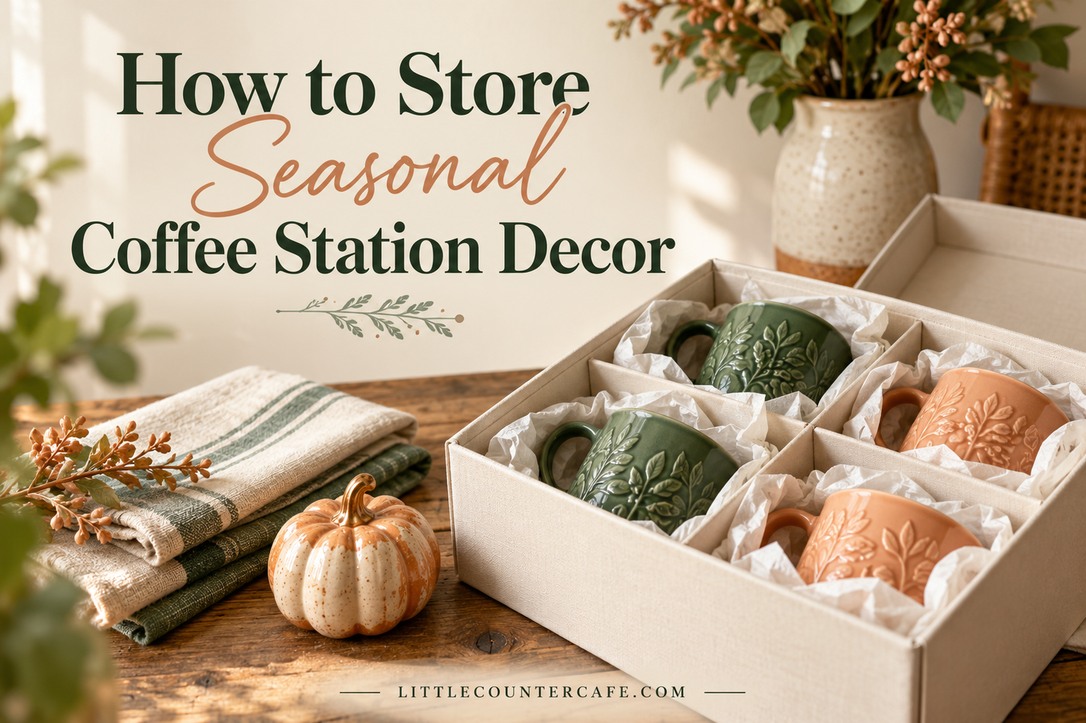
A little seasonal change can make the coffee corner feel lovely. The awkward part comes afterward: a pumpkin mug in the everyday cupboard, a Christmas print behind the toaster, and a box somewhere that might contain the matching saucer.
The easiest system is to give seasonal coffee station decor one defined home, protect each material properly, and leave yourself a record of what is inside. Start with the space you actually have. A useful collection can be a pair of mugs, one small accent, and a changeable print; it does not need a separate tote for every holiday.
This guide focuses on everyday household decor, with concept illustrations for inspiration. Valuable, antique, repaired, or unusually fragile pieces may need specialist care. Use the printable inventory at the end to record your own items and storage measurements.
Sort Seasonal Pieces Before Choosing a Container
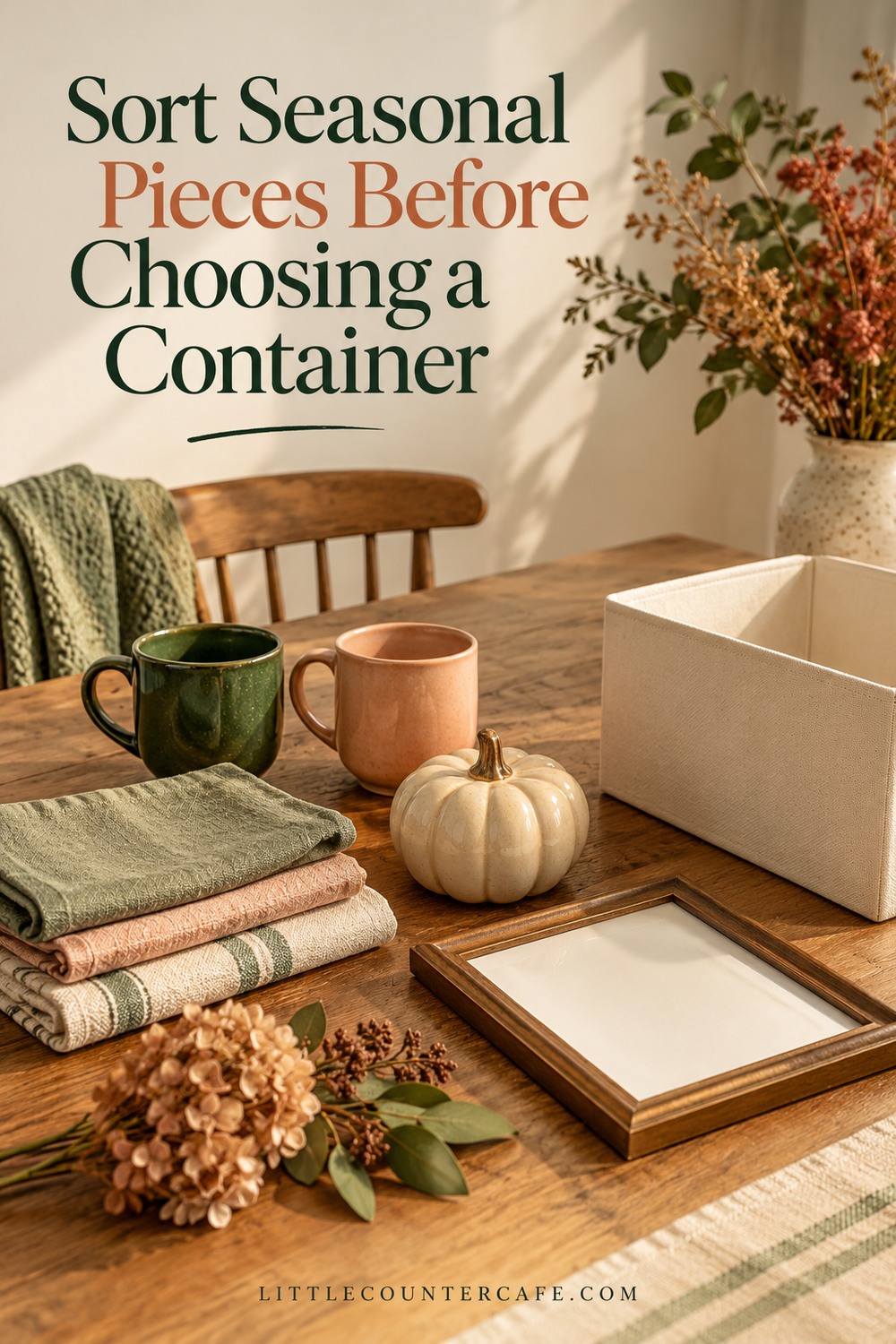
Gather only the coffee and tea corner pieces first. Mixing them with the entire household holiday collection makes a small job much bigger. Set out mugs, small dishes, signs, fabric accents, artificial stems, and any battery-operated decorations on a clear table. Keep hot drinks away from the packing area.
Make four groups: everyday pieces returning to use, seasonal pieces to store, items to pass on, and pieces needing attention. Do not seal a chipped mug into the next season’s drinking collection. Set it aside and decide whether it belongs in a non-food display, needs professional assessment, or should leave the collection.
For each item, ask whether it earned the space it occupied. Was the mug comfortable to use? Did the ornament leave enough room to make tea? Did you like the sign enough to put it out again? Keep the pieces you want to find next year. A box full of decorations you avoid using is taking up useful space.
Separate food from decor. Coffee beans, tea, cocoa, candy, and flavored syrups need their own appropriate food storage and label checks. A seasonal display bin is not a pantry. Empty and care for food-contact containers according to their instructions before putting them away; do not leave a forgotten packet in a decorative canister.
Choose a collection limit before buying organizers. If your available shelf fits one manageable container, work toward a collection that fits that space without squeezing fragile pieces. Consider whether a reversible sign, a neutral frame with changeable inserts, or two versatile mugs could replace several bulky accessories.
Measure the proposed storage location: usable width, depth, height, and the opening you must move the container through. Check shelf load limits and container specifications. Allow room to grip the box. A tote that fits perfectly but cannot be lifted out comfortably is not a good fit. Choose a smaller box if a full one would be awkward or heavy.
Keep ordinary year-round mugs with your daily supplies. Our guide to what to keep on a coffee counter can help you decide which pieces should remain within reach.
Pack Mugs, Prints, and Soft Decor Separately
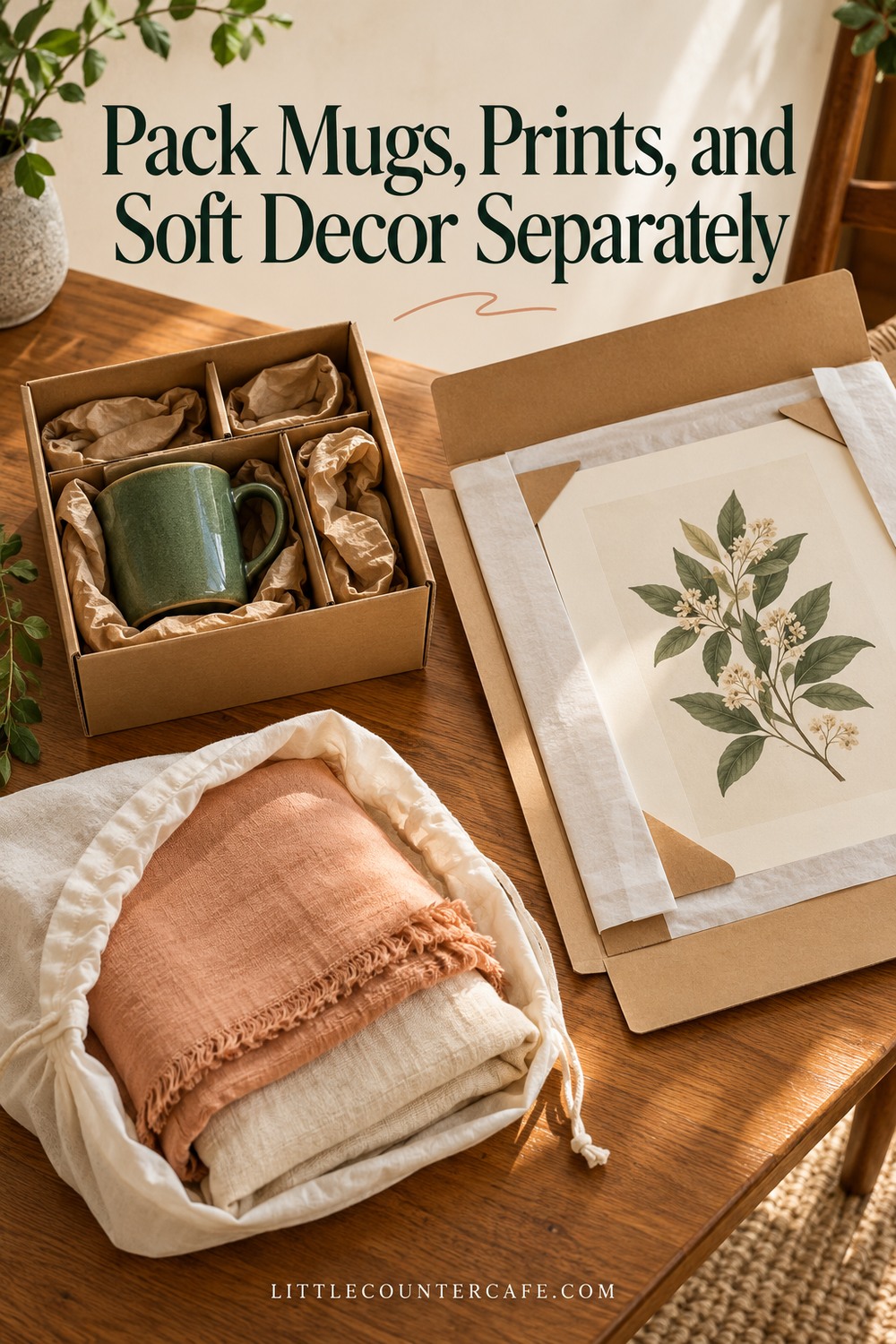
Different materials need different support. Dividers and smaller inner containers can share a larger box, but the weight of ceramics should never rest on a thin frame, paper print, or easily crushed stems. Original packaging can be useful when it is clean, sound, and supportive; replace damaged or dirty packing materials.
Mugs, saucers, and ceramic ornaments
Follow the item’s care instructions, then let it dry fully before packing. Check the base, handle joins, lids, and recesses where moisture can linger. Support a mug from its body and base while moving it, rather than carrying several pieces by their handles.
The Canadian Conservation Institute’s basic glass and ceramic care guidance recommends careful handling, cushioning between stacked pieces, and avoiding abrupt environmental changes. For a home coffee collection, that supports a simple approach: separate hard surfaces and prevent pieces knocking together.
Individually cushion mugs and ornaments with suitable clean, soft packing material. Give projecting handles and delicate points space. Use compartments that hold items securely without forcing them into place. Do not make a tall nested tower unless the manufacturer designed those pieces to stack. Pack heavy items low in a manageable container, with no heavy load pressing on fragile pieces. Gently check for movement before closing the lid; add support rather than stuffing it so tightly that it creates pressure.
If a piece has a loose handle, flaking surface, old repair, or sentimental value, avoid improvised adhesive repairs or aggressive cleaning. Store it separately and seek appropriate advice. Museum guidance helps explain the risks, but ordinary packing is not conservation treatment.
Prints and frames
Keep changeable paper inserts in a supportive folder or suitable protective enclosure. Store them flat when practical, with no mug or ceramic weight on top. Avoid adhesive tape directly on a print and avoid folding an image to make it fit a smaller box. Store frames separately with protection between hard surfaces and around vulnerable corners.
The Library of Congress paper-care guidance favors a clean, stable storage environment, protection from intense light, and supportive enclosures. An indoor cupboard is usually a more sensible starting point than a hot attic or a leak-prone location. For meaningful original art, choose materials and handling suited to its medium rather than treating it like a replaceable seasonal print.
Linens, stems, and small accessories
Launder washable linens according to their labels and put them away completely dry. Fold them loosely in a separate clean pouch or section so ceramics do not snag the fabric. Avoid packing fragrance products with linens or food-contact pieces. Check care instructions for special fibers, trims, or delicate embroidery.
Brush or clean artificial stems only as their care instructions allow, and keep them from being flattened by heavier objects. Group tiny accessories in a small inner container so they do not disappear into cushioning. Keep hanging hardware together in a labeled envelope or small compartment, without loose sharp pieces against ceramics.
For removable-battery decorations, follow the decoration and battery manufacturers’ storage instructions. Energizer’s battery-care guidance advises removing batteries when a device will be unused for an extended period. Store batteries appropriately and safely out of children’s reach, rather than loose among metal hardware. Do not open sealed rechargeable devices or attempt repairs as part of packing decor.
Give Every Box a Label and a Practical Home
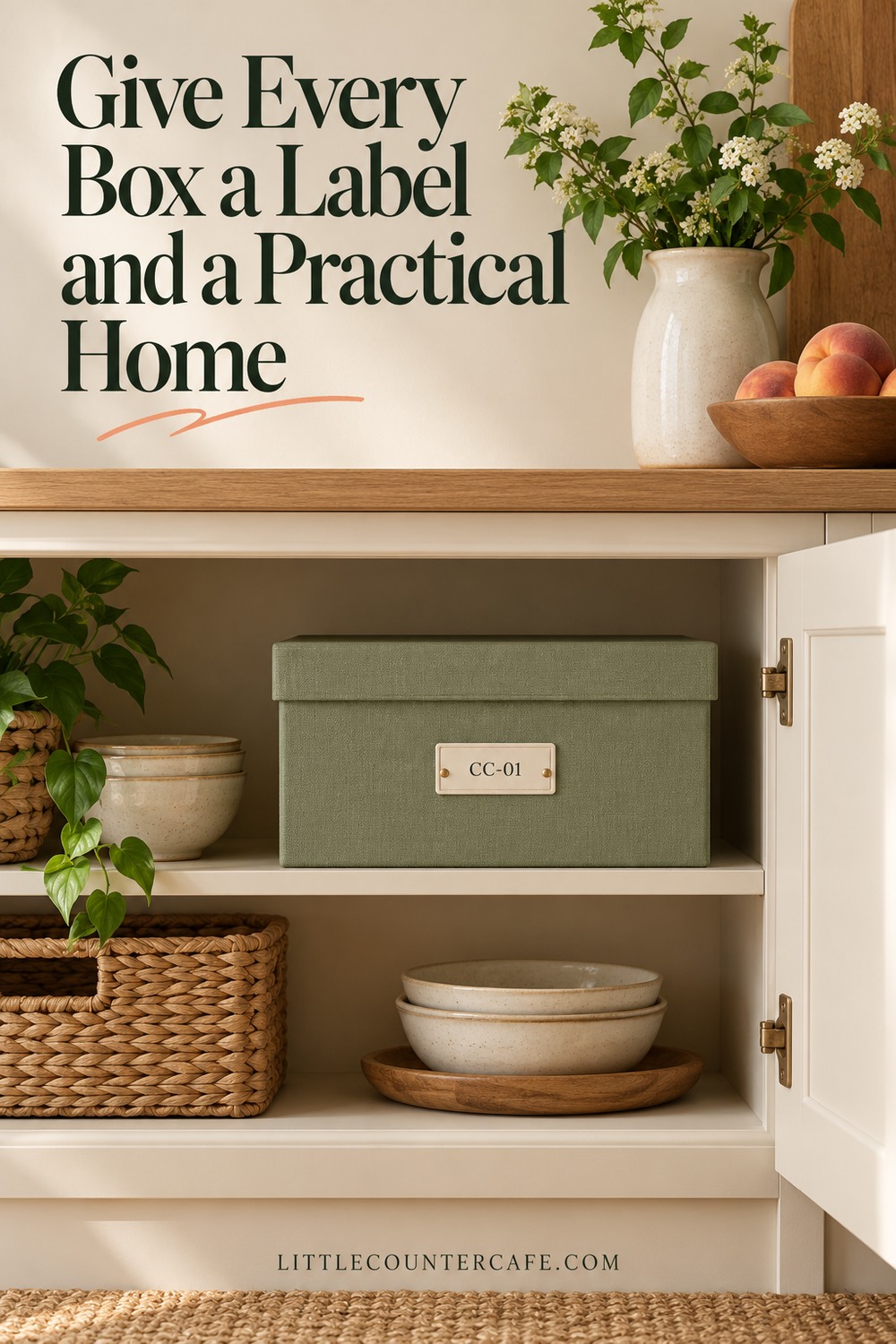
A label should answer three questions: what is inside, where it belongs, and which part you want first. “Coffee corner — fall — two mugs, pumpkin, print” is more helpful than “miscellaneous.” If the box contains fragile pieces, make that clear too. Put the label on the side you can see on the shelf, with a second label on the lid if useful.
Number containers when the collection needs more than one: CC-01, CC-02, and so on. On your inventory, list the storage location and any separate flat-print folder. This prevents a second search for pieces that could not safely go into the main box. Write “prints in folder CC-P” rather than squeezing the prints into the wrong container just to keep everything together.
Take a quick photo of the display before dismantling it, then a second photo of the contents before closing the container. Keep them in a clearly named album or folder. The photos help with arrangement and shopping; the written inventory supplies quantities, missing pieces, and locations that a photo may not show.
Choose a dry, stable indoor storage spot away from heat, direct sunlight, and possible leaks. Keep boxes clear of places that become damp. Do not assume a sealed lid solves a damp room or makes a box waterproof. If the location smells musty, shows condensation, or has a history of water problems, address that problem and choose another suitable location.
Place heavy containers on a stable, accessible lower shelf, following the furniture and container limits. Keep stacks modest and follow any stacking instructions. Do not balance a heavy tote above your head or block access to household equipment. If you need a step stool, use suitable equipment and avoid lifting an awkward load while reaching.
Small homes can use a divided cupboard shelf, a suitable under-bed container, or part of a linen cupboard, provided the environment and weight support are appropriate. Measure first, keep fragile contents protected, and leave the lid accessible. A shared seasonal household box can work well if the coffee-corner pieces have a clearly marked inner section.
Use the printable inventory to record container code, season, contents, quantity, condition, location, and a note for next time. “Need one replacement saucer” is much more useful than discovering the gap while setting up for guests.
Reset the Coffee Corner and Plan the Next Swap
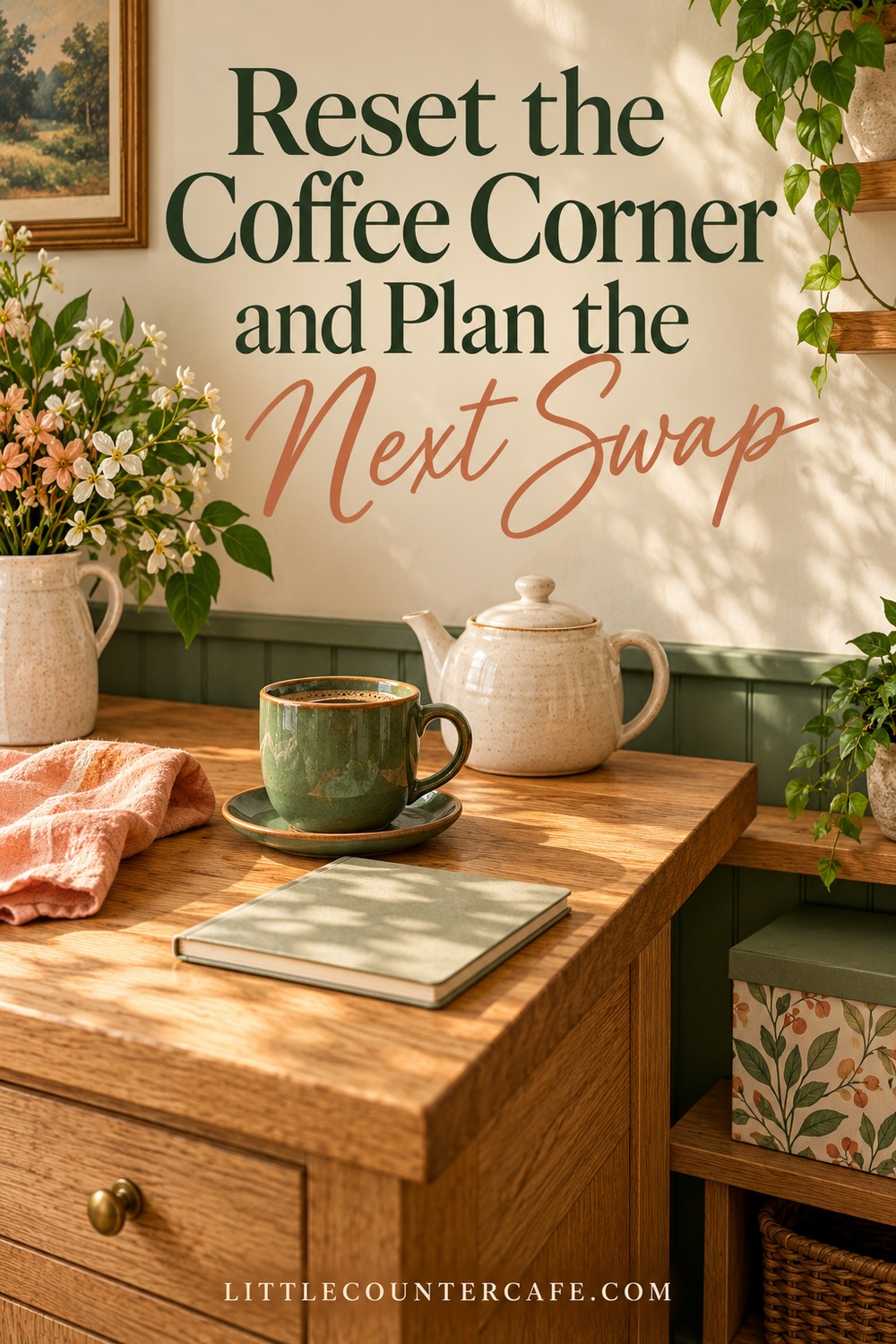
Once the seasonal pieces are packed, return the coffee or tea area to its everyday arrangement. Bring back the mugs you actually use, clear your cup landing area, and check that appliance access remains practical. A seasonal reset should finish with a usable counter, not another pile waiting for a decision.
For an easy pack-away sequence, use this checklist:
- Photograph the display and gather its pieces in one place.
- Separate food, everyday items, and pieces needing attention.
- Clean and fully dry items according to their care instructions.
- Protect each material and pack without pressure or crushing.
- Update the inventory, label the visible side, and record the location.
- Return everyday supplies and put the next-season note somewhere easy to find.
Before the next seasonal change, open the inventory before browsing shops. Decide which existing pieces you want to use and whether anything needs attention. Set a spending limit if a replacement is needed. Keep a short “do not buy” note for things you already have plenty of, such as novelty mugs or small signs.
If one container is overflowing, edit the collection rather than immediately buying a larger tote. If a mug gets chipped between seasons, reconsider its support and movement inside the box. If a linen smells stale, check that it was fully dry and that the storage location is suitable. Do not mask a moisture problem with fragrance. For mold or damage, isolate the affected item and use care appropriate to its material before returning it to the collection.
For inspiration when the next holiday arrives, see our Christmas coffee station ideas for small kitchens. Keep the storage system simple enough to use every time: a modest collection, a safe place for each material, and one clear record of where it all went.
Printable Seasonal Coffee Decor Inventory
Use the two-page inventory and pack-away checklist to record your container dimensions, contents, condition, storage location, and next-season shopping notes. Print extra inventory pages when you need them. Your measurements are for your own space; the illustrated examples do not establish a universal box size or shelf capacity.
Download the seasonal coffee decor inventory
As an Amazon Associate I earn from qualifying purchases. Relevant seasonal accessories are available in the category list below; check dimensions and material suitability before buying anything for your storage system.

LITTLE COUNTER CAFE · Seasonal Coffee Bar Styling & Drink Staples
Refresh your little café with the season.
Flexible styling pieces and drink-making staples to use across seasonal coffee menus and counter refreshes.
As an Amazon Associate I earn from qualifying purchases. This is a paid link.